
Chronicle of the solution: The Trap of Winter
Espionage Tier III
The spy has been caught, and the thread they left behind is unwound below, from one end to the other.
The dossier as it reached the desk
The council's secrets have reached where they never should have — and not on their own: someone carried them. The spy knows the corridors better than the guards do — an ill sign: it is one of the household. On the Chancellery's list stand Chamberlain Iorgu, Ban Radu the Silent, Teofil the Chronicler, Duchess Amara de Corvin and Mother Evghenia; one of these names covers a lie. Among the things spoken of in whispers are the small wine cask, the signet ring, the herald's horn, the ciphered letter and the ledger of accounts. The threads were tangled on purpose: investigate, weigh every word, and pronounce your verdict only when the grid leaves no room for doubt.
Called to judgement were Chamberlain Iorgu, Ban Radu the Silent, Teofil the Chronicler, Duchess Amara de Corvin and Mother Evghenia. Each had somewhere to begin a story; one alone had reason to change it.
The suspects
-
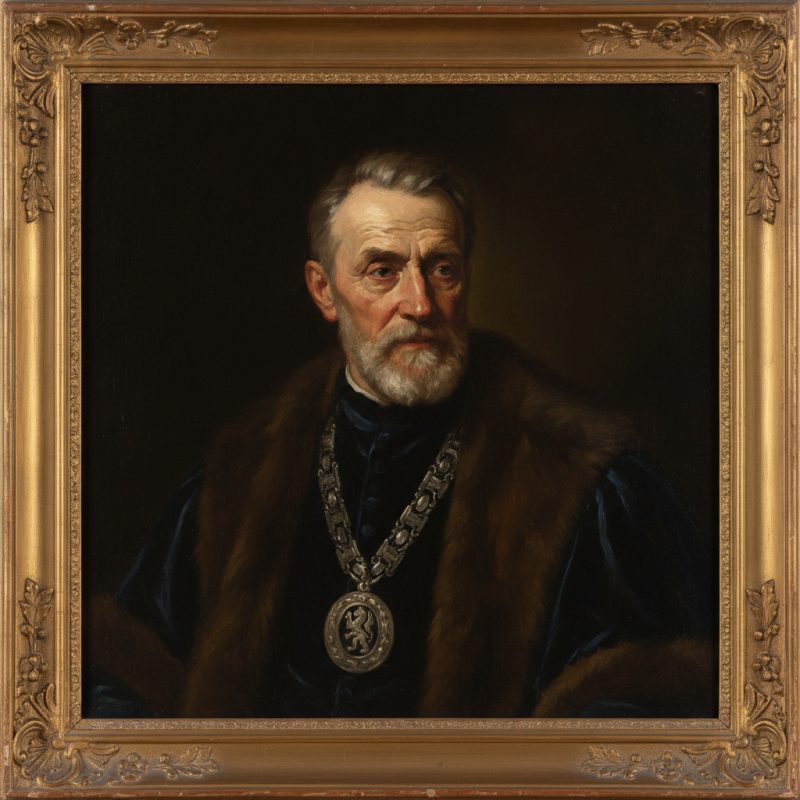
Chamberlain Iorgu
He arranges the king's audiences and, for a small courtesy, the order in which petitions are read.
1.77 m tall · grey eyes · brown hair · right-handed
-
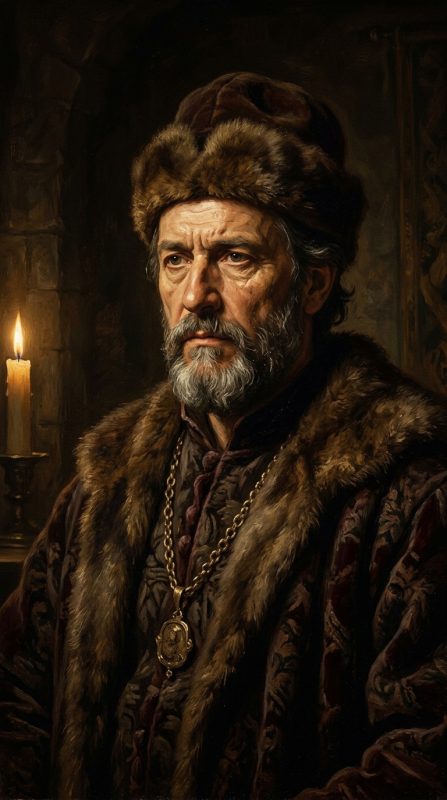
Ban Radu the Silent
He has never uttered a needless word in his life. Sadly, nor a useful one for investigators.
1.81 m tall · grey eyes · grey hair · right-handed
-
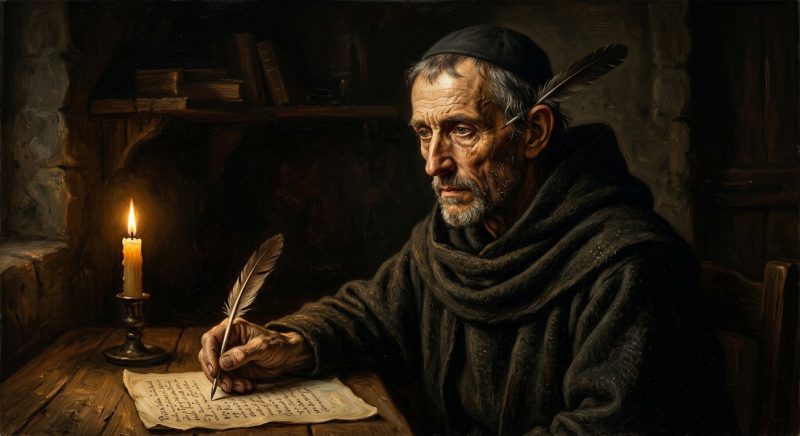
Teofil the Chronicler
He writes the kingdom's history as he is ordered. The unwelcome drafts, however, he keeps every one.
1.69 m tall · brown eyes · greying hair · left-handed
-
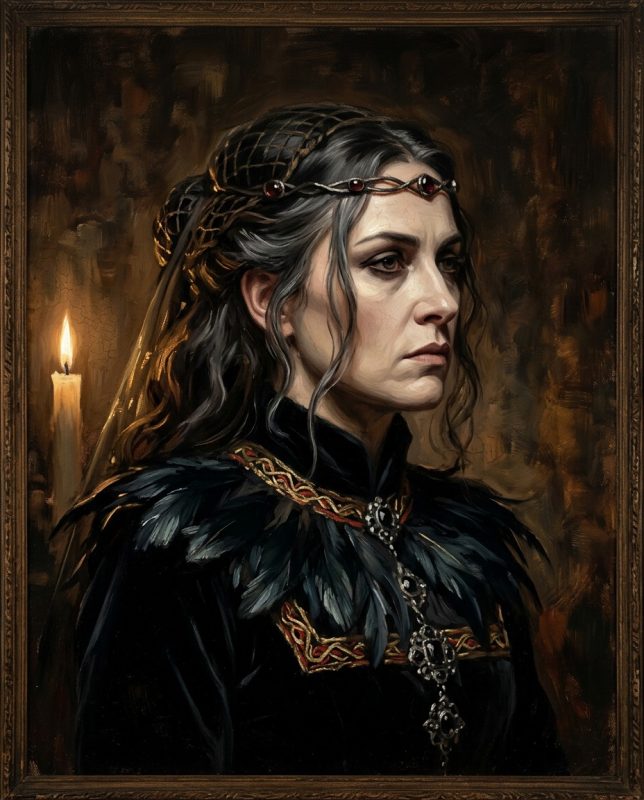
Duchess Amara de Corvin
Widowed three times, heir on each occasion. Her smile has buried more nobles than the plague.
1.68 m tall · dark eyes · black hair · right-handed
-
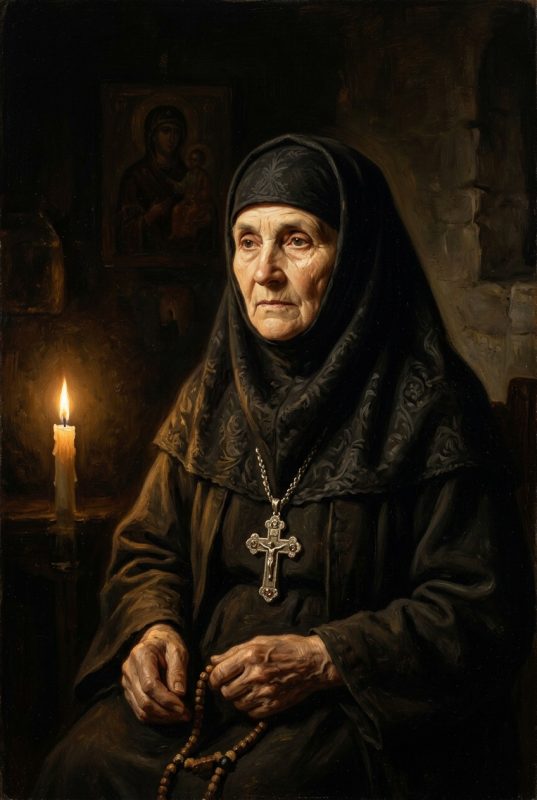
Mother Evghenia
She runs the abbey with an iron hand and a golden pen. The register of donations has pages she shows no one.
1.60 m tall · dark eyes · black hair · right-handed
Locations
-
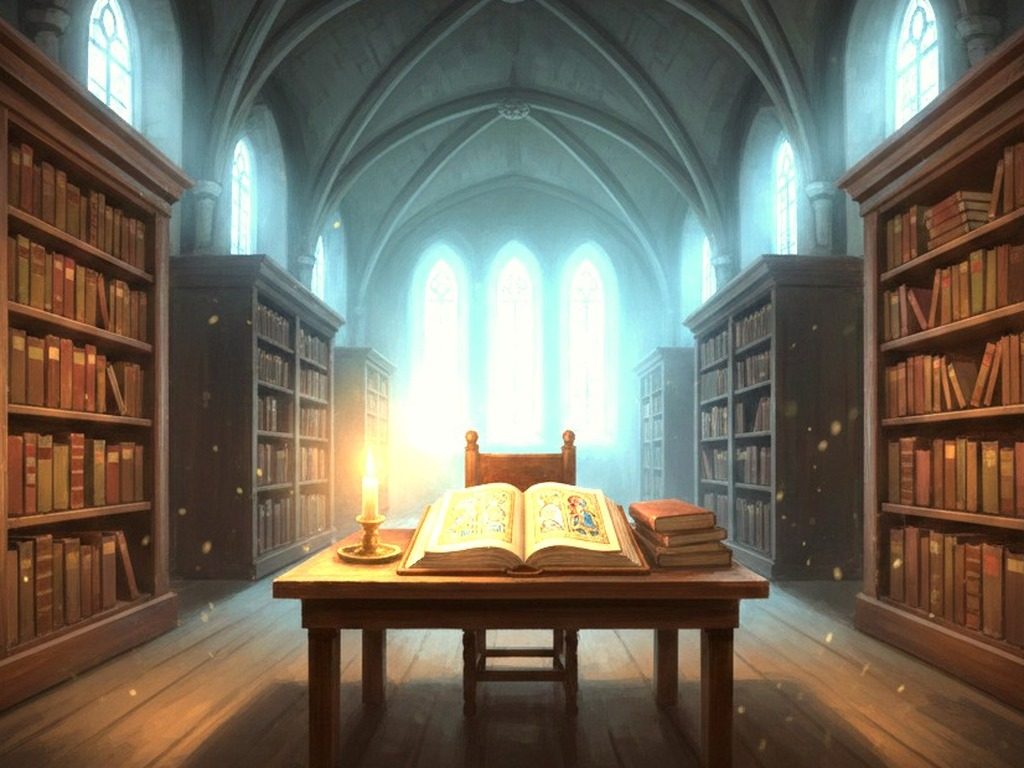
The abbey library
Thousands of leather-bound tomes. Some of the chains on the shelves were cut recently.
-

The Golden Boar inn
Wine watered down and rumours diluted with nothing. The rooms upstairs ask no questions.
-

The scriptorium
Slanted desks, ink, and working silence. Here a quill creaks louder than a conscience.
-

The guild forge
Anvils, tongs, and a fire that never goes out. Many small metal things vanish here.
-
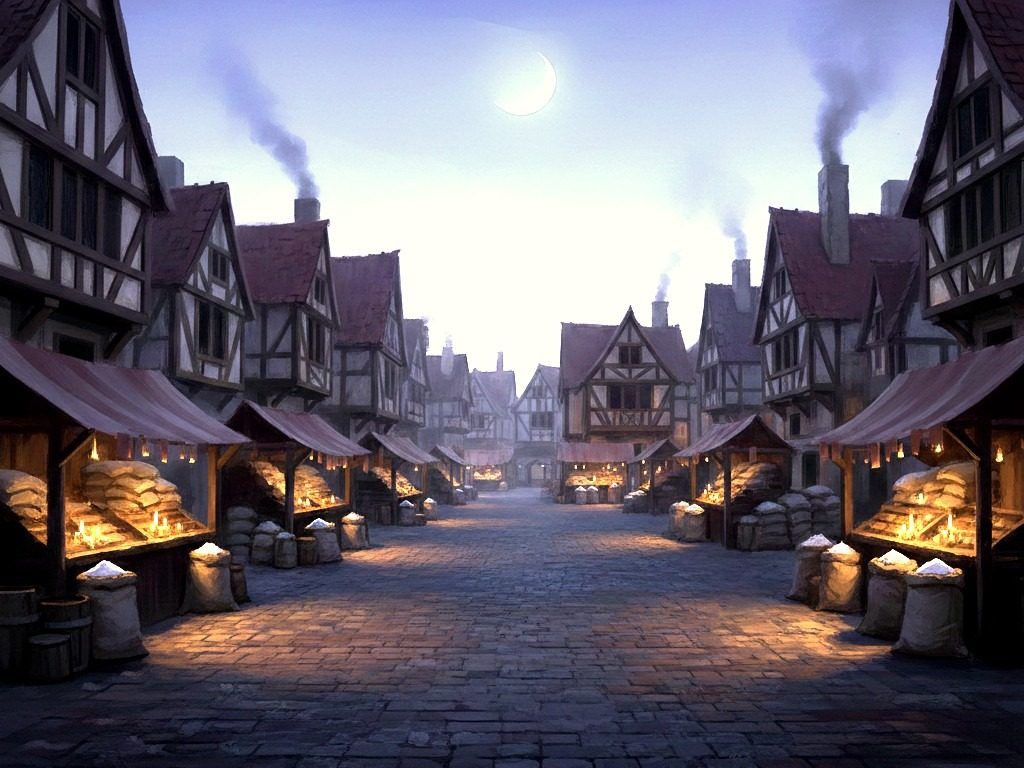
The salt market
Here anything is bargained for, from salt to silences. The price of silence keeps rising.
Objects
-

The small wine cask
Arin wine, the good year. The bung was pulled and put back by an unskilled hand.
-
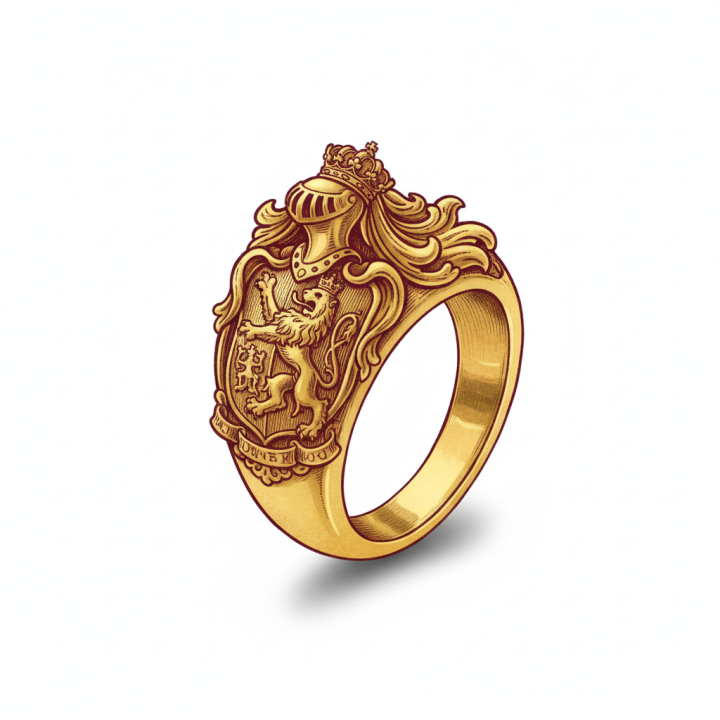
The signet ring
The crest has been filed away almost completely. Almost.
-
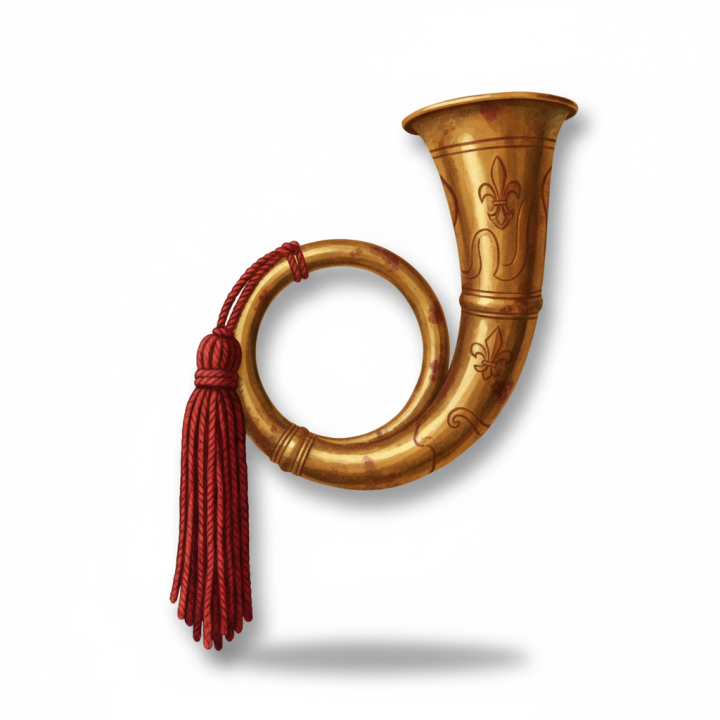
The herald's horn
It sounds the muster, the alarm, or the retreat. Whoever holds it can start a whole panic with a single breath.
-
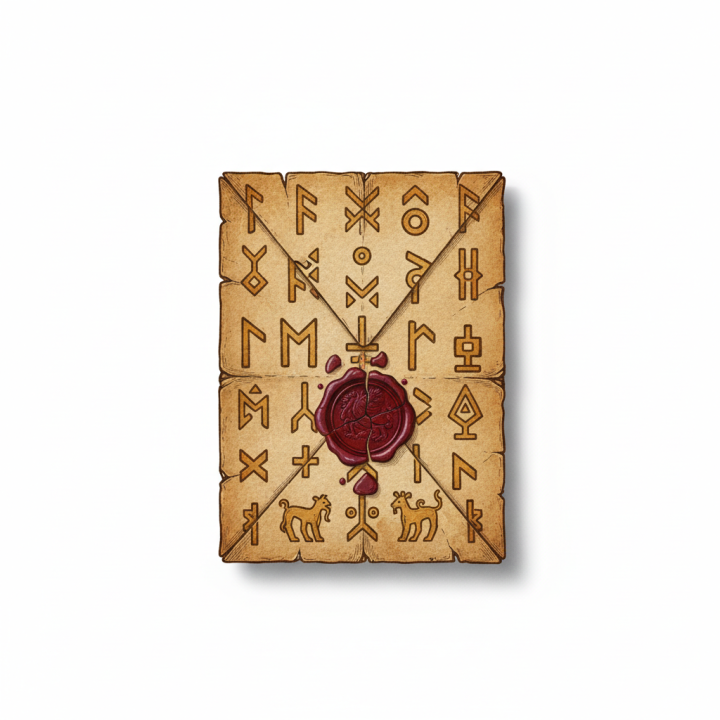
The ciphered letter
Orderly rows of meaningless signs. The ink is costly, the paper costlier, the sender - unknown.
-
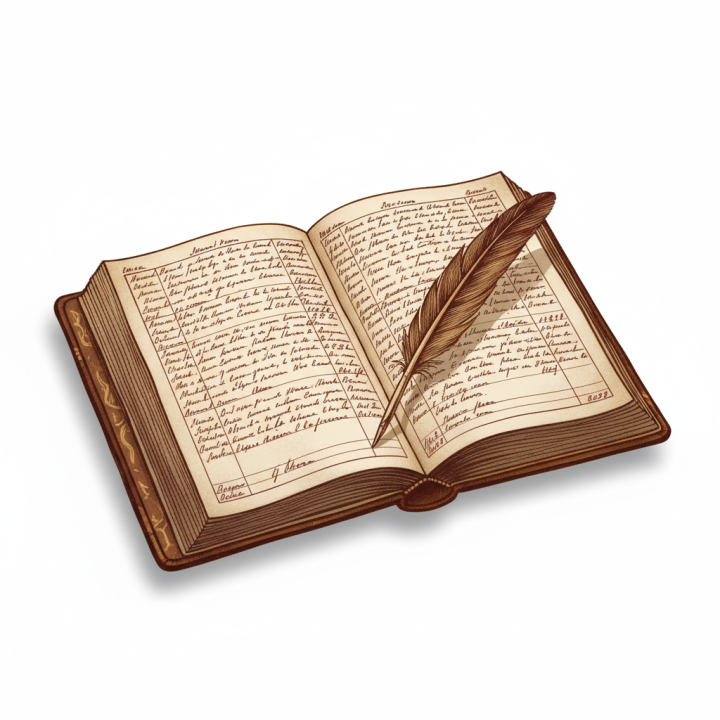
The ledger of accounts
Neat columns of figures, with one page torn out exactly at mid-month.
Motives
-

A debt of honour
O făgăduială care cântărește mai greu decât viața.
-

Revenge
O datorie de sânge pe care numai fapta o mai șterge.
-

Ambition
Setea de a urca, chiar peste trupuri, spre o treaptă mai înaltă.
-
Fear of exposure
Groaza de a fi dat în vileag, care împinge la orice.
-

Jealousy
Otrava care mistuie pe cel ce râvnește ce nu-i al lui.
The pages of the file
This much was worked with, no more and no less. Minimality is not a figure of speech: each row was taken out in turn, at trial, and without it the solution ceased to be unique.
- Every scout reports the same about the culprit: the culprit was in the place where anything is bargained for.
- The chronicler notes drily: the Golden Boar inn and revenge go together, whatever the court may say.
- In the Chancellery's ledger it stands in black and white: the small wine cask and ambition go together.
- Ban Radu the Silent declares under oath: "I was at the Golden Boar inn".
- A maid whispered it at confession: Duchess Amara de Corvin handled the ledger of accounts.
- The hounds caught no scent at all: the shortest suspect never touched the ciphered letter.
- An honest-faced witness saw it plainly: Teofil the Chronicler handled the herald's horn.
- The chancellor deduced it coldly: if Ban Radu the Silent was at the salt market, then Duchess Amara de Corvin was at the scriptorium.
- An honest-faced witness saw it plainly: the left-handed suspect was in the place with thousands of leather-bound tomes.
- A maid whispered it at confession: Teofil the Chronicler was driven by jealousy.
- However it may seem, at suspects, the salt market and the small wine cask take different roads.
- At the Chancellery, Mother Evghenia maintains: "I was driven by revenge".
- The chronicler notes drily: the ciphered letter and a debt of honour go together, whatever the court may say.
Reveal the Chancellery's reasoning — warning: past this line, the mystery ends
How the circle closed
The investigator guessed at nothing. Each finding went to its place in the grid, each testimony passed through the sieve of the Supreme Law, and elimination did the rest.
A piece of information dearly bought showed its worth: “Every scout reports the same about the culprit: the culprit was in the place where anything is bargained for”. The line names nobody, but it binds the culprit to a fact — and every suspect who cannot carry it leaves the circle.
A note in the margin of the page read: “The chronicler notes drily: the Golden Boar inn and revenge go together, whatever the court may say”. A certain match thus enters the grid, and its row and column empty at once of every other possibility.
The Chancellery began with what could be verified: “In the Chancellery's ledger it stands in black and white: the small wine cask and ambition go together”. A pair was tied, and the knot dragged a whole handful of impossibilities after it.
The pages gathered fast, and each cut a strip out of the grid: “Ban Radu the Silent declares under oath: "I was at the Golden Boar inn"”; “A maid whispered it at confession: Duchess Amara de Corvin handled the ledger of accounts”; “The hounds caught no scent at all: the shortest suspect never touched the ciphered letter”; “An honest-faced witness saw it plainly: Teofil the Chronicler handled the herald's horn”; “The chancellor deduced it coldly: if Ban Radu the Silent was at the salt market, then Duchess Amara de Corvin was at the scriptorium”; “An honest-faced witness saw it plainly: the left-handed suspect was in the place with thousands of leather-bound tomes”; “A maid whispered it at confession: Teofil the Chronicler was driven by jealousy”; “However it may seem, at suspects, the salt market and the small wine cask take different roads”. The investigation needed nothing further; what remained read itself.
From one word to the next, the investigation arrived here: “At the Chancellery, Mother Evghenia maintains: "I was driven by revenge"”. The testimony was set aside on the scales: if the speaker is innocent it is true; if not, it is precisely the reverse.
The archivist underlined the following line with his nail: “The chronicler notes drily: the ciphered letter and a debt of honour go together, whatever the court may say”. The cell filled, and around it a space opened: that is what a certain match does to a grid.
The lying testimony
One word was enough. Ban Radu the Silent swore before the Chancellery that I was at the Golden Boar inn — and that alone would not sit with the rest of the file. The truth, drawn out of the other rows, runs thus: Ban Radu the Silent never set foot in the Golden Boar inn. Whoever lies, under the Supreme Law, gives themselves away.
The Chancellery's verdict
After every cut, one possible suspect was left in the file: Ban Radu the Silent. At the hour of the deed, Ban Radu the Silent was at the salt market, handled the ciphered letter and was driven by a debt of honour. It was reached only by driving each supposition to its absurd end — a tier III dossier, and rightly so.
The acquittal of the rest
The others found their acquittal in the grid as well: Chamberlain Iorgu was at the guild forge, handled the small wine cask and was driven by ambition; Teofil the Chronicler was at the abbey library, handled the herald's horn and was driven by jealousy; Duchess Amara de Corvin was at the scriptorium, handled the ledger of accounts and was driven by fear of exposure; Mother Evghenia was at the Golden Boar inn, handled the signet ring and was driven by revenge. Not one of the rows above is spare — remove it and the grid opens again.
That is how a dossier closes: not with a well-contrived suspicion, but with the only arrangement the grid still allowed. The Chancellery needed no confession — it needed only logic.
Play this dossier All mysteries
Everything you read above rests on the dossier itself. The Chancellery's solver checked, at publication, that the given clues yield exactly one solution — no more, and not none. behind the scenes at the Chancellery.