
Chronicle of the solution: The Riddle of Winter
Forged decree Tier III
The file on the forged decree is closed; what remains is the reasoning, which deserves keeping rather more than the deed.
What the file said when it was opened
The scribes swear they never wrote it, the seal looks true, and yet the decree is false from its first line. Until the hand that pressed the seal is found, every written order stands in doubt. Suspicion has fallen on Chamberlain Iorgu, Luca the Squire, Damaschin the Healer, Manole the Jeweller and Zaharia the Spice Merchant — and until the proof is plain, none of these names leaves the room. As for the impulse behind it, the court whispers of everything: ambition, revenge, a debt of honour, greed and blackmail. A sharp eye is not enough here — it takes an archivist's patience: fit everything together, then pronounce your verdict.
The dossier opened with Chamberlain Iorgu, Luca the Squire, Damaschin the Healer, Manole the Jeweller and Zaharia the Spice Merchant — a short list, as the Chancellery likes them, because short means it can be finished.
The suspects
-
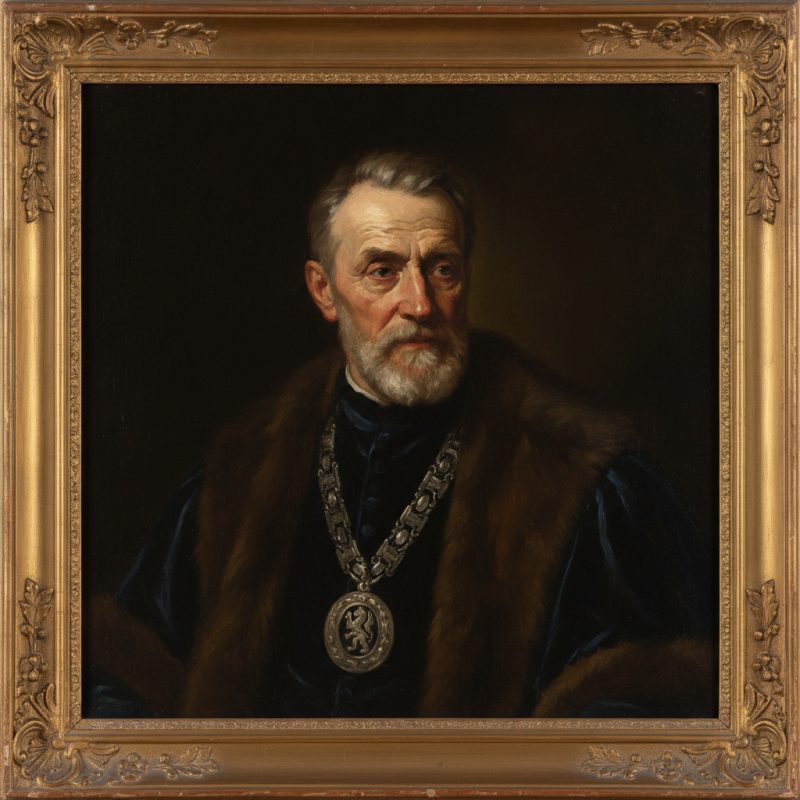
Chamberlain Iorgu
He arranges the king's audiences and, for a small courtesy, the order in which petitions are read.
1.77 m tall · grey eyes · brown hair · right-handed
-

Luca the Squire
He polishes the knight's armour and dreams of a sword of his own. For a coat of arms he would do almost anything.
1.72 m tall · green eyes · brown hair · right-handed
-
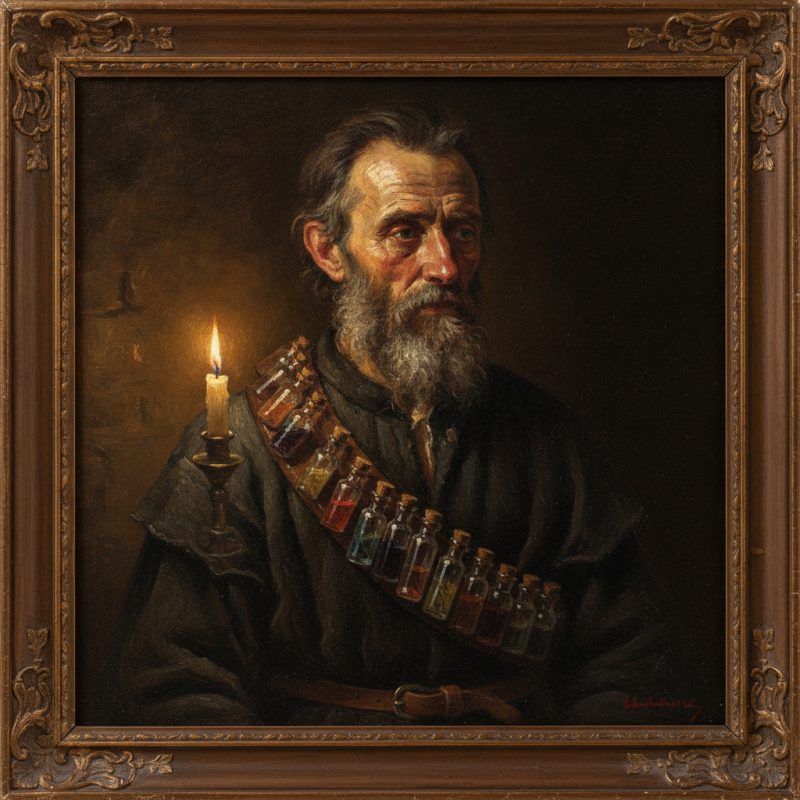
Damaschin the Healer
He knows the cure for any illness and the dose at which the cure becomes something else. He swears he has never mistaken the dosage.
1.71 m tall · green eyes · grey hair · left-handed
-
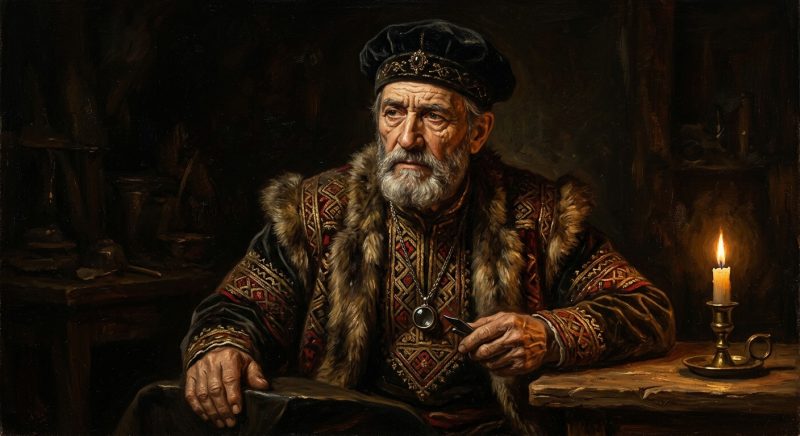
Manole the Jeweller
He tells gold from gilt at a glance. With people, he admits, it takes him two.
1.69 m tall · brown eyes · brown hair · right-handed
-

Zaharia the Spice Merchant
His ships bring pepper, saffron, and news no one asked for. All of it at the same price: steep.
1.74 m tall · dark eyes · black hair · right-handed
Locations
-
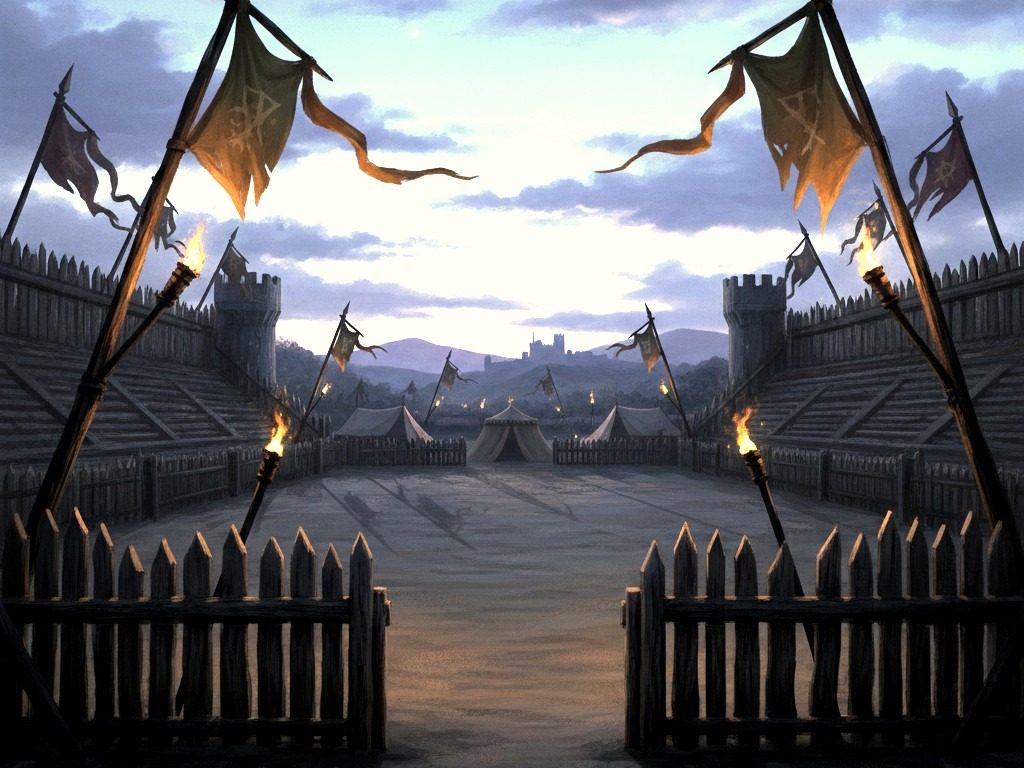
The tourney field
Empty stands outside festival days. An excellent place for meetings that never happened.
-

The watchtower
The highest point of the fortress. From here you see everything - and from below, everyone sees who climbs up.
-
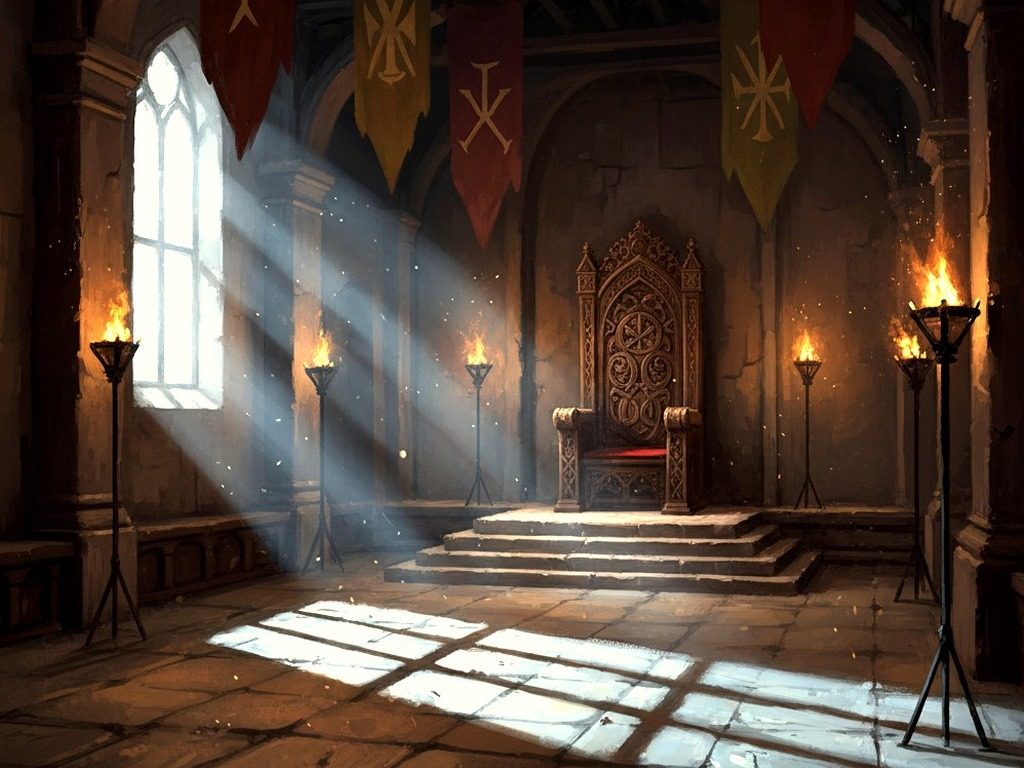
The throne room
Gold, purple, and the most closely watched place in the kingdom. In theory.
-

The guild forge
Anvils, tongs, and a fire that never goes out. Many small metal things vanish here.
-

The old dungeon
Cells abandoned since the new dungeon was built. "Abandoned" is one way of putting it.
Objects
-
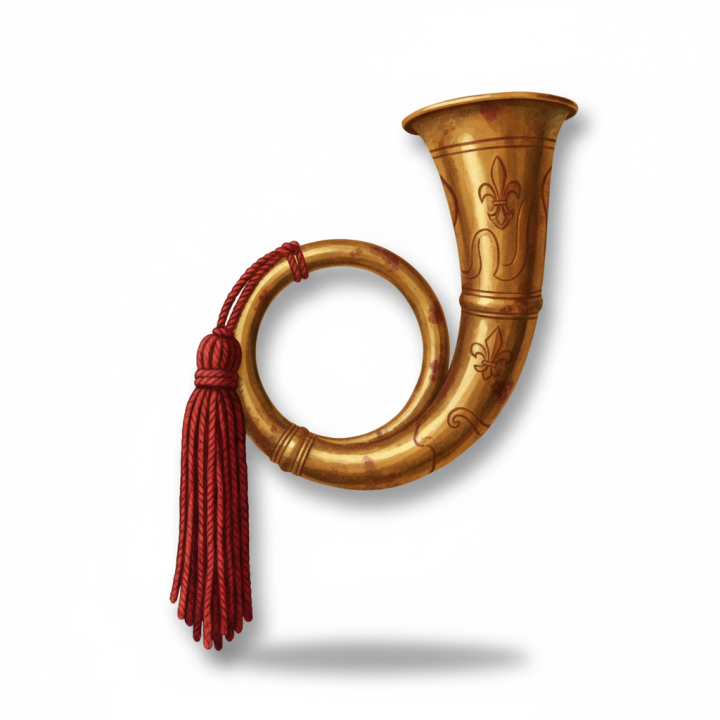
The herald's horn
It sounds the muster, the alarm, or the retreat. Whoever holds it can start a whole panic with a single breath.
-
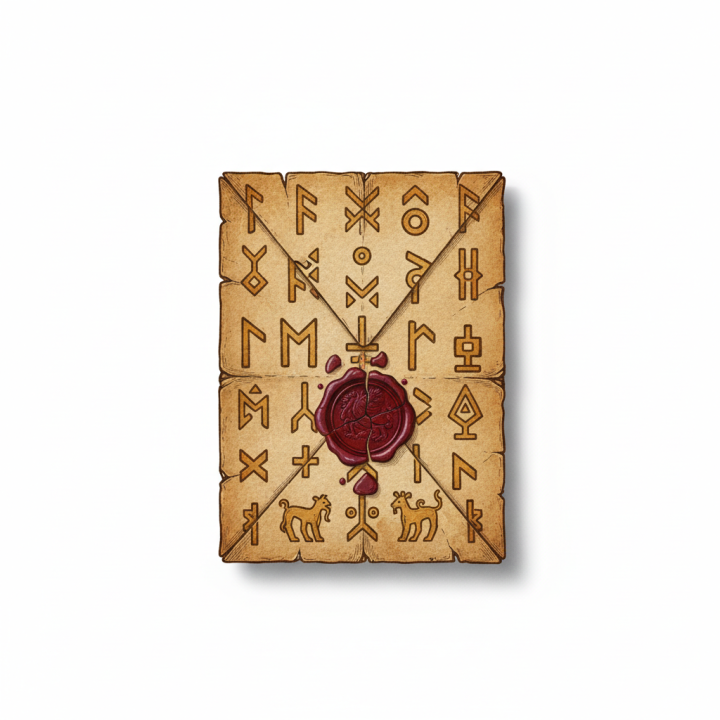
The ciphered letter
Orderly rows of meaningless signs. The ink is costly, the paper costlier, the sender - unknown.
-
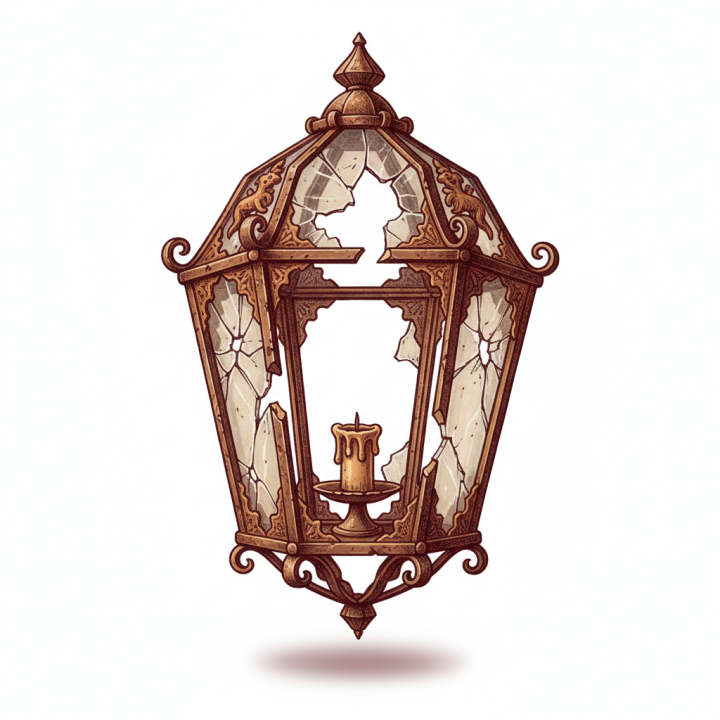
The broken lantern
The glass cracked, the wick burned to the end. Someone needed a lot of light, fast.
-

The abbess's bell
It calls the nuns to prayer. On the night in question, they all say, it rang once too many.
-
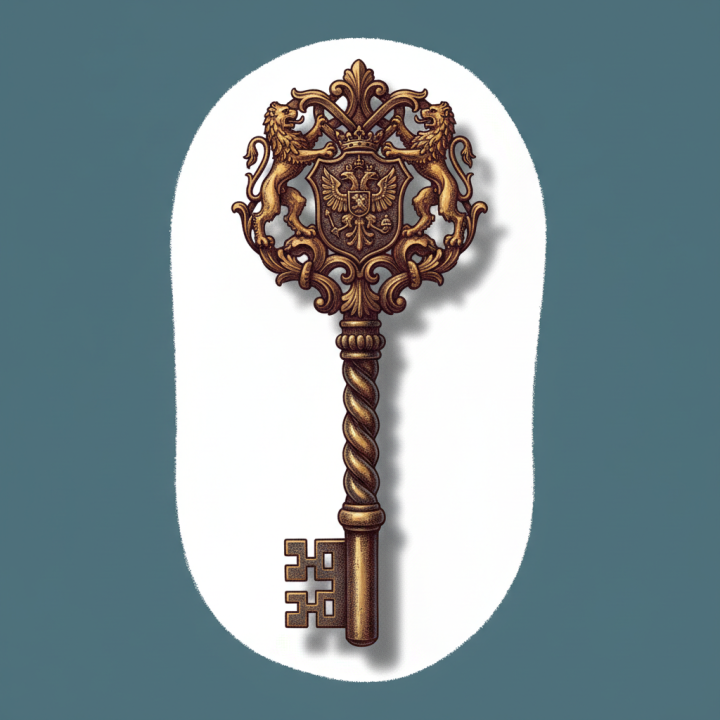
The bronze key
Heavy, old, its teeth worn smooth. No one knows what door it opens anymore - or so they say.
Motives
-
Ambition
Setea de a urca, chiar peste trupuri, spre o treaptă mai înaltă.
-
Revenge
O datorie de sânge pe care numai fapta o mai șterge.
-
A debt of honour
O făgăduială care cântărește mai greu decât viața.
-

Greed
Dorința nesățioasă de avere, care nu se oprește la nimic.
-
Blackmail
Un secret ținut ca funia la gât, strâns exact cât trebuie.
Moments
-

At dawn
When the citadel is barely waking and the guards still doze.
-

After matins
The hour after the morning service, when the abbey empties.
-

At noon
Midday, with bustle in the markets and silence in the alcoves.
-

At dusk
When the shadows lengthen and the lanterns are not yet lit.
-

At vespers
At the evening service, when the bells drown out any footstep.
The pages of the file
This much was worked with, no more and no less. Minimality is not a figure of speech: each row was taken out in turn, at trial, and without it the solution ceased to be unique.
- Damaschin the Healer raises their right hand and says: "I was at the old dungeon".
- Two witnesses, upon their crest: Chamberlain Iorgu was not driven by ambition.
- Whatever the market gossips: the ciphered letter does not match that hour: at noon.
- The gate guard swears: Chamberlain Iorgu was there at dusk.
- The traces left at the scene show it plainly: the culprit handled the ciphered letter.
- The tracks in the dust do not lie: the guild forge and blackmail go together.
- The gate guard swears: the broken lantern and ambition go together.
- The tracks in the dust do not lie: a debt of honour matches that hour: at vespers.
- The chronicler notes drily: Luca the Squire was at the watchtower, whatever the court may say.
- The chronicler notes drily: the shortest suspect was at the tourney field, whatever the court may say.
- The tracks in the dust do not lie: the ciphered letter and greed go together.
- Even the jester says it in earnest: the old dungeon does not match that hour: after matins.
- Luca the Squire raises their right hand and says: "I was driven by a debt of honour".
- A maid whispered it at confession: the throne room and the broken lantern go together.
- The customs register is clear: Chamberlain Iorgu never touched the bronze key.
- An honest-faced witness saw it plainly: the herald's horn matches that hour: after matins.
Open the full reasoning — open only if you have already tried the dossier
How it was unravelled
No suspicion weighed here. Only the grid weighed: every certain match sweeps a whole row and a whole column, and at the end one arrangement alone remains possible.
The scouts brought their share as well: “Damaschin the Healer raises their right hand and says: "I was at the old dungeon"”. The Supreme Law asks you to try each suspect as the culprit and watch which hypothesis shatters. Here one shattered.
There followed a detail that narrowed the circle: “Two witnesses, upon their crest: Chamberlain Iorgu was not driven by ambition”. A cross in the grid seems little, but every cross brings the row nearer the moment when one cell alone is left free.
The Chancellery began with what could be verified: “Whatever the market gossips: the ciphered letter does not match that hour: at noon”. The cut named nobody, but it shortened the list of those who could still be named.
The rest of the file almost wrote itself, out of lines like these: “The gate guard swears: Chamberlain Iorgu was there at dusk”; “The traces left at the scene show it plainly: the culprit handled the ciphered letter”; “The tracks in the dust do not lie: the guild forge and blackmail go together”; “The gate guard swears: the broken lantern and ambition go together”; “The tracks in the dust do not lie: a debt of honour matches that hour: at vespers”; “The chronicler notes drily: Luca the Squire was at the watchtower, whatever the court may say”; “The chronicler notes drily: the shortest suspect was at the tourney field, whatever the court may say”; “The tracks in the dust do not lie: the ciphered letter and greed go together”; “Even the jester says it in earnest: the old dungeon does not match that hour: after matins”; “Luca the Squire raises their right hand and says: "I was driven by a debt of honour"”; “A maid whispered it at confession: the throne room and the broken lantern go together”. Each cut a strip out of the grid, and at the end of them the space remaining was the size of a name.
From one word to the next, the investigation arrived here: “The customs register is clear: Chamberlain Iorgu never touched the bronze key”. One more door closed. Investigations are not won on suspicions but on doors closed one at a time.
The Chancellery asked for one more check, and received it: “An honest-faced witness saw it plainly: the herald's horn matches that hour: after matins”. Two names bound themselves for good, and the binding undid, at a stroke, every pairing that contradicted it.
The word that would not fit
The lie came to light by its plain failure to fit. Luca the Squire swore before the Chancellery that I was driven by a debt of honour, yet everything that could be proved shows the opposite: Luca the Squire was not driven by a debt of honour. Under the Supreme Law that failure to fit is the culprit's own signature.
The Chancellery's verdict
At the end of the grid one name alone remained: Luca the Squire. At the hour in question, Luca the Squire was at the watchtower, handled the ciphered letter, was driven by greed and was there at dawn. It was reached only by driving each supposition to its absurd end — a tier III dossier, and rightly so.
Where the others were
The innocent were not left without a story; each had a place of their own: Chamberlain Iorgu was at the guild forge, handled the abbess's bell, was driven by blackmail and was there at dusk; Damaschin the Healer was at the old dungeon, handled the bronze key, was driven by a debt of honour and was there at vespers; Manole the Jeweller was at the tourney field, handled the herald's horn, was driven by revenge and was there after matins; Zaharia the Spice Merchant was at the throne room, handled the broken lantern, was driven by ambition and was there at noon. They look like rows of padding and they are not: the whole of the rest rests on them.
The page closes. What is left of the whole affair is a truth that can be demonstrated, and that is worth more than a confession.
Play this dossier All mysteries
The chronicles are written by the Enigmerra Chancellery out of the dossier's own logic: every step above is verified by the solver which proved, at publication, that the dossier has a unique solution. behind the scenes at the Chancellery.