
Chronicle of the solution: The Feud of the Feast
Conspiracy Tier III
The web was unpicked thread by thread, and the knot at its centre carries a name today. Here is how it was reached.
What the file said when it was opened
The whispers began in Realm of the Crown like thin smoke; now the smoke smells of conspiracy. The crown demands not only the name but the proof: suspicion without grounds is itself a tool of the scheme. On the Chancellery's list stand Chancellor Veniamin, Tintar the Jester, Sir Bogdan de Fag, Pantelimon the Gardener and Safta the Herbwife; one of these names covers a lie. As for the impulse behind it, the court whispers of everything: the inheritance, revenge, a debt of honour, blackmail and fear of exposure. Few files have tested so many investigators; untangle the threads, catch the lie, and pronounce your verdict.
Called to judgement were Chancellor Veniamin, Tintar the Jester, Sir Bogdan de Fag, Pantelimon the Gardener and Safta the Herbwife. Each had somewhere to begin a story; one alone had reason to change it.
The suspects
-
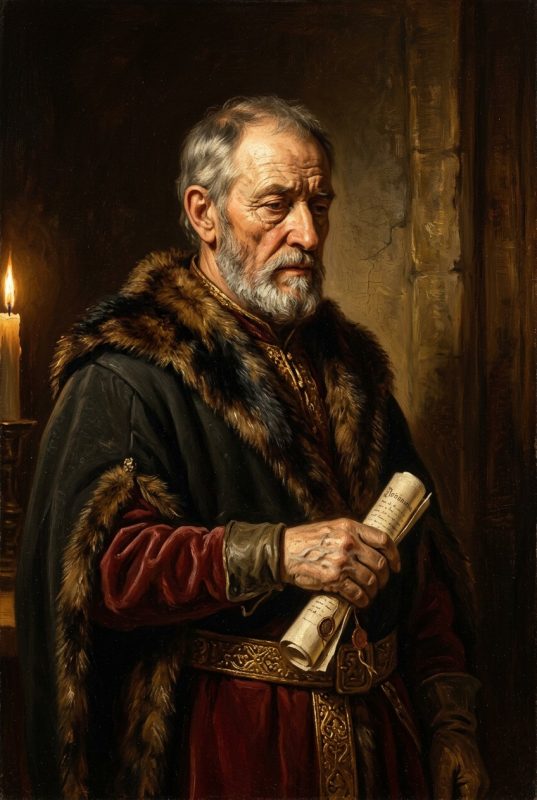
Chancellor Veniamin
Every charter of the kingdom passes through his hands. A comma he once moved started a war.
1.64 m tall · grey eyes · no hair · left-handed
-

Tintar the Jester
The only man in the kingdom who may tell the king the truth - provided he makes it sound like a joke.
1.56 m tall · green eyes · red hair · right-handed
-
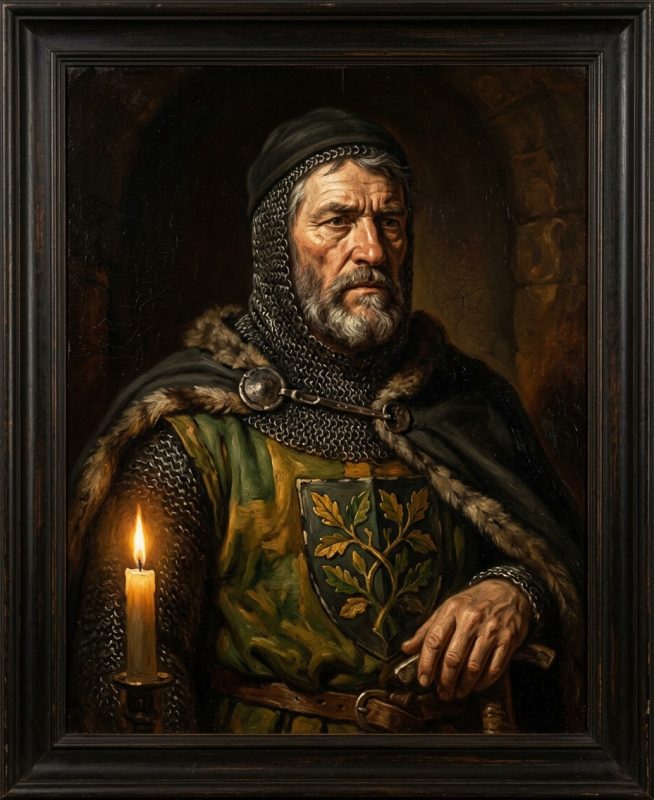
Sir Bogdan de Fag
He pawned his armour to pay his tavern debts. Honour, he says, does not rust.
1.85 m tall · blue eyes · brown hair · right-handed
-
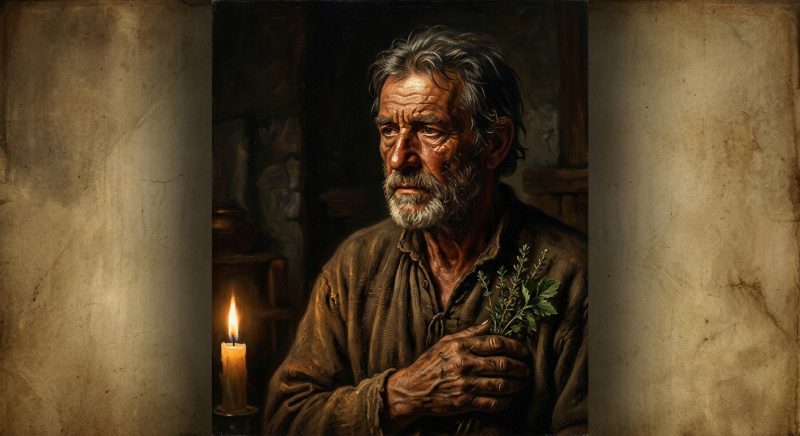
Pantelimon the Gardener
He tends the queen's roses and no one's beds of belladonna. The second garden is the more sought-after.
1.73 m tall · green eyes · greying hair · right-handed
-

Safta the Herbwife
She gathers herbs at hours when honest folk sleep. The herbs, she says, speak then.
1.58 m tall · green eyes · greying hair · right-handed
Locations
-

The wharf
Moored boats, wet ropes, and goods that prefer to arrive in the fog.
-

The scriptorium
Slanted desks, ink, and working silence. Here a quill creaks louder than a conscience.
-

The cathedral crypt
The old kings sleep beneath crested slabs. Now and then, someone disturbs their rest.
-
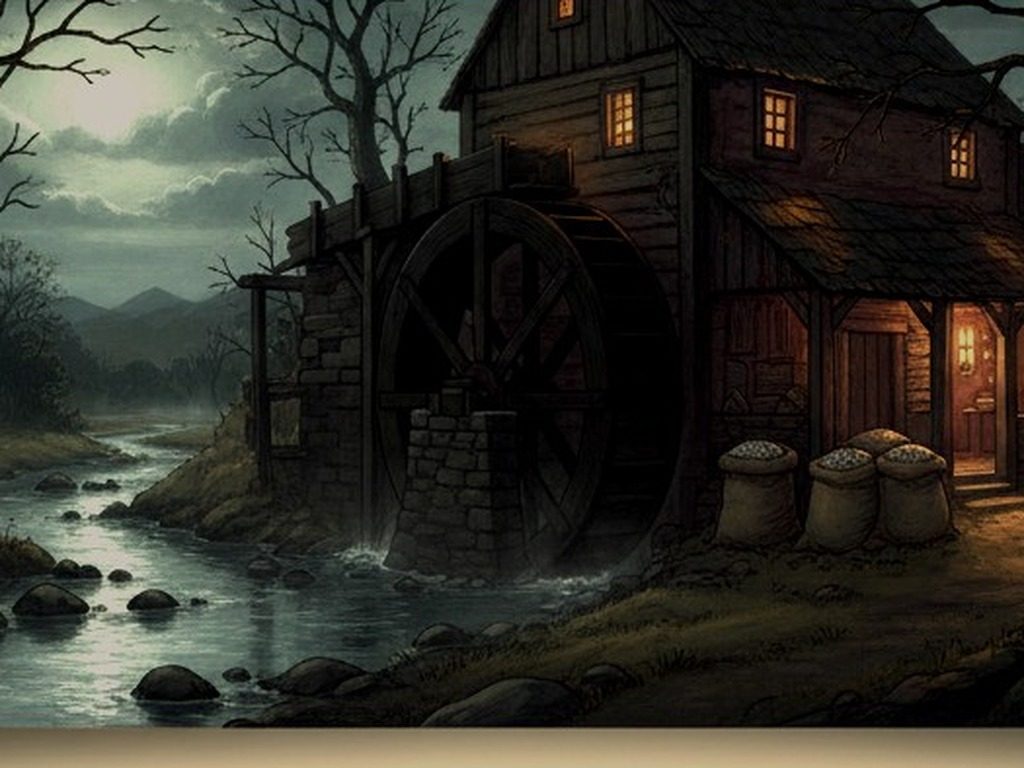
The mill by the river
The wheel turns day and night. Its noise drowns out any conversation - which is why some are held here.
-

The merchant's house
Carpets brought from overseas and a desk with more secret drawers than drawers.
Objects
-
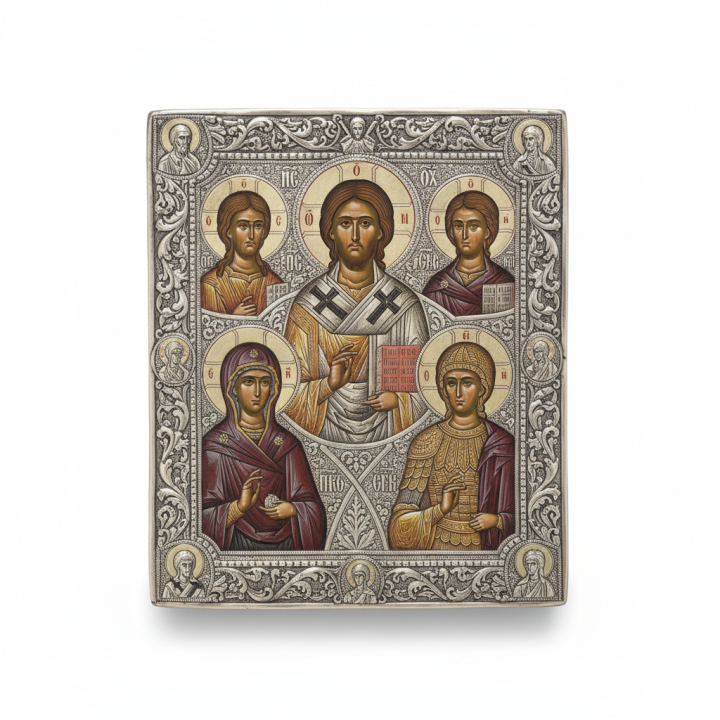
The silver-clad icon
The silver casing is old craftsmanship; the nails that hold it were driven this week.
-

The locked chest
Three padlocks, two rows of straps. Fresh scratches around the hinges, not the locks.
-
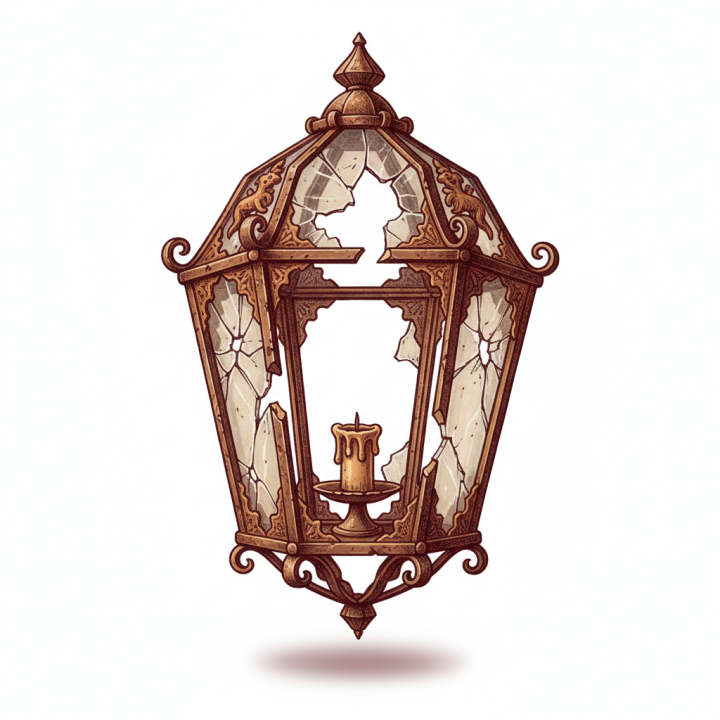
The broken lantern
The glass cracked, the wick burned to the end. Someone needed a lot of light, fast.
-

The royal seal
Whoever holds it can seal any decree. Which is why it should not be wandering the kingdom.
-
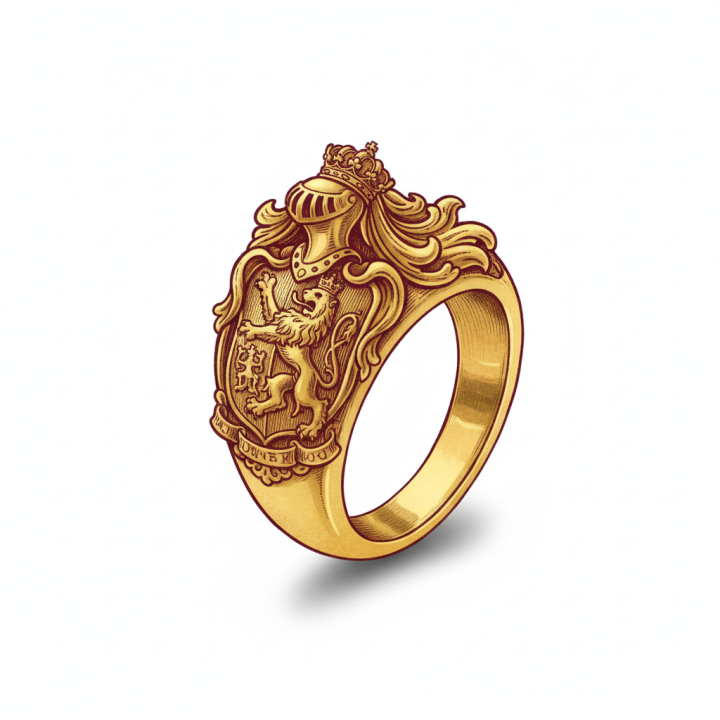
The signet ring
The crest has been filed away almost completely. Almost.
Motives
-

The inheritance
O avere așteptată, pe care numai o moarte o desparte de mână.
-

Revenge
O datorie de sânge pe care numai fapta o mai șterge.
-

A debt of honour
O făgăduială care cântărește mai greu decât viața.
-

Blackmail
Un secret ținut ca funia la gât, strâns exact cât trebuie.
-
Fear of exposure
Groaza de a fi dat în vileag, care împinge la orice.
The evidence gathered on file
Nothing is missing from the list and nothing is surplus. Every row below is necessary: without it, the grid would allow several solutions at once.
- The Chancellery checked twice: the wharf and the broken lantern do not go together.
- A maid whispered it at confession: the cathedral crypt and a debt of honour go together.
- The chancellor deduced it coldly: if Pantelimon the Gardener was driven by fear of exposure, then the tallest suspect handled the locked chest.
- The tracks in the dust do not lie: Tintar the Jester was at the wharf.
- Safta the Herbwife raises their right hand and says: "I was at the mill by the river".
- In the Chancellery's ledger it stands in black and white: the scriptorium and fear of exposure go together.
- An honest-faced witness saw it plainly: Safta the Herbwife handled the royal seal.
- The tracks in the dust do not lie: Pantelimon the Gardener was driven by fear of exposure.
- The chronicler notes drily: the signet ring and the inheritance go together, whatever the court may say.
- An honest-faced witness saw it plainly: the mill by the river and the inheritance go together.
- About the culprit, the Chancellery knows one thing for certain: the culprit was driven by blackmail.
Reveal the Chancellery's reasoning — the culprit's name is spoken from here on
How the circle closed
The road is always the same: findings first, because they do not lie; testimonies after, because one of them always does.
There followed a detail that narrowed the circle: “The Chancellery checked twice: the wharf and the broken lantern do not go together”. A cross in the grid seems little, but every cross brings the row nearer the moment when one cell alone is left free.
A witness of good faith cleared up one more corner: “A maid whispered it at confession: the cathedral crypt and a debt of honour go together”. Two names bound themselves for good, and the binding undid, at a stroke, every pairing that contradicted it.
The gate register had kept a trace of its own: “The chancellor deduced it coldly: if Pantelimon the Gardener was driven by fear of exposure, then the tallest suspect handled the locked chest”. The premise came true late, but when it did it closed at a stroke everything still open.
From here things gathered pace. Within a few hours the file received: “The tracks in the dust do not lie: Tintar the Jester was at the wharf”; “Safta the Herbwife raises their right hand and says: "I was at the mill by the river"”; “In the Chancellery's ledger it stands in black and white: the scriptorium and fear of exposure go together”; “An honest-faced witness saw it plainly: Safta the Herbwife handled the royal seal”; “The tracks in the dust do not lie: Pantelimon the Gardener was driven by fear of exposure”; “The chronicler notes drily: the signet ring and the inheritance go together, whatever the court may say”. Each closed a door, and by the last of them only one stood open.
A note in the margin of the page read: “An honest-faced witness saw it plainly: the mill by the river and the inheritance go together”. From then on that cell could no longer be disputed, and the dispute moved one row down.
The scouts brought their share as well: “About the culprit, the Chancellery knows one thing for certain: the culprit was driven by blackmail”. The fact stuck to the guilty party like a seal, and whoever did not bear the seal was left in peace.
The lying testimony
Here everything broke. Safta the Herbwife swore before the Chancellery that I was at the mill by the river — the one testimony in the whole file that will not sit with the rest of the grid. The truth, laid down by the other findings, is precisely the reverse: Safta the Herbwife never set foot in the mill by the river. Under the Supreme Law only the culprit lies, and whoever lies names themselves.
The close of the investigation
The verdict wrote itself — the culprit is Safta the Herbwife. When the deed took place, Safta the Herbwife was at the merchant's house, handled the royal seal and was driven by blackmail. Plain elimination was not enough here: every suspect had to be tried as the culprit until all hypotheses but one shattered. Hence the dossier stands at tier III.
Where the others were
And here is what had become of the others, in that same hour: Chancellor Veniamin was at the mill by the river, handled the signet ring and was driven by the inheritance; Tintar the Jester was at the wharf, handled the silver-clad icon and was driven by revenge; Sir Bogdan de Fag was at the cathedral crypt, handled the locked chest and was driven by a debt of honour; Pantelimon the Gardener was at the scriptorium, handled the broken lantern and was driven by fear of exposure. They look like rows of padding and they are not: the whole of the rest rests on them.
The truth did not surface in a flash of insight but out of a run of small cuts, every one of them checkable.
Play this dossier All mysteries
Everything you read above rests on the dossier itself. The Chancellery's solver checked, at publication, that the given clues yield exactly one solution — no more, and not none. behind the scenes at the Chancellery.