
Chronicle of the solution: The Spy of the Crown
Poisoning Tier II
The poison has found the hand that poured it, and the Chancellery sets down here, for the archive, the whole course of the investigation.
How the file came to the Chancellery
Something more bitter than gall found its way to the court's table today: poison. Whoever poured it knew the habits of the table; that narrows the circle more than we would like. Suspicion has fallen on Filip the Steward, Princess Smaranda, Manole the Jeweller and Sword-Bearer Dragos — and until the proof is plain, none of these names leaves the room. Rumor walks the deed through every corner: the cathedral crypt, the wharf, the watchtower and the scriptorium. Study the testimonies at your leisure, fit them into the grid, and pronounce your verdict without haste.
The dossier opened with Filip the Steward, Princess Smaranda, Manole the Jeweller and Sword-Bearer Dragos — a short list, as the Chancellery likes them, because short means it can be finished.
The suspects
-
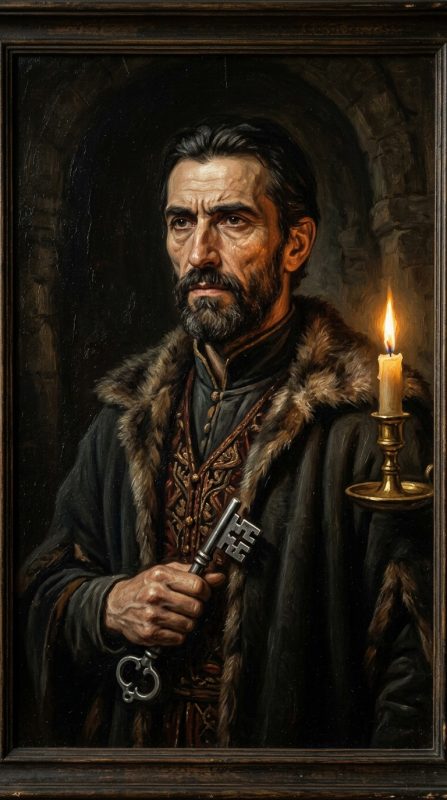
Filip the Steward
He counts the crown's silver every evening. On some evenings the count comes out different - and he says nothing.
1.79 m tall · grey eyes · chestnut hair · right-handed
-

Princess Smaranda
She has refused seven suitors and kept the gifts of all. She calls it practicality, not greed.
1.66 m tall · green eyes · chestnut hair · right-handed
-
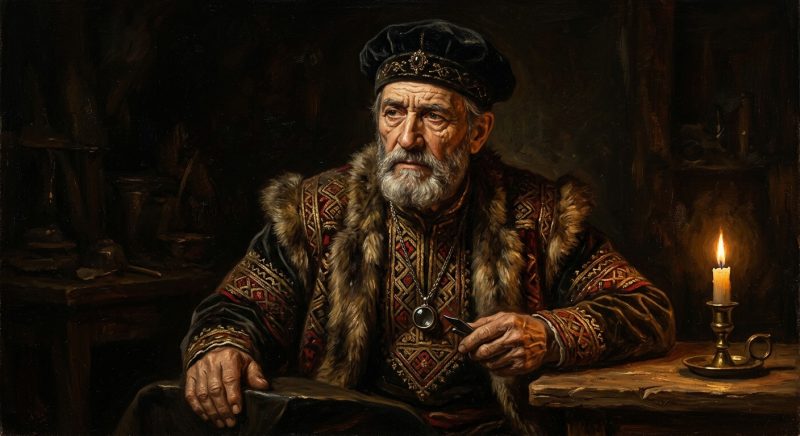
Manole the Jeweller
He tells gold from gilt at a glance. With people, he admits, it takes him two.
1.69 m tall · brown eyes · brown hair · right-handed
-
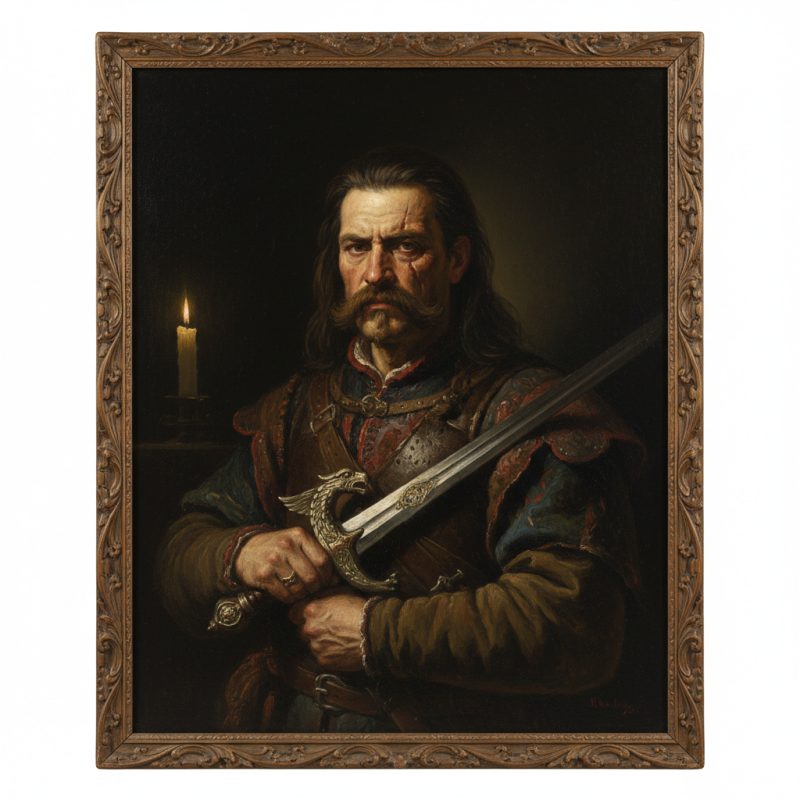
Sword-Bearer Dragos
He bears the king's ceremonial sword. At the tourney he has never lost; at dice, always.
1.86 m tall · brown eyes · chestnut hair · right-handed
Locations
-

The cathedral crypt
The old kings sleep beneath crested slabs. Now and then, someone disturbs their rest.
-

The wharf
Moored boats, wet ropes, and goods that prefer to arrive in the fog.
-

The watchtower
The highest point of the fortress. From here you see everything - and from below, everyone sees who climbs up.
-

The scriptorium
Slanted desks, ink, and working silence. Here a quill creaks louder than a conscience.
Objects
-
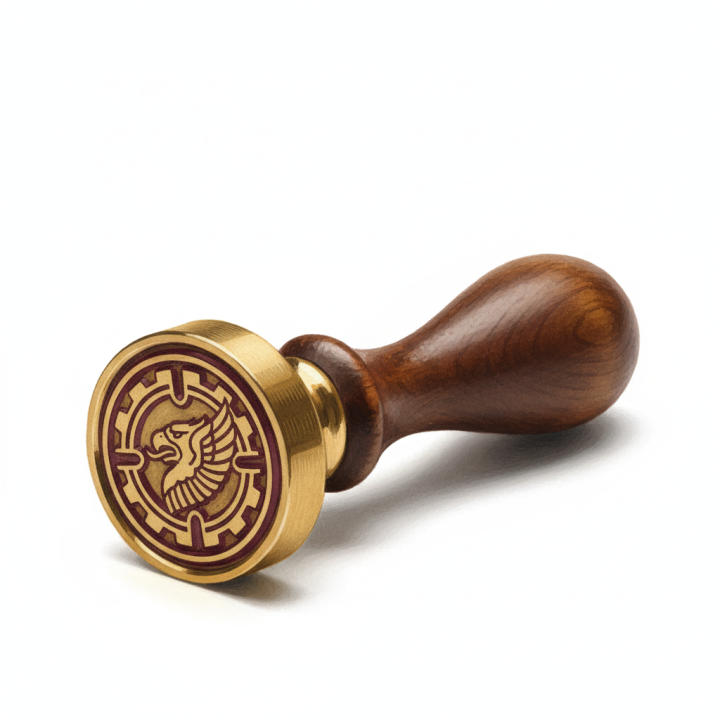
The guild seal
The stamp that turns any goods into goods "of certified quality." Worth a mine of gold.
-

The small wine cask
Arin wine, the good year. The bung was pulled and put back by an unskilled hand.
-

The royal seal
Whoever holds it can seal any decree. Which is why it should not be wandering the kingdom.
-
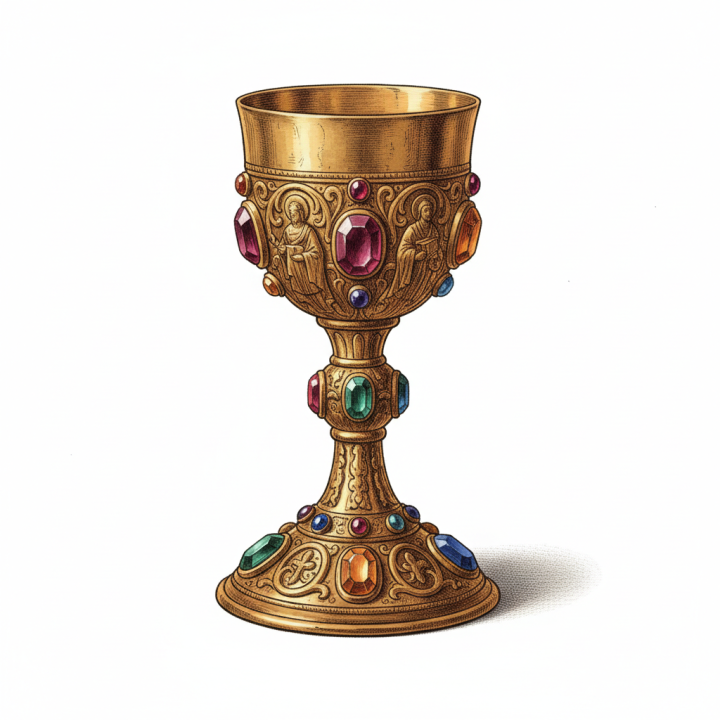
The bishop's chalice
Gold set with blue stones. Blessed three times, stolen twice.
Moments
-

At dawn
When the citadel is barely waking and the guards still doze.
-

After matins
The hour after the morning service, when the abbey empties.
-

At noon
Midday, with bustle in the markets and silence in the alcoves.
-

At dusk
When the shadows lengthen and the lanterns are not yet lit.
The pages of the file
Here is the whole file, as the investigator received it. Not one row is spare — it was checked by removing each in turn and watching the unique solution disappear.
- The gate guard swears: the small wine cask matches that hour: at noon.
- In the Chancellery's ledger it stands in black and white: the suspect with grey eyes was there after matins.
- In the Chancellery's ledger it stands in black and white: Sword-Bearer Dragos was at the wharf.
- The chronicler notes drily: the royal seal matches that hour: at dawn, whatever the court may say.
- A note in the margin of the ledger: if Filip the Steward handled the guild seal, then Filip the Steward never touched the guild seal.
- An honest-faced witness saw it plainly: the scriptorium and the guild seal go together.
- The gate guard swears: the suspect with green eyes handled the royal seal.
- The traces left at the scene show it plainly: the culprit handled the bishop's chalice.
- In the Chancellery's ledger it stands in black and white: the watchtower and the royal seal go together.
Read the unravelling, step by step — warning, the culprit is named beyond this point
The road to the verdict
The rule of the house is simple: what is observed enters the grid as it stands; what is declared enters only once it is settled who declared it.
The gate register had kept a trace of its own: “The gate guard swears: the small wine cask matches that hour: at noon”. Once the tick was placed, the investigation had nothing left to argue on that row and moved on.
The archivist underlined the following line with his nail: “In the Chancellery's ledger it stands in black and white: the suspect with grey eyes was there after matins”. The tick goes down without hesitation, and with it fall all the other cells on that row and that column.
A witness of good faith cleared up one more corner: “In the Chancellery's ledger it stands in black and white: Sword-Bearer Dragos was at the wharf”. The cell filled, and around it a space opened: that is what a certain match does to a grid.
From here things gathered pace. Within a few hours the file received: “The chronicler notes drily: the royal seal matches that hour: at dawn, whatever the court may say”; “A note in the margin of the ledger: if Filip the Steward handled the guild seal, then Filip the Steward never touched the guild seal”; “An honest-faced witness saw it plainly: the scriptorium and the guild seal go together”; “The gate guard swears: the suspect with green eyes handled the royal seal”. The investigation needed nothing further; what remained read itself.
The clerk read the next line aloud: “The traces left at the scene show it plainly: the culprit handled the bishop's chalice”. A fact fastened to the culprit, with no name attached: enough for all those the fact does not cover to fall.
The next line was the one that changed the reckoning: “In the Chancellery's ledger it stands in black and white: the watchtower and the royal seal go together”. A pair was tied, and the knot dragged a whole handful of impossibilities after it.
The seal on the file
The Chancellery pronounced its verdict without hesitation: the culprit is Filip the Steward. At the hour of the deed, Filip the Steward was at the cathedral crypt, handled the bishop's chalice and was there after matins. Nothing in this verdict rests on supposition: every row comes out of the grid.
The acquittal of the rest
The innocent were not left without a story; each had a place of their own: Princess Smaranda was at the watchtower, handled the royal seal and was there at dawn; Manole the Jeweller was at the scriptorium, handled the guild seal and was there at dusk; Sword-Bearer Dragos was at the wharf, handled the small wine cask and was there at noon. Not one of the rows above is spare — remove it and the grid opens again.
That is how a dossier closes: not with a well-contrived suspicion, but with the only arrangement the grid still allowed. The Chancellery needed no confession — it needed only logic.
Play this dossier All mysteries
Nothing in this chronicle is invented: the text rises out of the dossier's logic, and the dossier passed through the solver before publication, so that its solution is provably unique. behind the scenes at the Chancellery.