
Chronicle of the solution: The Knot of the Envoy
Disappearance Tier IV
What had been made invisible was found, and whoever hid it answers for it today. Here is the road there.
The dossier, on a first reading
Something — or someone — has vanished in Realm of the Crown, and no one can say when the thread was cut. Every passing hour erases another trace, and the traces were few to begin with. On the Chancellery's list stand Safta the Herbwife, Grigore the Cupbearer, Chancellor Veniamin, Mother Evghenia and Balasa the Seamstress; one of these names covers a lie. Rumor walks the deed through every corner: the scriptorium, the throne room, the old chapel, the customs cellar and the old dungeon. The threads were tangled on purpose: investigate, weigh every word, and pronounce your verdict only when the grid leaves no room for doubt.
The dossier opened with Safta the Herbwife, Grigore the Cupbearer, Chancellor Veniamin, Mother Evghenia and Balasa the Seamstress — a short list, as the Chancellery likes them, because short means it can be finished.
The suspects
-
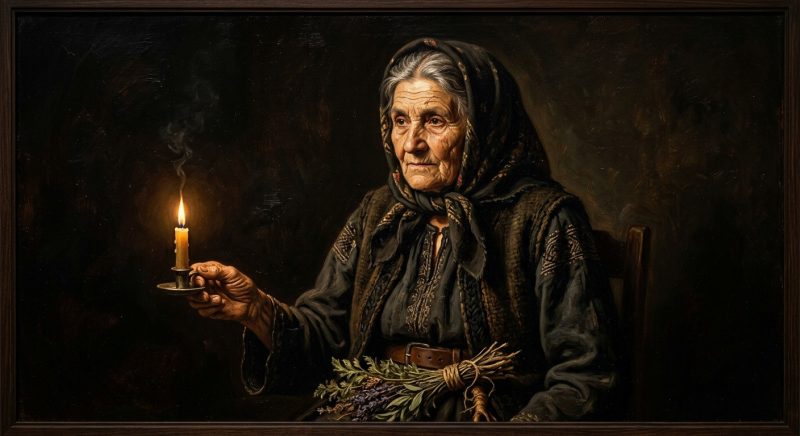
Safta the Herbwife
She gathers herbs at hours when honest folk sleep. The herbs, she says, speak then.
1.58 m tall · green eyes · greying hair · right-handed
-
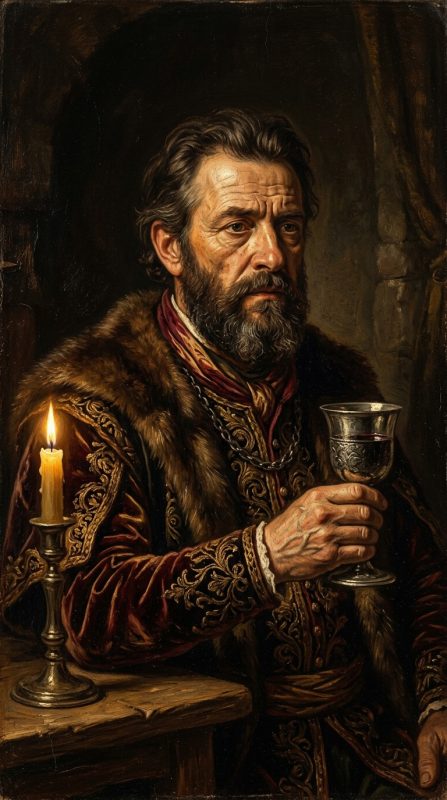
Grigore the Cupbearer
He tastes the king's wine before anyone else. A trade with a short future, he says, but a rich past.
1.70 m tall · brown eyes · chestnut hair · right-handed
-
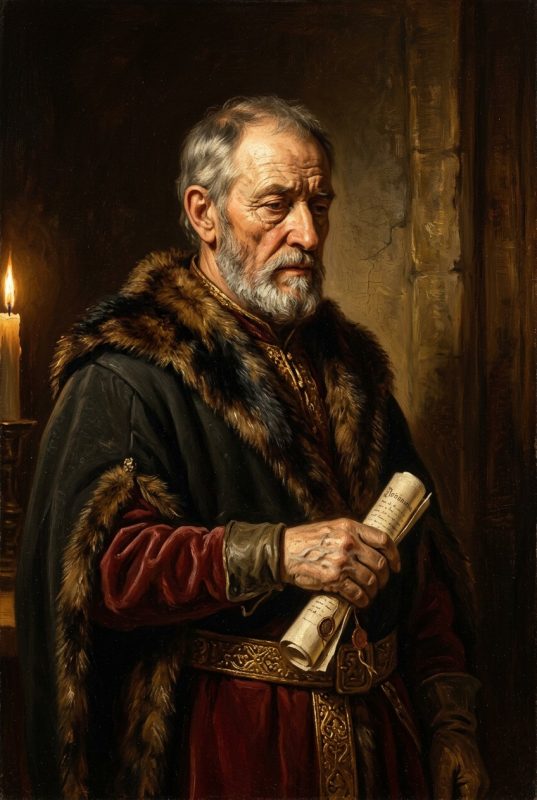
Chancellor Veniamin
Every charter of the kingdom passes through his hands. A comma he once moved started a war.
1.64 m tall · grey eyes · no hair · left-handed
-
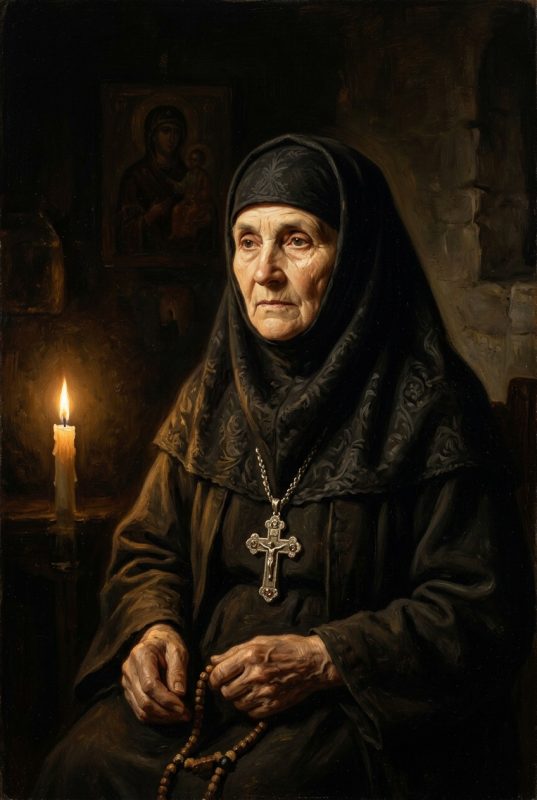
Mother Evghenia
She runs the abbey with an iron hand and a golden pen. The register of donations has pages she shows no one.
1.60 m tall · dark eyes · black hair · right-handed
-
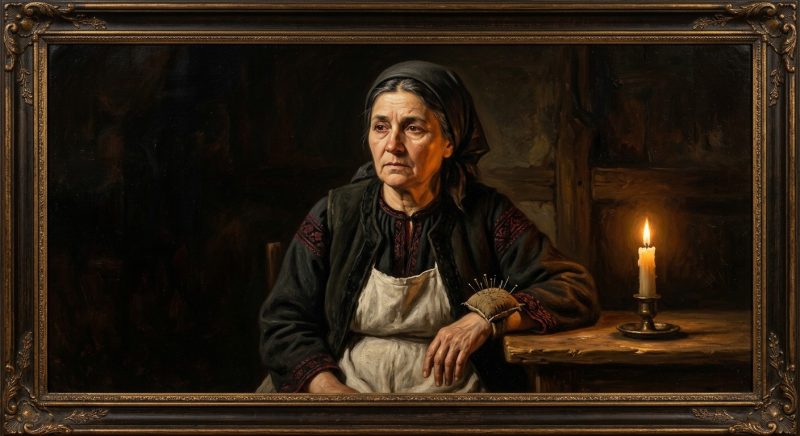
Balasa the Seamstress
She sews the garments of all the nobility and knows everyone's measurements - including those that do not show.
1.59 m tall · blue eyes · red hair · left-handed
Locations
-

The scriptorium
Slanted desks, ink, and working silence. Here a quill creaks louder than a conscience.
-
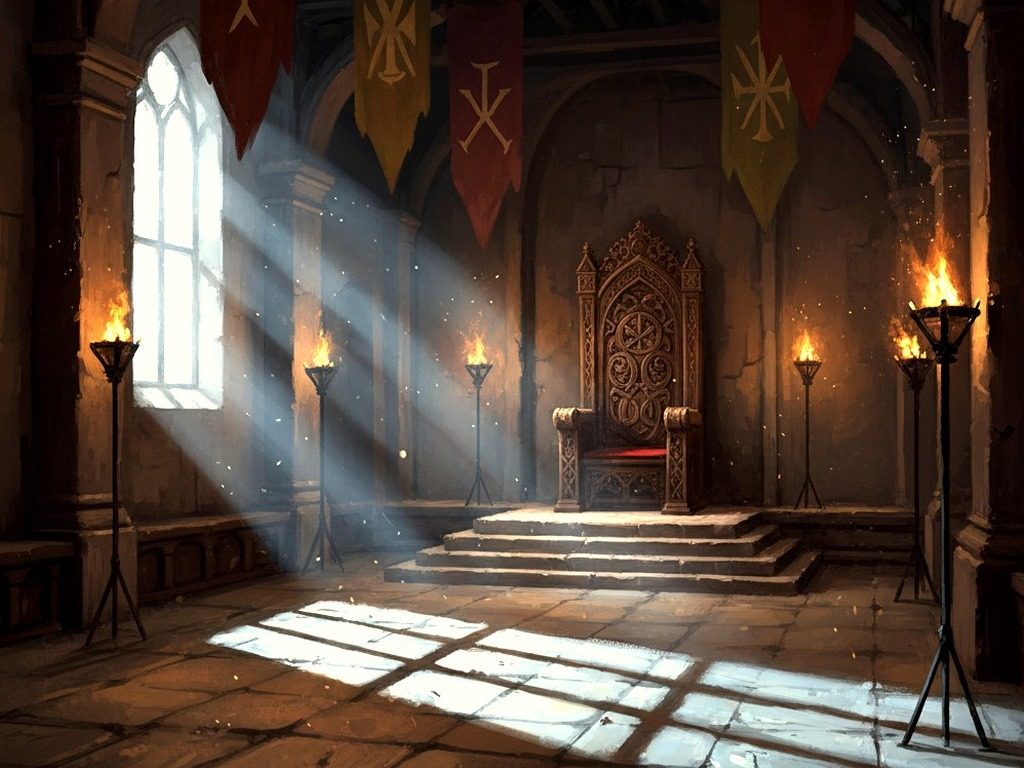
The throne room
Gold, purple, and the most closely watched place in the kingdom. In theory.
-
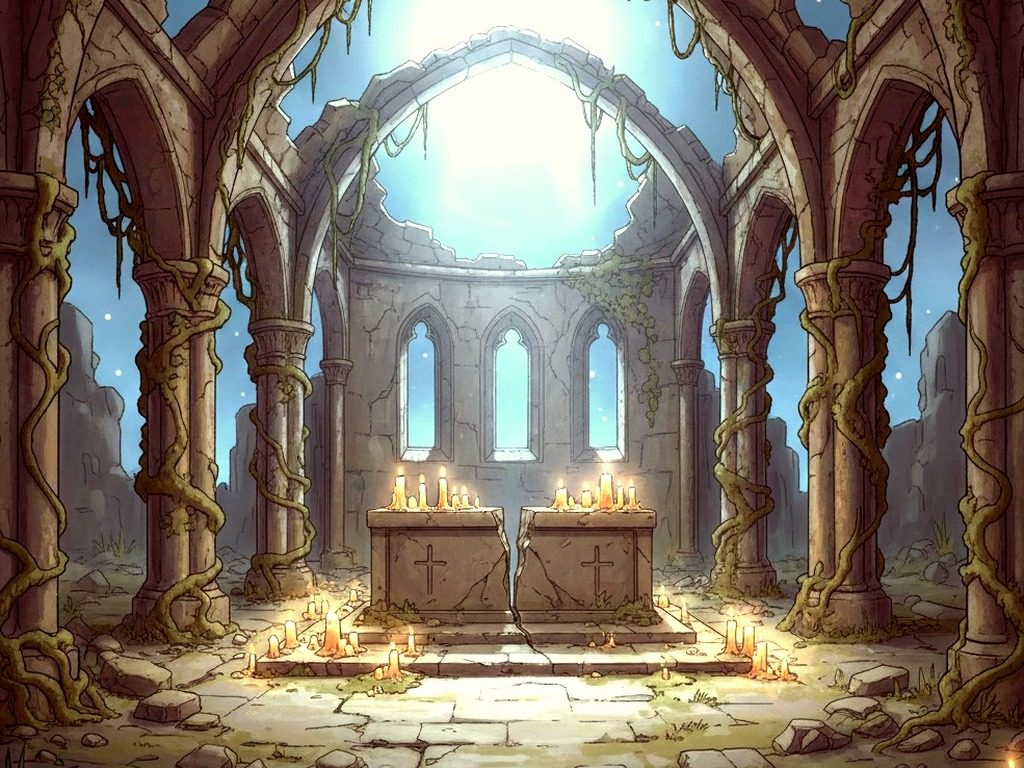
The old chapel
Candles, incense, and a silence in which every footstep echoes like a confession.
-
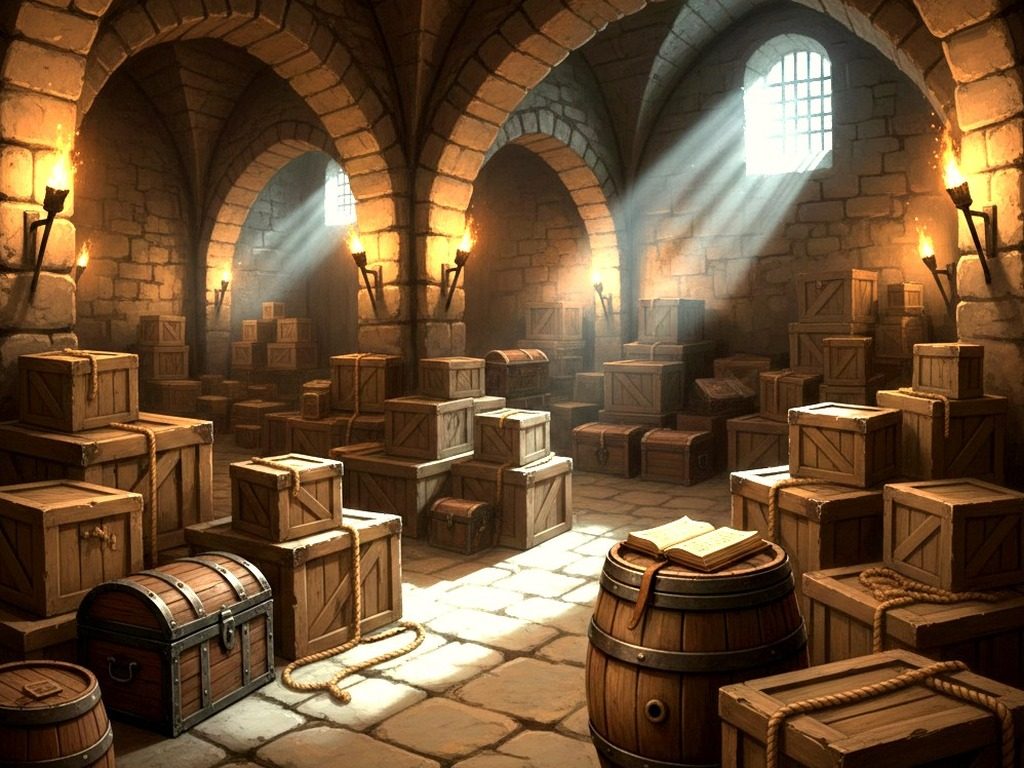
The customs cellar
Sealed crates, thick ledgers, and air that smells of undeclared goods.
-

The old dungeon
Cells abandoned since the new dungeon was built. "Abandoned" is one way of putting it.
Objects
-
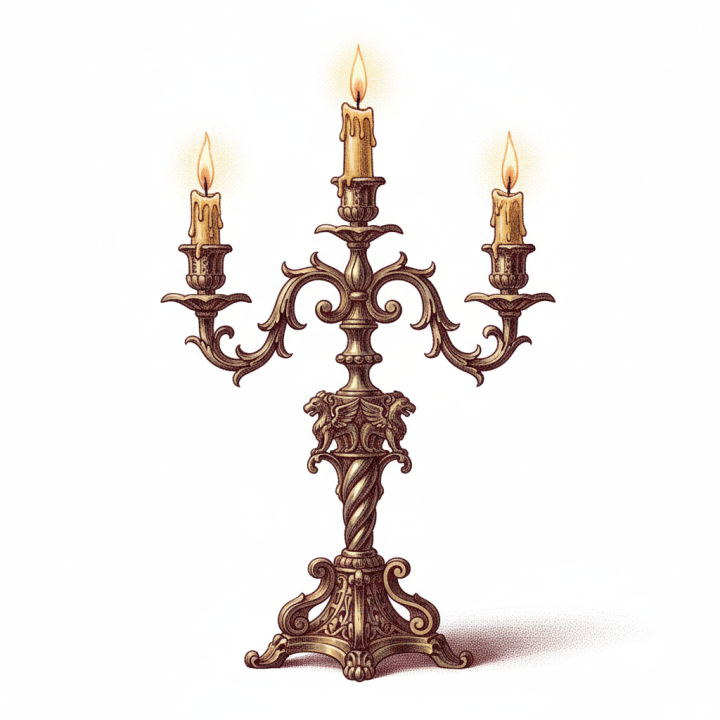
The silver candelabrum
Heavy as a small anvil. It can light a room or end a conversation.
-
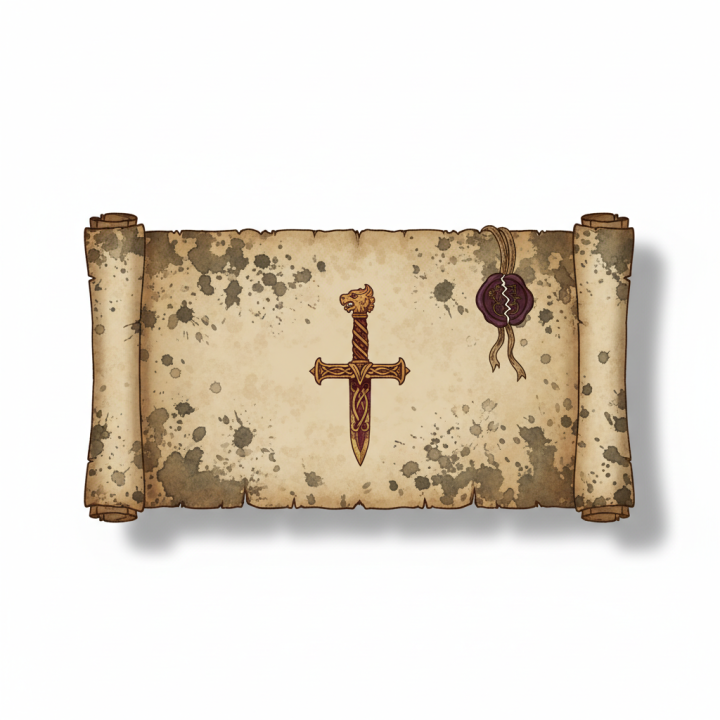
The stained parchment
A half-burned document with a stain that might be wine. Or not.
-
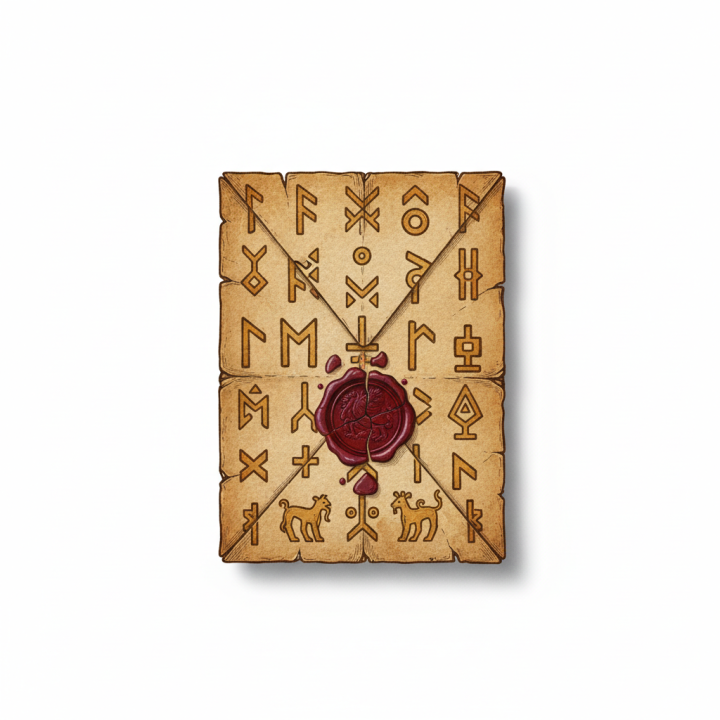
The ciphered letter
Orderly rows of meaningless signs. The ink is costly, the paper costlier, the sender - unknown.
-
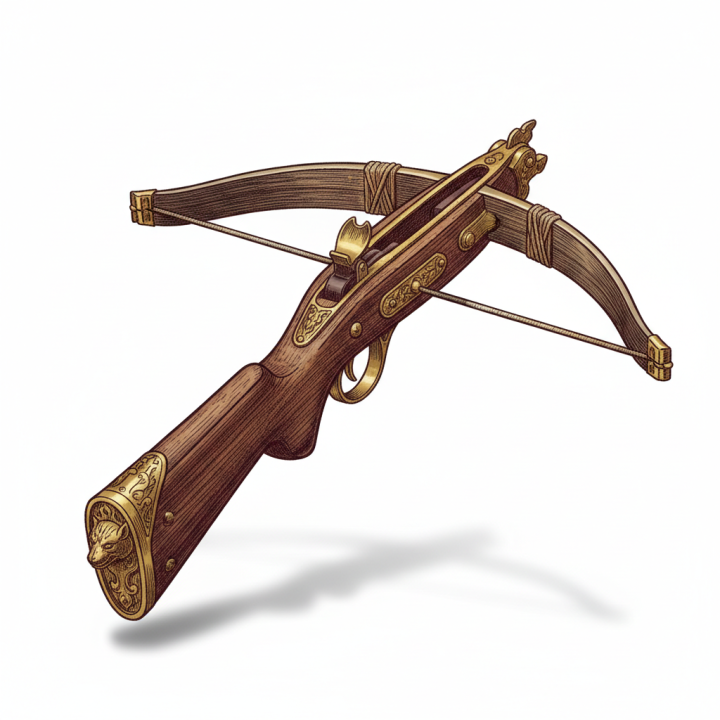
The hunting crossbow
Light, accurate, with a walnut stock. Exactly one bolt is missing from the quiver.
-

The small wine cask
Arin wine, the good year. The bung was pulled and put back by an unskilled hand.
Motives
-
Fear of exposure
Groaza de a fi dat în vileag, care împinge la orice.
-

Revenge
O datorie de sânge pe care numai fapta o mai șterge.
-

A debt of honour
O făgăduială care cântărește mai greu decât viața.
-

Jealousy
Otrava care mistuie pe cel ce râvnește ce nu-i al lui.
-

Blackmail
Un secret ținut ca funia la gât, strâns exact cât trebuie.
Moments
-

At dawn
When the citadel is barely waking and the guards still doze.
-

After matins
The hour after the morning service, when the abbey empties.
-

At noon
Midday, with bustle in the markets and silence in the alcoves.
-

At dusk
When the shadows lengthen and the lanterns are not yet lit.
-

At vespers
At the evening service, when the bells drown out any footstep.
The pages of the file
Here is the whole file, as the investigator received it. Not one row is spare — it was checked by removing each in turn and watching the unique solution disappear.
- Whatever the market gossips: the old chapel and blackmail do not go together.
- The Chancellery checked twice: Grigore the Cupbearer never touched the small wine cask.
- Two witnesses, upon their crest: the small wine cask and fear of exposure do not go together.
- The chronicler notes drily: the silver candelabrum and jealousy go together, whatever the court may say.
- In the gate ledger, Chancellor Veniamin stands higher, the suspect with blue eyes lower.
- The Chancellery checked twice: the suspect with red hair never set foot in the place where every footstep echoes like a confession.
- The chronicler notes drily: the old dungeon and revenge go together, whatever the court may say.
- The chronicler notes drily: Balasa the Seamstress was driven by jealousy, whatever the court may say.
- The gate guard swears: the throne room matches that hour: after matins.
- In the Chancellery's ledger it stands in black and white: the customs cellar and a debt of honour go together.
- The traces left at the scene show it plainly: the culprit was there after matins.
- Before the investigator, Safta the Herbwife firmly repeats: "I was there at dusk".
- The gate guard swears: the suspect with dark eyes was in the place where a quill creaks louder than a conscience.
- An honest-faced witness saw it plainly: the stained parchment matches that hour: at dawn.
- In the Chancellery's ledger it stands in black and white: the hunting crossbow matches that hour: at noon.
- The chronicler notes drily: the old dungeon matches that hour: at vespers, whatever the court may say.
Break the seal: the Chancellery's reasoning — the culprit's name is spoken from here on
How the circle closed
The investigation ran contrary to suspicion: it did not ask who could have, it cut away, row by row, whoever could not.
A piece of information dearly bought showed its worth: “Whatever the market gossips: the old chapel and blackmail do not go together”. The row lost one more cell, and whoever gathers losses enough arrives at a gain.
A report from the watch brought clarity: “The Chancellery checked twice: Grigore the Cupbearer never touched the small wine cask”. The possibility fell without appeal, and the circle tightened by one finger.
The clerk read the next line aloud: “Two witnesses, upon their crest: the small wine cask and fear of exposure do not go together”. A cell is struck out, and with it a whole possibility that until then looked as good as any other.
Then came, one after another, the findings that drew the noose tight: “The chronicler notes drily: the silver candelabrum and jealousy go together, whatever the court may say”; “In the gate ledger, Chancellor Veniamin stands higher, the suspect with blue eyes lower”; “The Chancellery checked twice: the suspect with red hair never set foot in the place where every footstep echoes like a confession”; “The chronicler notes drily: the old dungeon and revenge go together, whatever the court may say”; “The chronicler notes drily: Balasa the Seamstress was driven by jealousy, whatever the court may say”; “The gate guard swears: the throne room matches that hour: after matins”; “In the Chancellery's ledger it stands in black and white: the customs cellar and a debt of honour go together”; “The traces left at the scene show it plainly: the culprit was there after matins”; “Before the investigator, Safta the Herbwife firmly repeats: "I was there at dusk"”; “The gate guard swears: the suspect with dark eyes was in the place where a quill creaks louder than a conscience”; “An honest-faced witness saw it plainly: the stained parchment matches that hour: at dawn”. The grid emptied before one's eyes, and what stayed in it could no longer be doubted.
A note in the margin of the page read: “In the Chancellery's ledger it stands in black and white: the hunting crossbow matches that hour: at noon”. A certain match thus enters the grid, and its row and column empty at once of every other possibility.
There followed a detail that narrowed the circle: “The chronicler notes drily: the old dungeon matches that hour: at vespers, whatever the court may say”. One more certainty means, in a deduction grid, a whole fistful of impossibilities — and so it proved here.
The lying testimony
The Supreme Law worked here the other way about, and that is exactly why it is worth telling. The single testimony on file withstood checking. Since only the culprit lies, the fact that not one of those who spoke contradicted the grid took them out of the circle one by one — and the guilt was left with the one who chose to stay silent. Silence is no proof in itself, but here it was the only place the grid still left free.
The culprit's name
After every cut, one possible suspect was left in the file: Balasa the Seamstress. At the hour of the deed, Balasa the Seamstress was at the throne room, handled the silver candelabrum, was driven by jealousy and was there after matins. Plain elimination was not enough here: every suspect had to be tried as the culprit until all hypotheses but one shattered. Hence the dossier stands at tier IV.
What became of the others
And here is what had become of the others, in that same hour: Safta the Herbwife was at the customs cellar, handled the small wine cask, was driven by a debt of honour and was there at dusk; Grigore the Cupbearer was at the old dungeon, handled the ciphered letter, was driven by revenge and was there at vespers; Chancellor Veniamin was at the old chapel, handled the stained parchment, was driven by fear of exposure and was there at dawn; Mother Evghenia was at the scriptorium, handled the hunting crossbow, was driven by blackmail and was there at noon. They look like rows of padding and they are not: the whole of the rest rests on them.
The page closes. What is left of the whole affair is a truth that can be demonstrated, and that is worth more than a confession.
Play this dossier All mysteries
Everything you read above rests on the dossier itself. The Chancellery's solver checked, at publication, that the given clues yield exactly one solution — no more, and not none. behind the scenes at the Chancellery.