
Chronicle of the solution: The Tourney Intrigue
Poisoning Tier I
The poisoning file is closed. What remains is the part worth learning: how one got from an upturned cup to a name.
The dossier, on a first reading
An overturned goblet, a face gone pale, whispers dying down — thus began, in Realm of the Crown, the case before you. Between remedy and venom runs a thin line, and someone at court crossed it knowingly. Suspicion has fallen on Lady Ruxandra, Duchess Amara de Corvin and Teofil the Chronicler — and until the proof is plain, none of these names leaves the room. The places named in the testimonies — the tourney field, the castle cellar and the scriptorium — each await their turn under scrutiny. Take up the quill, follow the thread of the clues, and set your seal upon the verdict.
Poison is the weapon of those who would rather not be present when the blow lands. At a tourney, where every eye is on the field, it is also the easiest weapon to use — which is why this dossier entered the archive under the name “The Tourney Intrigue”.
There are three suspects, and each is dangerous in a different way. Lady Ruxandra. Duchess Amara de Corvin, thrice widowed and thrice an heiress, whose smile has buried more nobles than the plague. And Teofil the Chronicler, who never lifts a sword but decides what posterity will remember — a power the Chancellery has never underestimated.
There are three places: the tourney field itself, the castle cellar, where what is drunk is kept, and the scriptorium, where what will remain is written. Between them the whole dossier plays out.
This is tier I, so it yields to direct elimination. A word from the archivist: begin with the findings, not with the testimonies. Findings never lie; among the testimonies, one always does.
The clerk entered Lady Ruxandra, Duchess Amara de Corvin and Teofil the Chronicler in the register — that, and not one name more, until the verdict.
The suspects
-
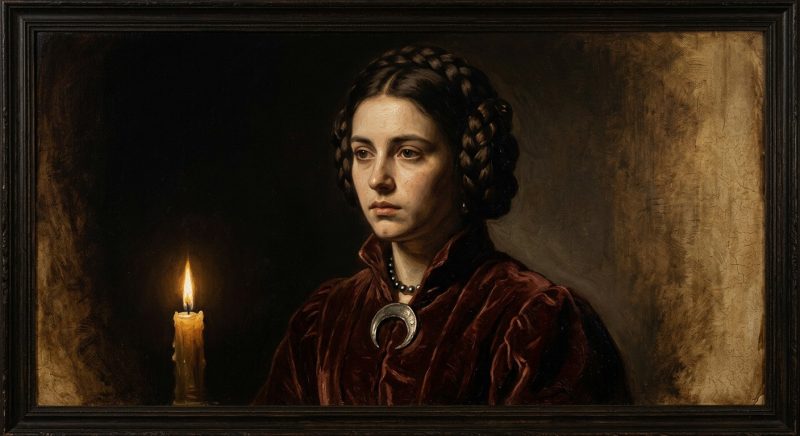
Lady Ruxandra
The queen's shadow at every hour. She hears everything, sees everything, and embroiders all she learns into patterns known only to her.
1.65 m tall · blue eyes · blond hair · right-handed
-
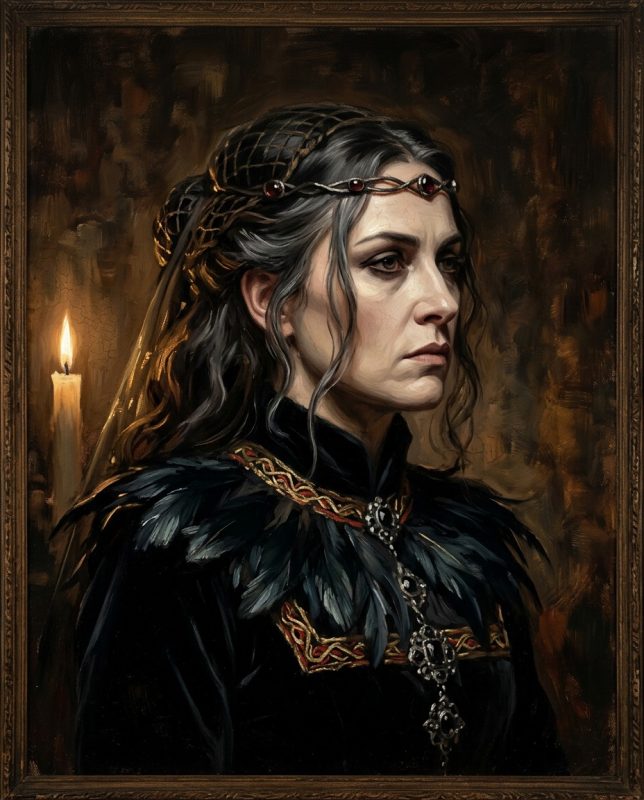
Duchess Amara de Corvin
Widowed three times, heir on each occasion. Her smile has buried more nobles than the plague.
1.68 m tall · dark eyes · black hair · right-handed
-
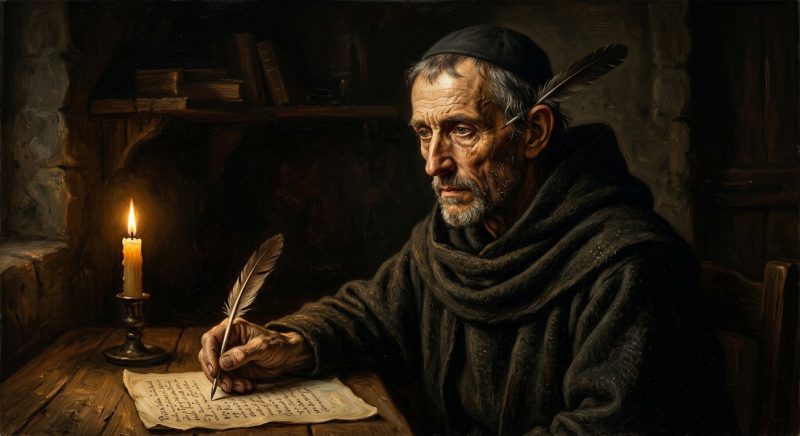
Teofil the Chronicler
He writes the kingdom's history as he is ordered. The unwelcome drafts, however, he keeps every one.
1.69 m tall · brown eyes · greying hair · left-handed
Locations
-
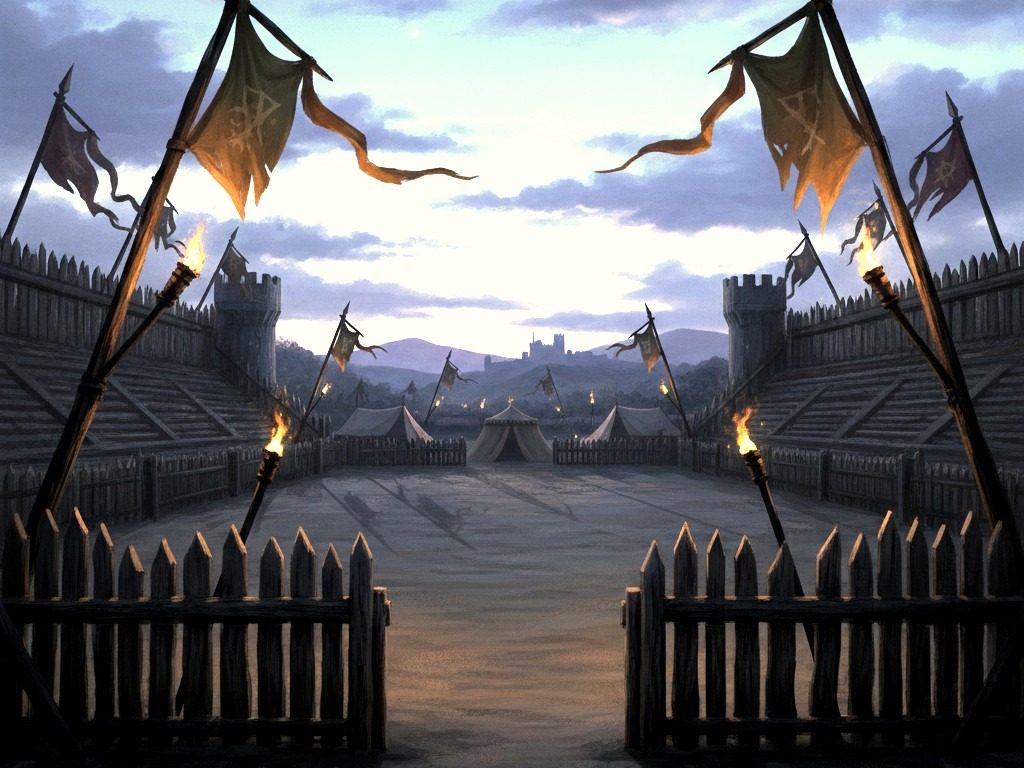
The tourney field
Empty stands outside festival days. An excellent place for meetings that never happened.
-
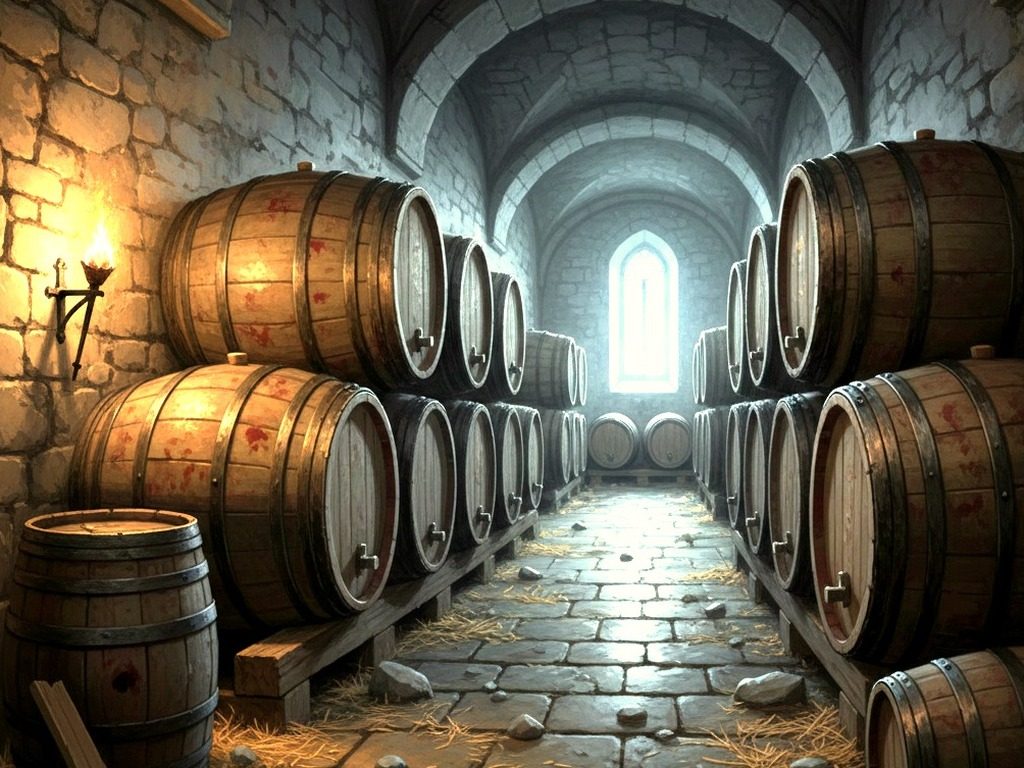
The castle cellar
Barrels as big as carts and corners the lantern never reaches.
-

The scriptorium
Slanted desks, ink, and working silence. Here a quill creaks louder than a conscience.
The evidence gathered on file
This much was worked with, no more and no less. Minimality is not a figure of speech: each row was taken out in turn, at trial, and without it the solution ceased to be unique.
- The customs register is clear: the suspect with black hair never set foot in the place with stands empty outside festival days.
- The traces left at the scene show it plainly: the culprit was at the scriptorium.
- A maid whispered it at confession: Teofil the Chronicler was in the place where the lantern never reaches.
Open the full reasoning — the culprit's name is spoken from here on
The reasoning, step by step
The Chancellery does not work with impressions. It works with a grid in which every cell has exactly one answer, and with the patience to find it.
The scouts brought their share as well: “The customs register is clear: the suspect with black hair never set foot in the place with stands empty outside festival days”. The row lost one more cell, and whoever gathers losses enough arrives at a gain.
The archivist underlined the following line with his nail: “The traces left at the scene show it plainly: the culprit was at the scriptorium”. A fact fastened to the culprit, with no name attached: enough for all those the fact does not cover to fall.
There followed a detail that narrowed the circle: “A maid whispered it at confession: Teofil the Chronicler was in the place where the lantern never reaches”. One more certainty means, in a deduction grid, a whole fistful of impossibilities — and so it proved here.
The Chancellery's verdict
The Chancellery closed the dossier with a single name written on it: Duchess Amara de Corvin. At the hour in question, Duchess Amara de Corvin was at the scriptorium. Nothing was assumed along the way; every step can be redone with a pencil on paper.
Those taken out of the circle
The remaining suspects received their release from the grid too: Lady Ruxandra was at the tourney field; Teofil the Chronicler was at the castle cellar. It is these acquittals that made the verdict possible: without them, room for doubt would have remained.
The page closes. What is left of the whole affair is a truth that can be demonstrated, and that is worth more than a confession.
Play this dossier All mysteries
Everything you read above rests on the dossier itself. The Chancellery's solver checked, at publication, that the given clues yield exactly one solution — no more, and not none. behind the scenes at the Chancellery.