
Chronicle of the solution: The Silence of the Inn
Theft Tier III
What was taken has been found, and the one who took it wears irons today; here, though, is the road that led there.
The opening of the investigation
A bitter morning has settled over Realm of the Crown: something precious has vanished without a trace. The Chancellery has set every other file aside: until what was taken returns, no one sleeps easy. The testimonies keep returning to the same names: Pantelimon the Gardener, Damaschin the Healer, Codrin the Huntsman, Ilinca the Baker and Costache the Toll-Keeper. Motives abound — fear of exposure, ambition, blackmail, greed and revenge — yet only one moved the guilty hand. A sharp eye is not enough here — it takes an archivist's patience: fit everything together, then pronounce your verdict.
Called to judgement were Pantelimon the Gardener, Damaschin the Healer, Codrin the Huntsman, Ilinca the Baker and Costache the Toll-Keeper. Each had somewhere to begin a story; one alone had reason to change it.
The suspects
-
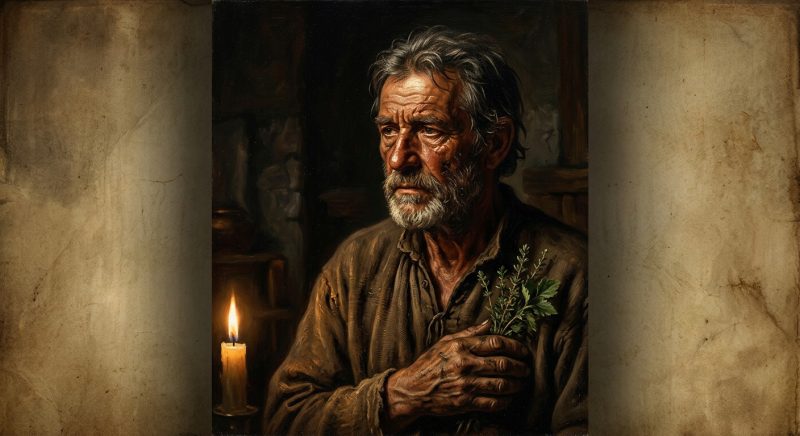
Pantelimon the Gardener
He tends the queen's roses and no one's beds of belladonna. The second garden is the more sought-after.
1.73 m tall · green eyes · greying hair · right-handed
-
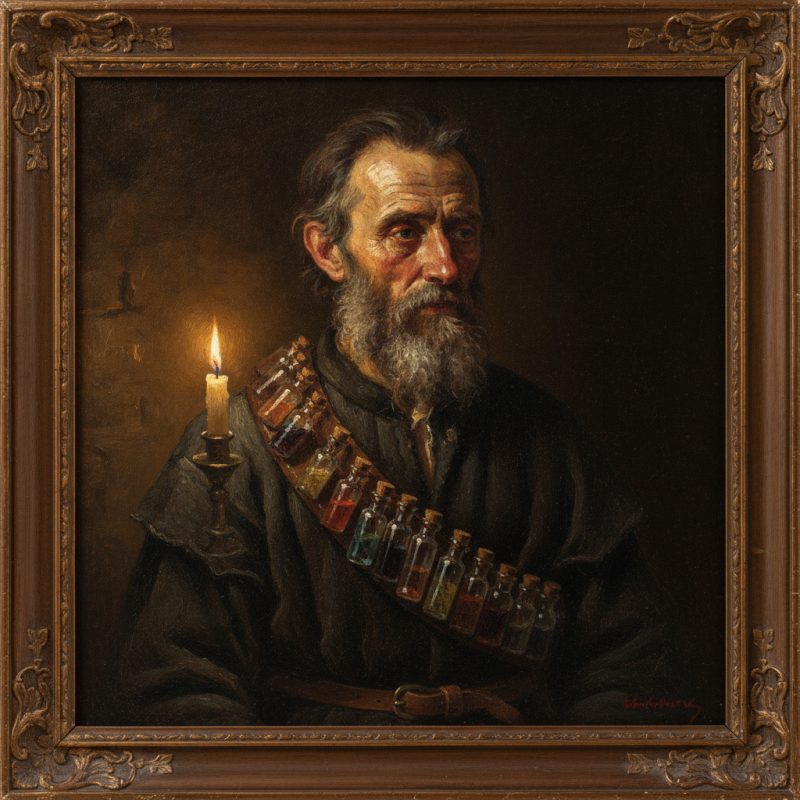
Damaschin the Healer
He knows the cure for any illness and the dose at which the cure becomes something else. He swears he has never mistaken the dosage.
1.71 m tall · green eyes · grey hair · left-handed
-
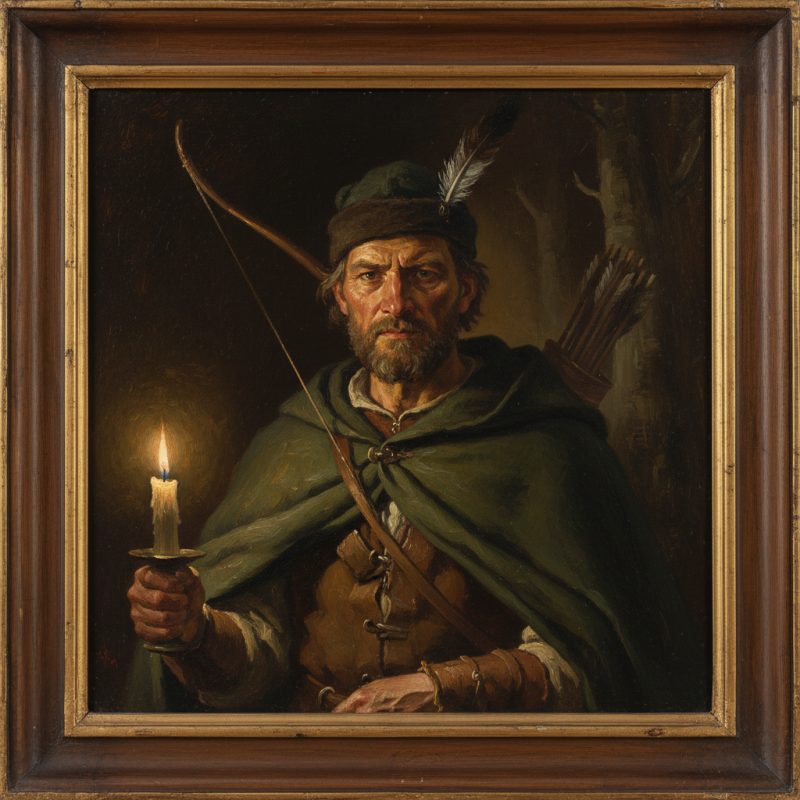
Codrin the Huntsman
He knows the royal forest better than the castle corridors. Tracks, he says, never lie - men do.
1.87 m tall · green eyes · black hair · right-handed
-
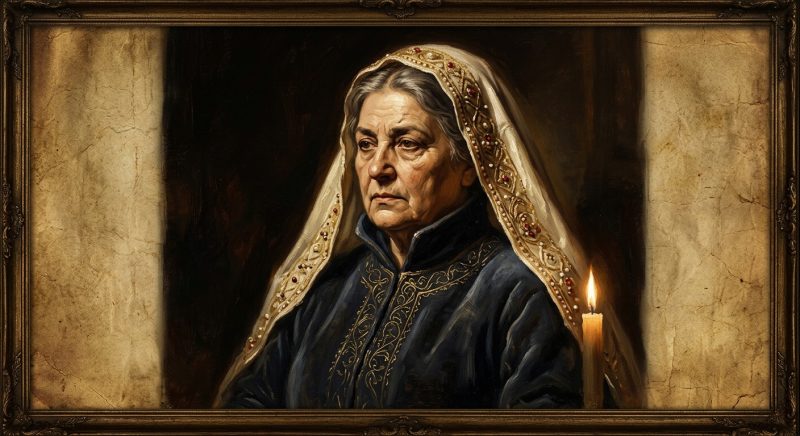
Ilinca the Baker
She weighs flour to the gram and people at a glance. No one stays in her debt twice.
1.62 m tall · brown eyes · chestnut hair · right-handed
-
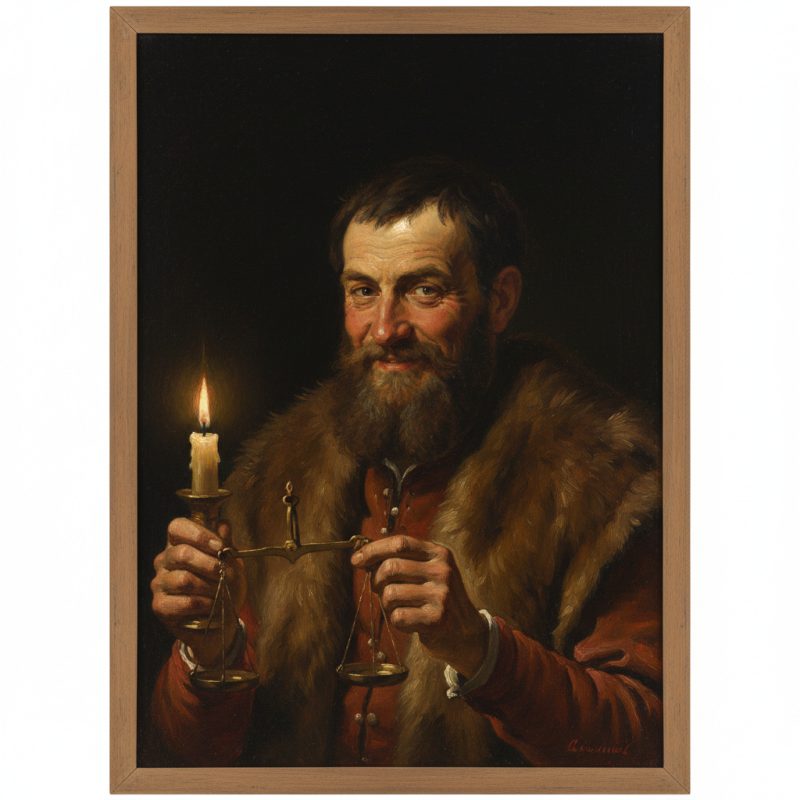
Costache the Toll-Keeper
His scales weigh the goods; his eye, the merchant. Both can be "greased" at need.
1.80 m tall · dark eyes · grey hair · right-handed
Locations
-
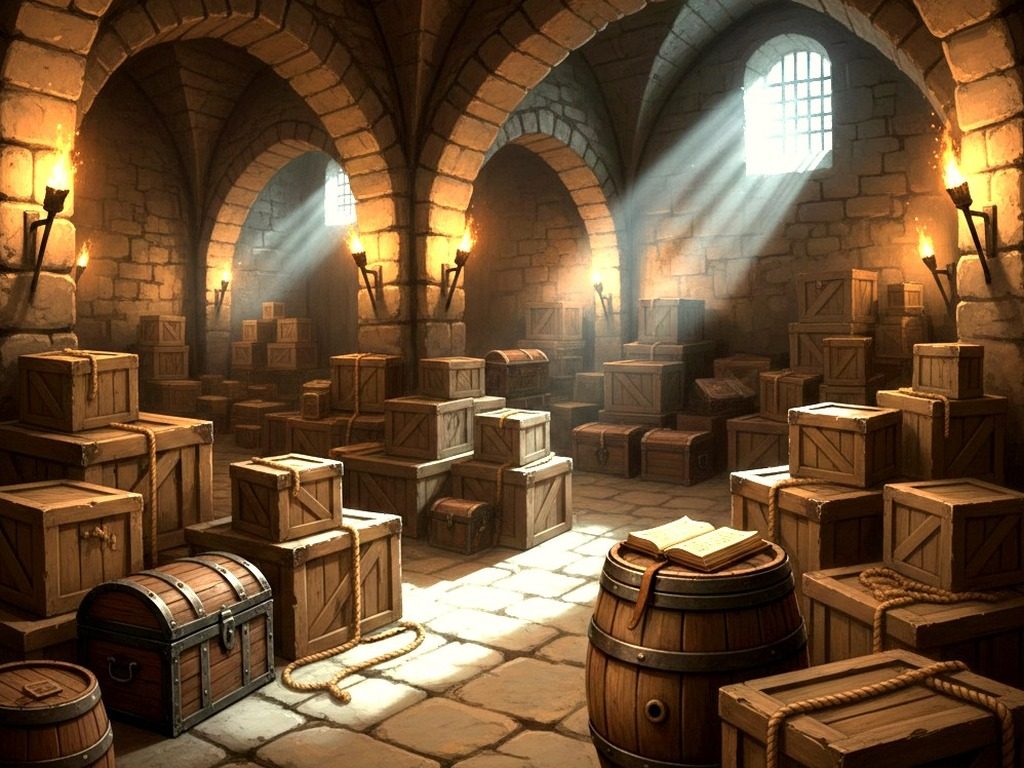
The customs cellar
Sealed crates, thick ledgers, and air that smells of undeclared goods.
-
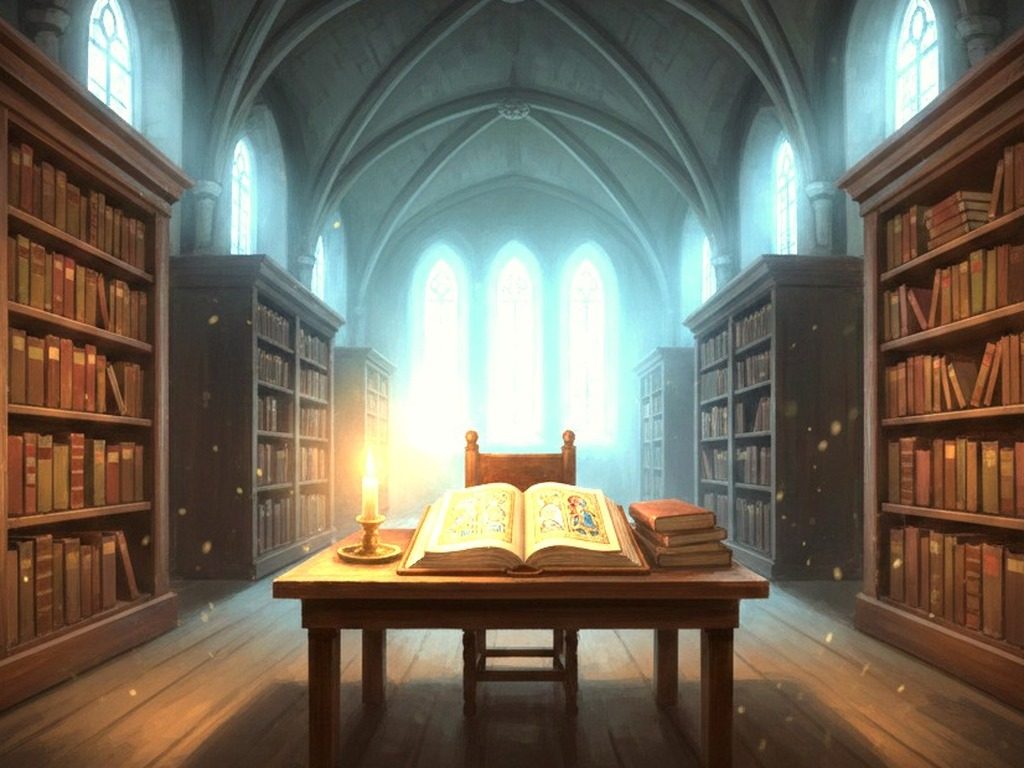
The abbey library
Thousands of leather-bound tomes. Some of the chains on the shelves were cut recently.
-

The guild forge
Anvils, tongs, and a fire that never goes out. Many small metal things vanish here.
-
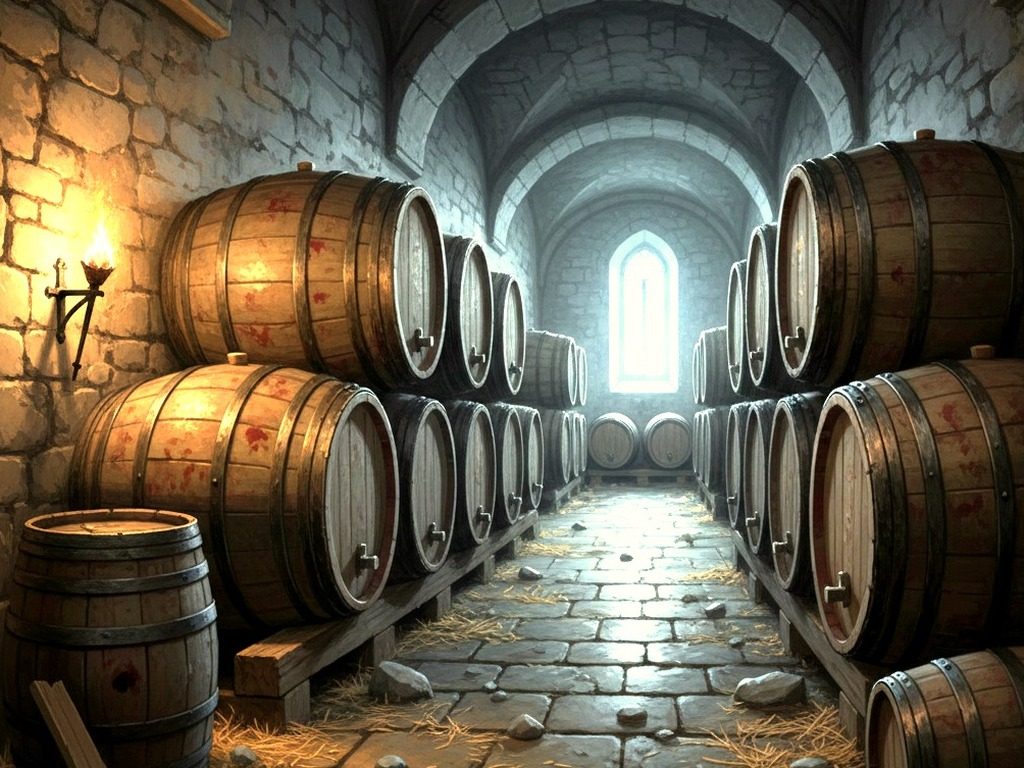
The castle cellar
Barrels as big as carts and corners the lantern never reaches.
-

The wharf
Moored boats, wet ropes, and goods that prefer to arrive in the fog.
Objects
-
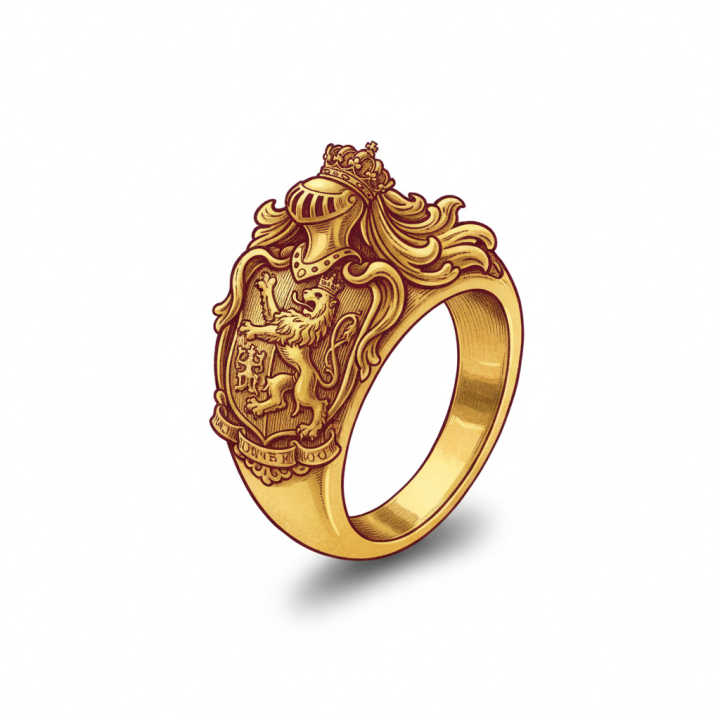
The signet ring
The crest has been filed away almost completely. Almost.
-
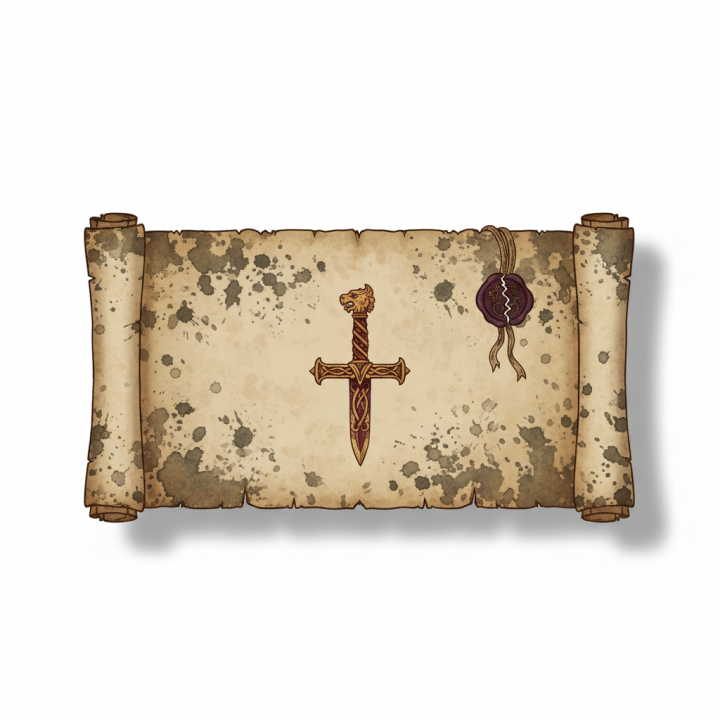
The stained parchment
A half-burned document with a stain that might be wine. Or not.
-
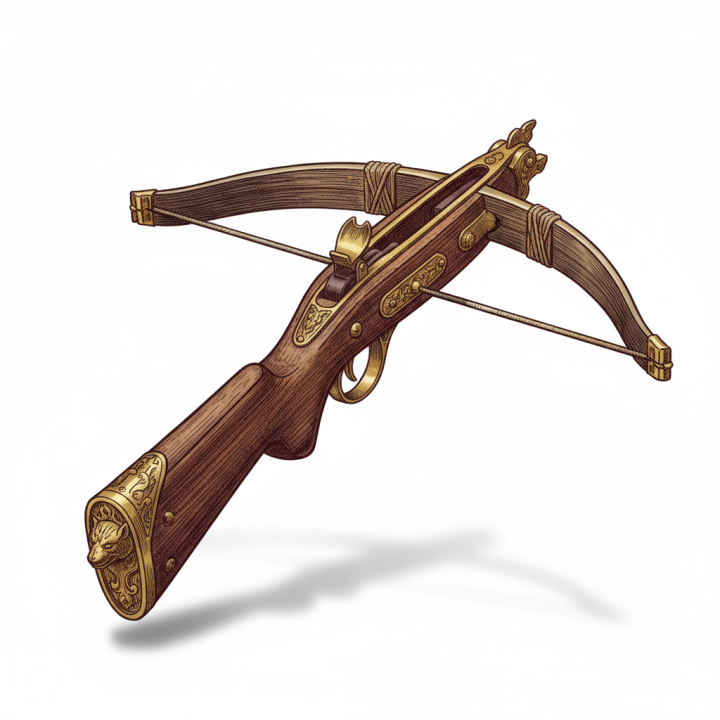
The hunting crossbow
Light, accurate, with a walnut stock. Exactly one bolt is missing from the quiver.
-
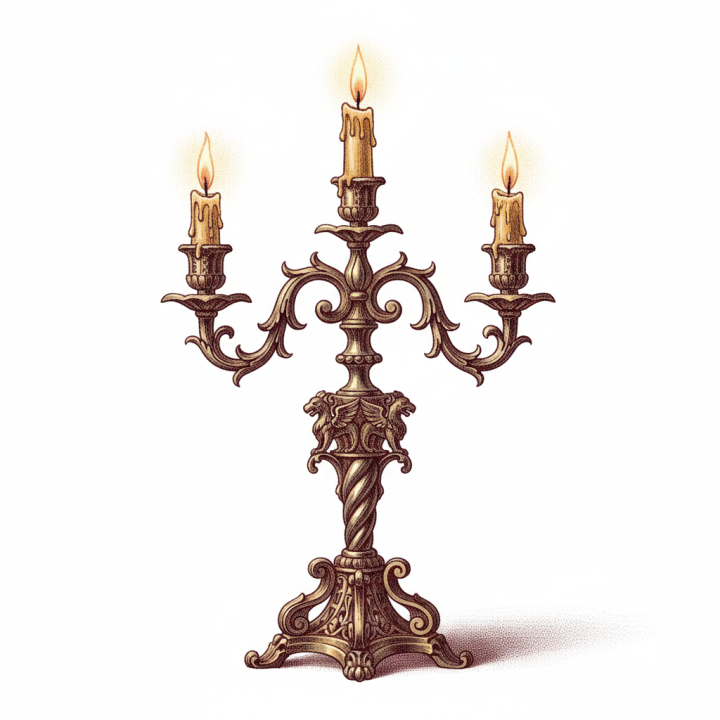
The silver candelabrum
Heavy as a small anvil. It can light a room or end a conversation.
-

The rusted sword
An old weapon, forgotten on the rack. The rust on the blade is newer than it looks.
Motives
-
Fear of exposure
Groaza de a fi dat în vileag, care împinge la orice.
-
Ambition
Setea de a urca, chiar peste trupuri, spre o treaptă mai înaltă.
-

Blackmail
Un secret ținut ca funia la gât, strâns exact cât trebuie.
-

Greed
Dorința nesățioasă de avere, care nu se oprește la nimic.
-
Revenge
O datorie de sânge pe care numai fapta o mai șterge.
Moments
-

At dawn
When the citadel is barely waking and the guards still doze.
-

After matins
The hour after the morning service, when the abbey empties.
-

At noon
Midday, with bustle in the markets and silence in the alcoves.
-

At dusk
When the shadows lengthen and the lanterns are not yet lit.
-

At vespers
At the evening service, when the bells drown out any footstep.
The pages of the file
Here is the whole file, as the investigator received it. Not one row is spare — it was checked by removing each in turn and watching the unique solution disappear.
- Pantelimon the Gardener declares under oath: "I was there at dusk".
- A maid whispered it at confession: Codrin the Huntsman was there at noon.
- By the order of the hours, first comes Ilinca the Baker, then Codrin the Huntsman.
- The chronicler notes drily: the hunting crossbow and revenge go together, whatever the court may say.
- The tracks in the dust do not lie: the customs cellar and the signet ring go together.
- A maid whispered it at confession: the abbey library and the silver candelabrum go together.
- The chronicler notes drily: greed matches that hour: at noon, whatever the court may say.
- In the Chancellery's ledger it stands in black and white: the wharf matches that hour: at vespers.
- Every scout reports the same about the culprit: the culprit was at the abbey library.
- The customs register is clear: the guild forge and the stained parchment do not go together.
- The chronicler notes drily: the customs cellar matches that hour: at dawn, whatever the court may say.
- A maid whispered it at confession: ambition matches that hour: after matins.
- An honest-faced witness saw it plainly: the left-handed suspect was there at dusk.
- The chronicler notes drily: the suspect with dark eyes was driven by blackmail, whatever the court may say.
- In the Chancellery's ledger it stands in black and white: the wharf and the rusted sword go together.
Break the seal: the Chancellery's reasoning — warning, the culprit is named beyond this point
The unravelling of the thread
The road is always the same: findings first, because they do not lie; testimonies after, because one of them always does.
The Chancellery began with what could be verified: “Pantelimon the Gardener declares under oath: "I was there at dusk"”. Here the investigation had to judge twice: once the testimony, once the one who gives it.
The gate register had kept a trace of its own: “A maid whispered it at confession: Codrin the Huntsman was there at noon”. The match was nailed down, and the rest of the row was left clean, like a page wiped with a sponge.
It was set down, for whoever reads after us: “By the order of the hours, first comes Ilinca the Baker, then Codrin the Huntsman”. Every new line in the file closes a door; by the end not one is left open.
The Chancellery received then, within hours, all that was still missing: “The chronicler notes drily: the hunting crossbow and revenge go together, whatever the court may say”; “The tracks in the dust do not lie: the customs cellar and the signet ring go together”; “A maid whispered it at confession: the abbey library and the silver candelabrum go together”; “The chronicler notes drily: greed matches that hour: at noon, whatever the court may say”; “In the Chancellery's ledger it stands in black and white: the wharf matches that hour: at vespers”; “Every scout reports the same about the culprit: the culprit was at the abbey library”; “The customs register is clear: the guild forge and the stained parchment do not go together”; “The chronicler notes drily: the customs cellar matches that hour: at dawn, whatever the court may say”; “A maid whispered it at confession: ambition matches that hour: after matins”; “An honest-faced witness saw it plainly: the left-handed suspect was there at dusk”. Laid end to end, they did what not one of them could have done alone.
This page was stitched into the file too: “The chronicler notes drily: the suspect with dark eyes was driven by blackmail, whatever the court may say”. Two names bound themselves for good, and the binding undid, at a stroke, every pairing that contradicted it.
This particular came to light as well: “In the Chancellery's ledger it stands in black and white: the wharf and the rusted sword go together”. One more certainty means, in a deduction grid, a whole fistful of impossibilities — and so it proved here.
The word that would not fit
Here everything broke. Pantelimon the Gardener swore before the Chancellery that I was there at dusk — the one testimony in the whole file that will not sit with the rest of the grid. The truth, laid down by the other findings, is precisely the reverse: Pantelimon the Gardener was not present at dusk. Under the Supreme Law only the culprit lies, and whoever lies names themselves.
The culprit's name
The Chancellery pronounced its verdict without hesitation: the culprit is Pantelimon the Gardener. The arrangement in the grid is this: Pantelimon the Gardener was at the abbey library, handled the silver candelabrum, was driven by ambition and was there after matins. Tier III is no empty word: without the method of hypotheses, this grid would not have closed.
Where the others were
The grid took them out of the circle one by one, place in the story and all: Damaschin the Healer was at the guild forge, handled the hunting crossbow, was driven by revenge and was there at dusk; Codrin the Huntsman was at the castle cellar, handled the stained parchment, was driven by greed and was there at noon; Ilinca the Baker was at the customs cellar, handled the signet ring, was driven by fear of exposure and was there at dawn; Costache the Toll-Keeper was at the wharf, handled the rusted sword, was driven by blackmail and was there at vespers. Not one of the rows above is spare — remove it and the grid opens again.
The page closes. What is left of the whole affair is a truth that can be demonstrated, and that is worth more than a confession.
Play this dossier All mysteries
Nothing in this chronicle is invented: the text rises out of the dossier's logic, and the dossier passed through the solver before publication, so that its solution is provably unique. behind the scenes at the Chancellery.