
Chronicle of the solution: The Signature of the Tourney
Theft Tier III
The theft dossier is closed, and the Chancellery now permits itself to tell, at leisure, how it was unravelled.
What the file said when it was opened
A bitter morning has settled over Realm of the Crown: something precious has vanished without a trace. The Chancellery has set every other file aside: until what was taken returns, no one sleeps easy. Suspicion has fallen on Filip the Steward, Castellan Ursu, Grigore the Cupbearer and Toma the Cellarer — and until the proof is plain, none of these names leaves the room. The hours in question: "at dawn", "after matins", "at noon" and "at dusk". A sharp eye is not enough here — it takes an archivist's patience: fit everything together, then pronounce your verdict.
Under suspicion stood Filip the Steward, Castellan Ursu, Grigore the Cupbearer and Toma the Cellarer. One of them alone lied; the rest, without knowing it, spoke the truth that gave that one away.
The suspects
-
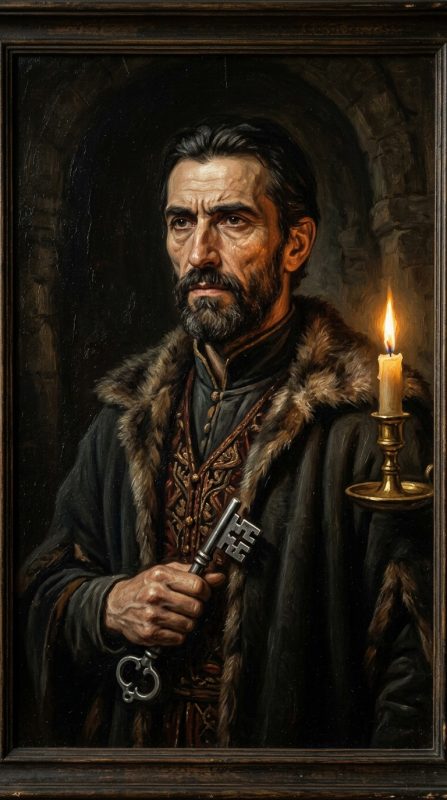
Filip the Steward
He counts the crown's silver every evening. On some evenings the count comes out different - and he says nothing.
1.79 m tall · grey eyes · chestnut hair · right-handed
-
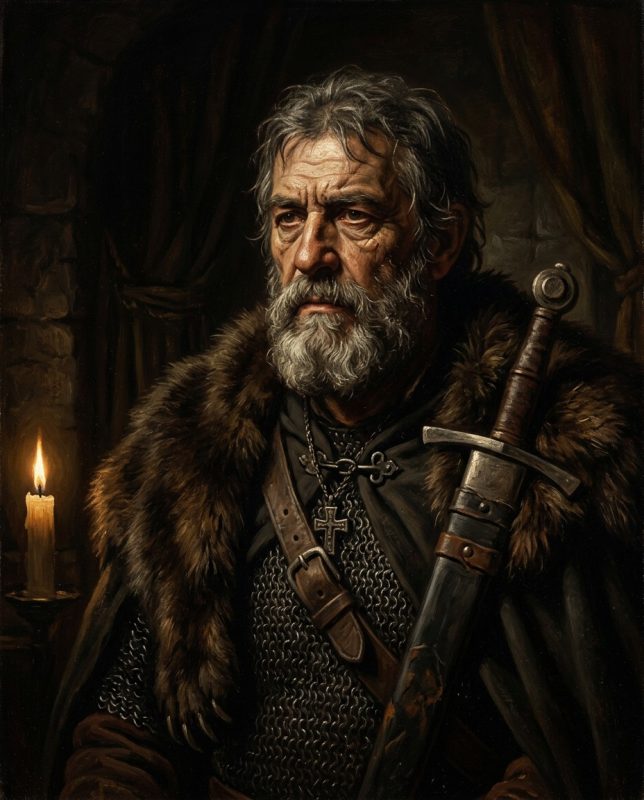
Castellan Ursu
He keeps the fortress dungeon and the tally of those who leave other than they entered.
1.90 m tall · dark eyes · black hair · right-handed
-
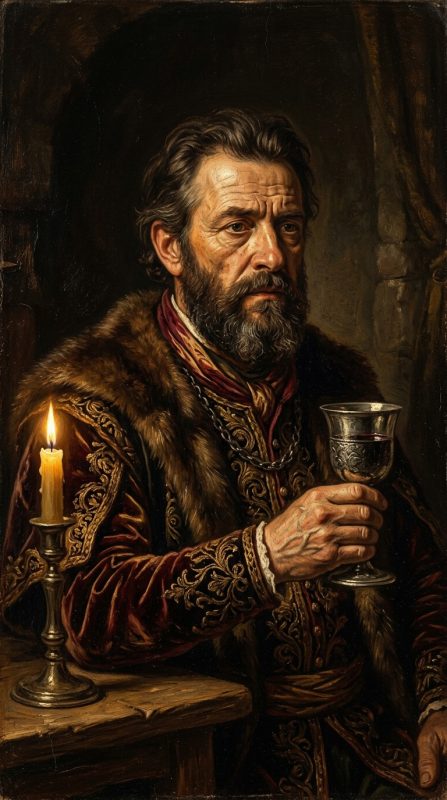
Grigore the Cupbearer
He tastes the king's wine before anyone else. A trade with a short future, he says, but a rich past.
1.70 m tall · brown eyes · chestnut hair · right-handed
-
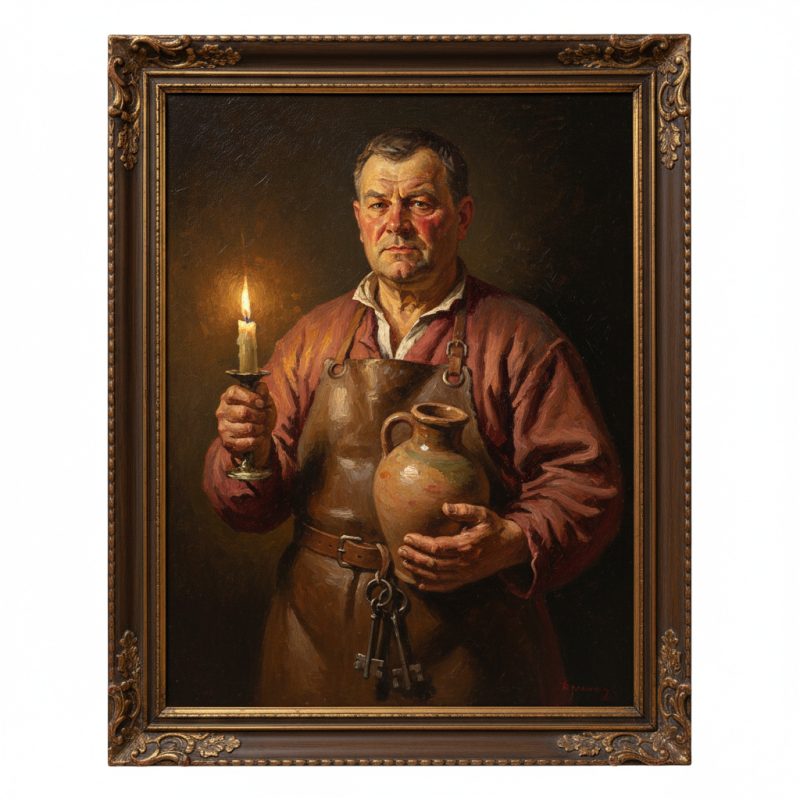
Toma the Cellarer
He holds the keys to every cellar in the castle. He claims the wine vanishes on its own, by "angelic evaporation."
1.73 m tall · brown eyes · red hair · left-handed
Locations
-
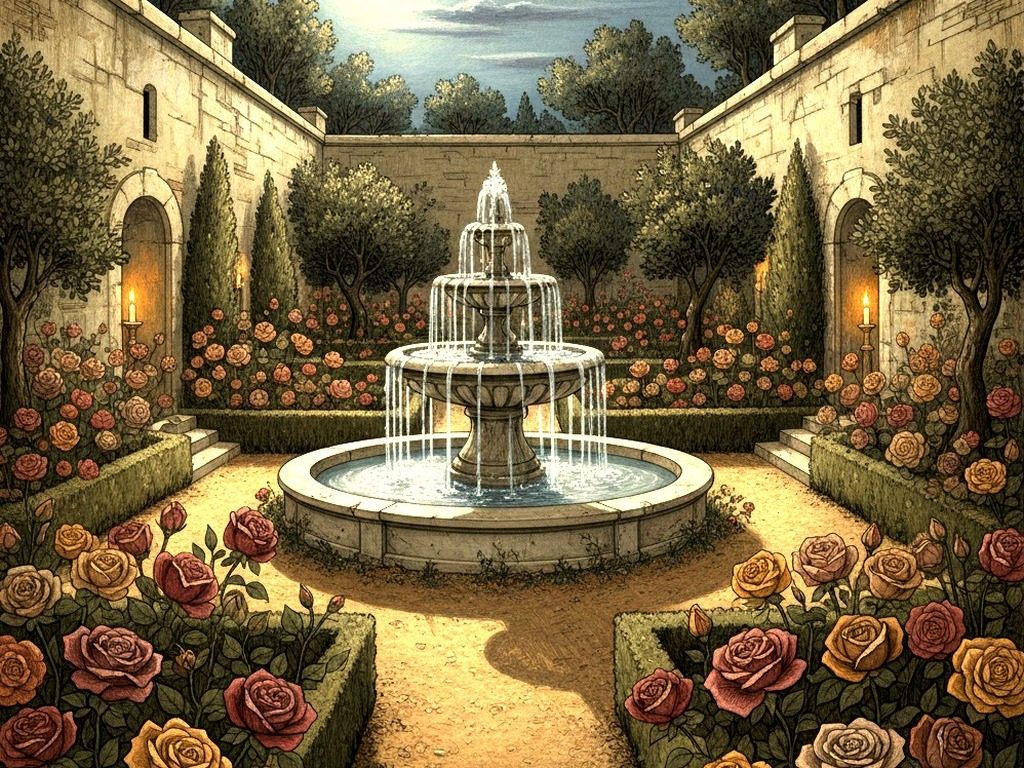
The queen's garden
Roses trimmed to a line and paths you may walk only by invitation. At night, the hedge has ears.
-
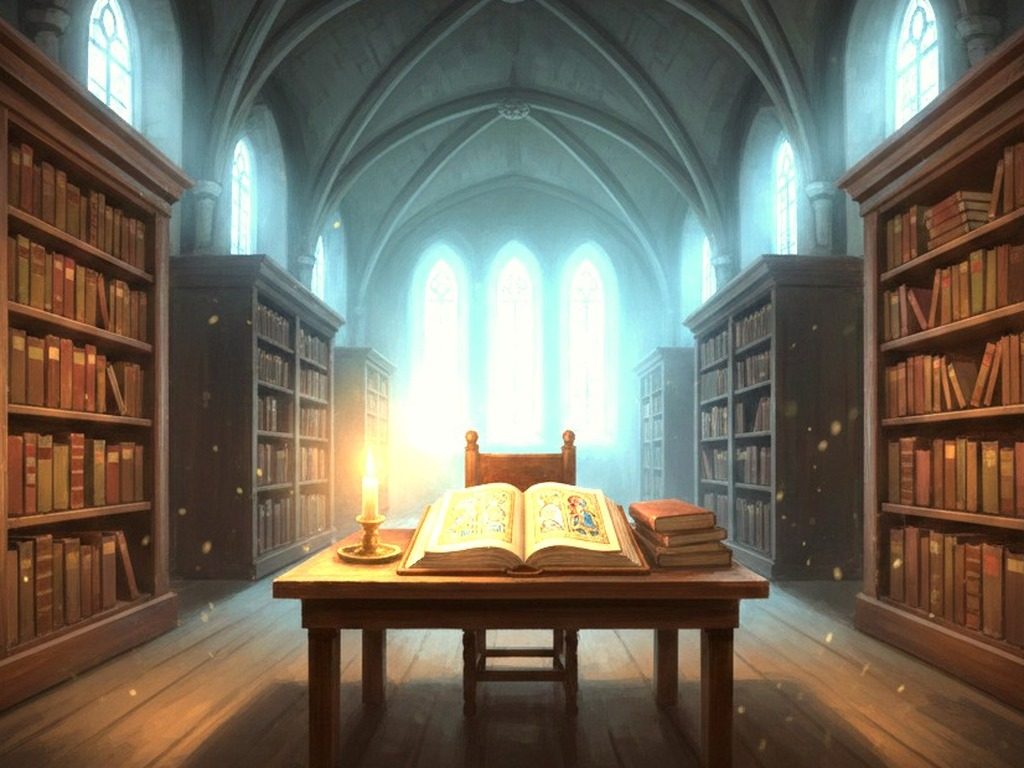
The abbey library
Thousands of leather-bound tomes. Some of the chains on the shelves were cut recently.
-

The cathedral crypt
The old kings sleep beneath crested slabs. Now and then, someone disturbs their rest.
-

The hunting lodge
The royal cabin in the heart of the forest. Far from the eyes of the court - which is exactly what suits some.
Objects
-
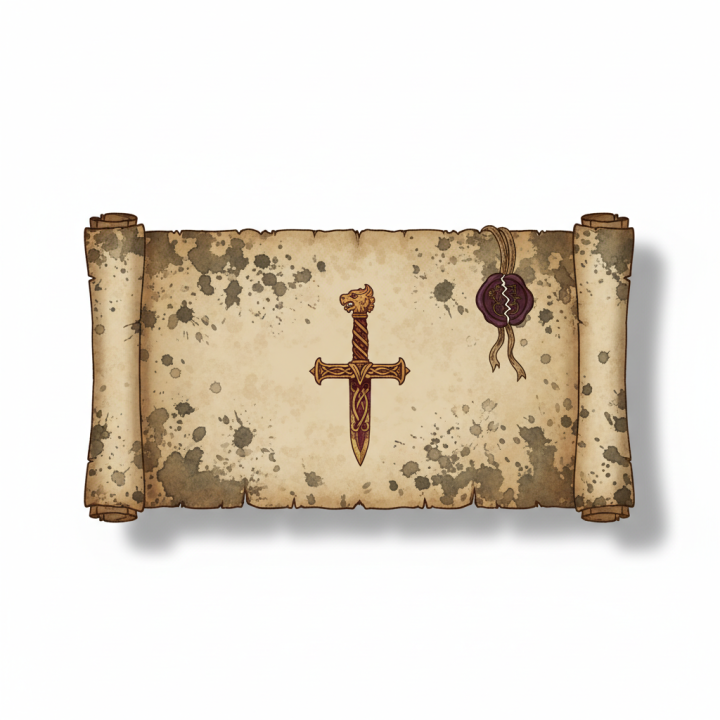
The stained parchment
A half-burned document with a stain that might be wine. Or not.
-
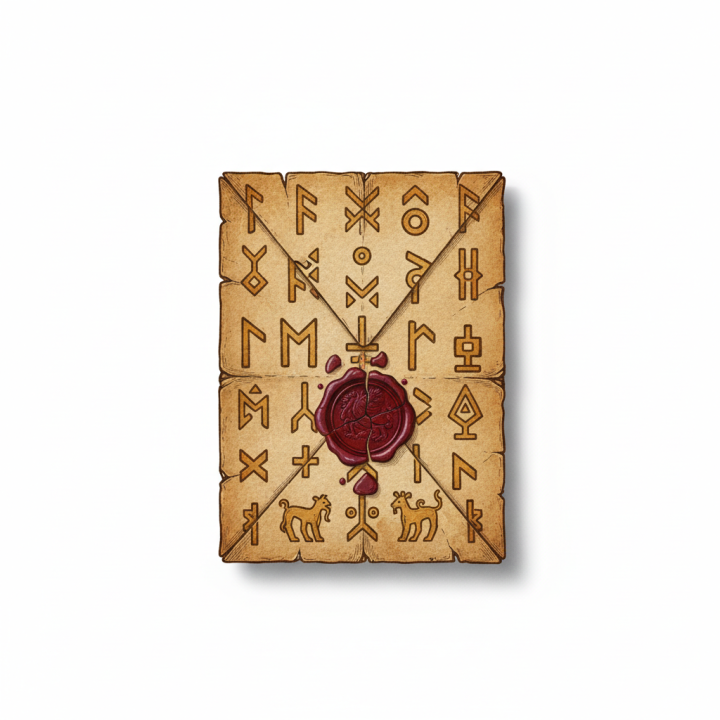
The ciphered letter
Orderly rows of meaningless signs. The ink is costly, the paper costlier, the sender - unknown.
-

The rusted sword
An old weapon, forgotten on the rack. The rust on the blade is newer than it looks.
-
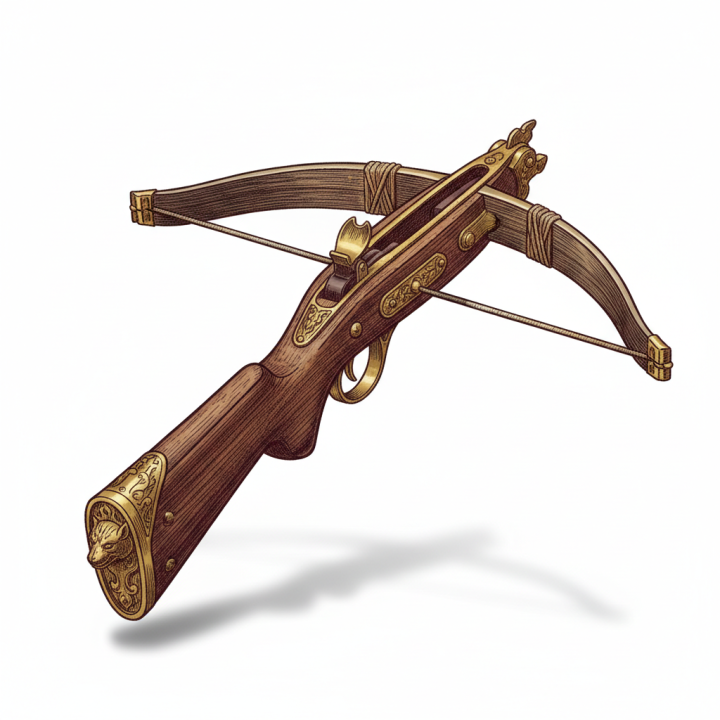
The hunting crossbow
Light, accurate, with a walnut stock. Exactly one bolt is missing from the quiver.
Moments
-

At dawn
When the citadel is barely waking and the guards still doze.
-

After matins
The hour after the morning service, when the abbey empties.
-

At noon
Midday, with bustle in the markets and silence in the alcoves.
-

At dusk
When the shadows lengthen and the lanterns are not yet lit.
Everything that could be learned
This much was worked with, no more and no less. Minimality is not a figure of speech: each row was taken out in turn, at trial, and without it the solution ceased to be unique.
- The gate guard swears: the hunting lodge matches that hour: at dusk.
- An honest-faced witness saw it plainly: the suspect with red hair was at the abbey library.
- At the Chancellery, Castellan Ursu maintains: "I handled the stained parchment".
- An honest-faced witness saw it plainly: the abbey library and the rusted sword go together.
- In the Chancellery's ledger it stands in black and white: the hunting crossbow matches that hour: at noon.
- An honest-faced witness saw it plainly: the suspect with dark eyes was there at dusk.
- The gate guard swears: the cathedral crypt matches that hour: after matins.
- Even the jester says it in earnest: Grigore the Cupbearer never set foot in the cathedral crypt.
- Every scout reports the same about the culprit: the culprit was there after matins.
Read the unravelling, step by step — warning, the culprit is named beyond this point
How the circle closed
The Chancellery does not work with impressions. It works with a grid in which every cell has exactly one answer, and with the patience to find it.
A report from the watch brought clarity: “The gate guard swears: the hunting lodge matches that hour: at dusk”. Once the tick was placed, the investigation had nothing left to argue on that row and moved on.
A piece of information dearly bought showed its worth: “An honest-faced witness saw it plainly: the suspect with red hair was at the abbey library”. A pair was tied, and the knot dragged a whole handful of impossibilities after it.
A witness of good faith cleared up one more corner: “At the Chancellery, Castellan Ursu maintains: "I handled the stained parchment"”. The testimony was set aside on the scales: if the speaker is innocent it is true; if not, it is precisely the reverse.
The file thickened quickly, and every fresh page cut something away: “An honest-faced witness saw it plainly: the abbey library and the rusted sword go together”; “In the Chancellery's ledger it stands in black and white: the hunting crossbow matches that hour: at noon”; “An honest-faced witness saw it plainly: the suspect with dark eyes was there at dusk”; “The gate guard swears: the cathedral crypt matches that hour: after matins”. The grid emptied before one's eyes, and what stayed in it could no longer be doubted.
The clerk read the next line aloud: “Even the jester says it in earnest: Grigore the Cupbearer never set foot in the cathedral crypt”. A cell is struck out, and with it a whole possibility that until then looked as good as any other.
There followed a detail that narrowed the circle: “Every scout reports the same about the culprit: the culprit was there after matins”. A fact fastened to the culprit, with no name attached: enough for all those the fact does not cover to fall.
The lie
Not a single lie was heard in this dossier. The single testimony on file withstood checking. Since a lie is, under the Supreme Law, the culprit's signature, its absence among those who spoke cleared them one by one, leaving the guilt with the one who chose to stay silent.
The verdict
The Chancellery closed the dossier with a single name written on it: Filip the Steward. At the hour in question, Filip the Steward was at the cathedral crypt, handled the ciphered letter and was there after matins. The dossier called for hypotheses driven to contradiction, not direct elimination alone — which is why it was rated at tier III.
The acquittal of the rest
The Chancellery recorded the others' movements as well, because it was precisely they that closed the grid: Castellan Ursu was at the hunting lodge, handled the stained parchment and was there at dusk; Grigore the Cupbearer was at the queen's garden, handled the hunting crossbow and was there at noon; Toma the Cellarer was at the abbey library, handled the rusted sword and was there at dawn. It is these acquittals that made the verdict possible: without them, room for doubt would have remained.
Whoever reads this chronicle years from now will find in it less a deed than a method.
Play this dossier All mysteries
This chronicle is no free retelling: it rises directly out of the dossier's logic, and every step passed through the solver which proved, before publication, that the solution is unique. behind the scenes at the Chancellery.