
Chronicle of the solution: The Feud of the Fair
Theft Tier IV
The theft dossier is closed, and the Chancellery now permits itself to tell, at leisure, how it was unravelled.
The deed, as it was recorded
In Realm of the Crown, only one thing is spoken of today: a daring theft, carried out almost before the court's eyes. The culprit worked cleanly, but not without witnesses — and the witnesses, at last, have begun to talk. Before you, one by one, will stand Costache the Toll-Keeper, Pantelimon the Gardener, Toma the Cellarer, Sword-Bearer Dragos and Tintar the Jester. Motives abound — the inheritance, greed, revenge, ambition and a debt of honour — yet only one moved the guilty hand. The threads were tangled on purpose: investigate, weigh every word, and pronounce your verdict only when the grid leaves no room for doubt.
Called to judgement were Costache the Toll-Keeper, Pantelimon the Gardener, Toma the Cellarer, Sword-Bearer Dragos and Tintar the Jester. Each had somewhere to begin a story; one alone had reason to change it.
The suspects
-
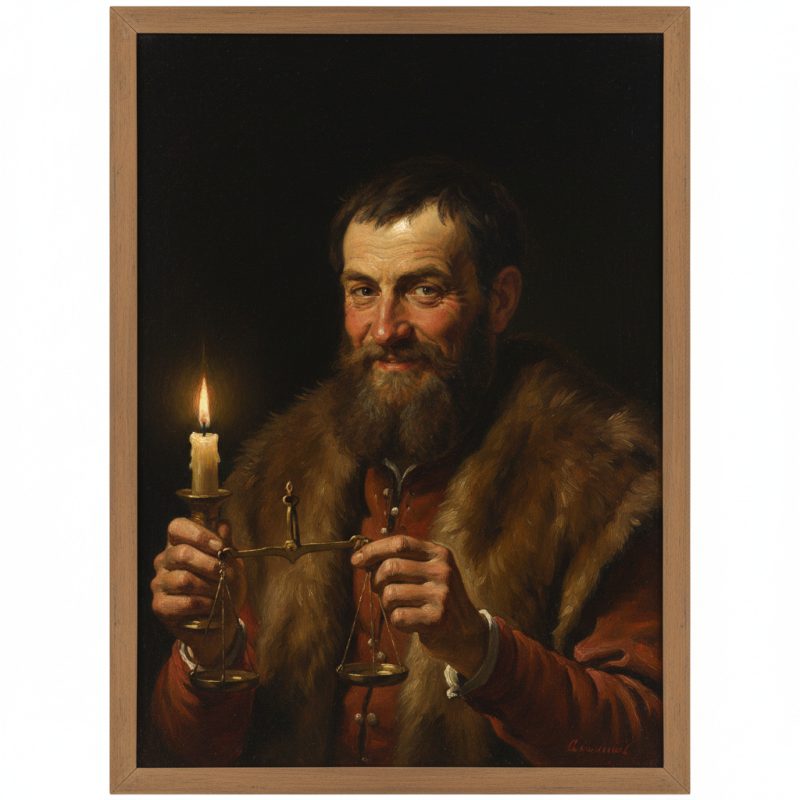
Costache the Toll-Keeper
His scales weigh the goods; his eye, the merchant. Both can be "greased" at need.
1.80 m tall · dark eyes · grey hair · right-handed
-
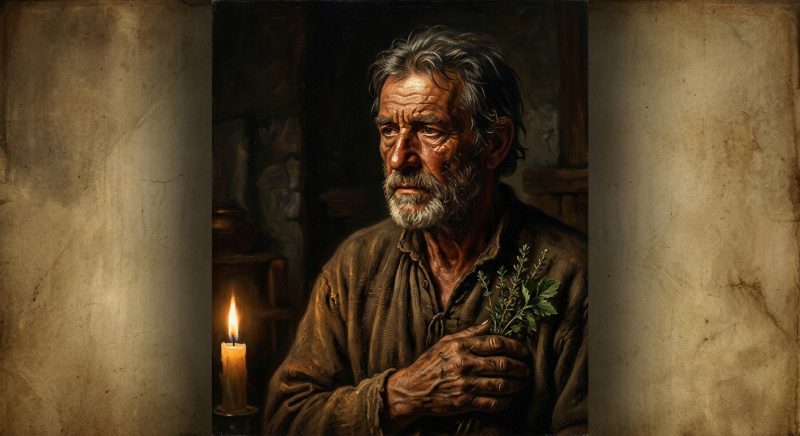
Pantelimon the Gardener
He tends the queen's roses and no one's beds of belladonna. The second garden is the more sought-after.
1.73 m tall · green eyes · greying hair · right-handed
-
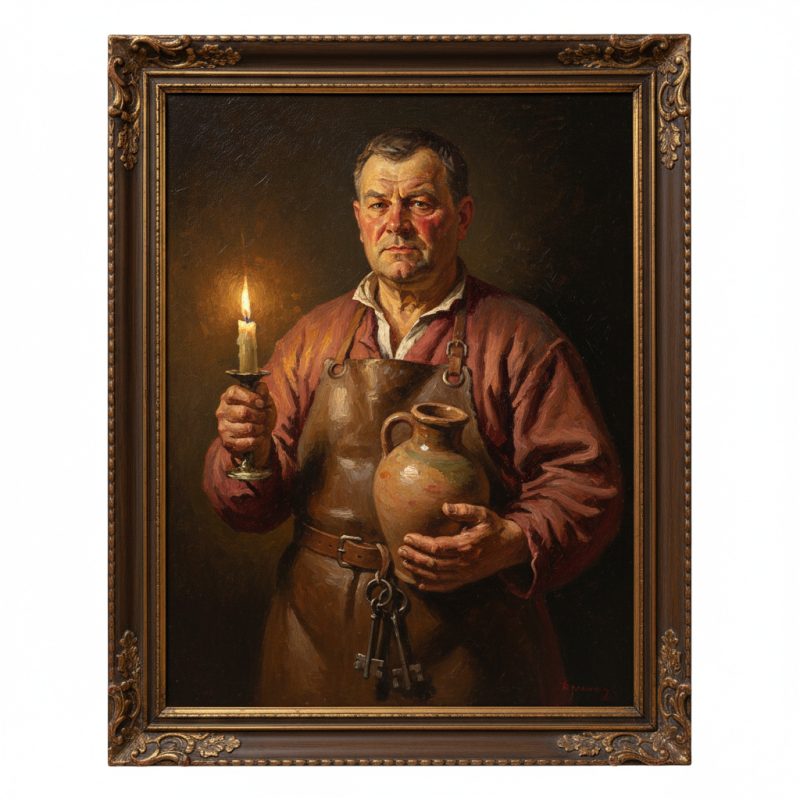
Toma the Cellarer
He holds the keys to every cellar in the castle. He claims the wine vanishes on its own, by "angelic evaporation."
1.73 m tall · brown eyes · red hair · left-handed
-
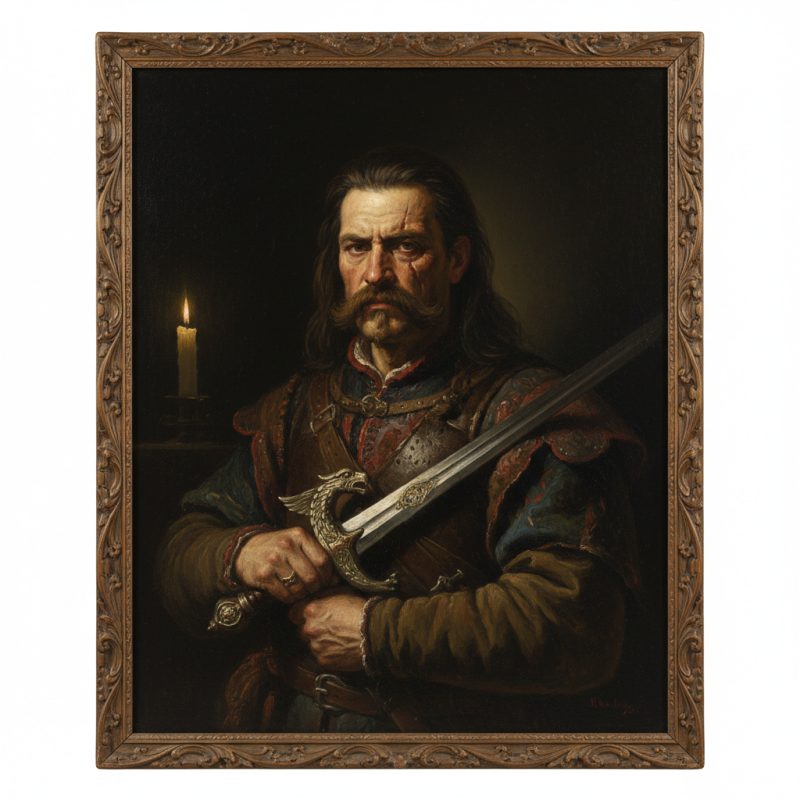
Sword-Bearer Dragos
He bears the king's ceremonial sword. At the tourney he has never lost; at dice, always.
1.86 m tall · brown eyes · chestnut hair · right-handed
-

Tintar the Jester
The only man in the kingdom who may tell the king the truth - provided he makes it sound like a joke.
1.56 m tall · green eyes · red hair · right-handed
Locations
-

The wharf
Moored boats, wet ropes, and goods that prefer to arrive in the fog.
-
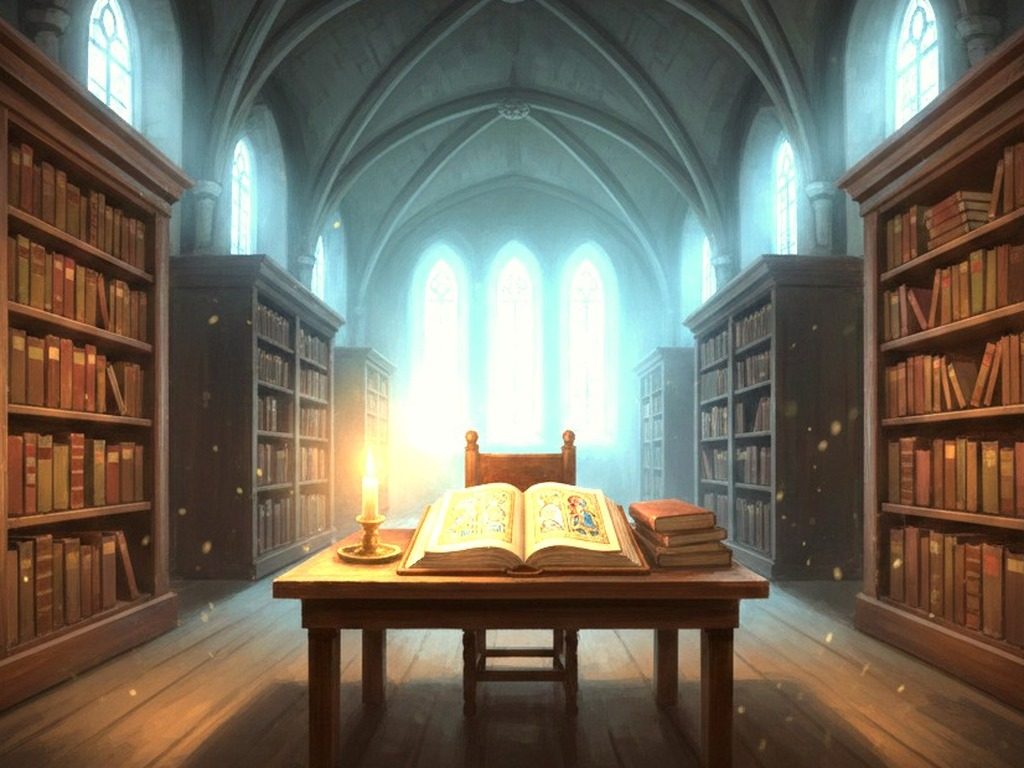
The abbey library
Thousands of leather-bound tomes. Some of the chains on the shelves were cut recently.
-
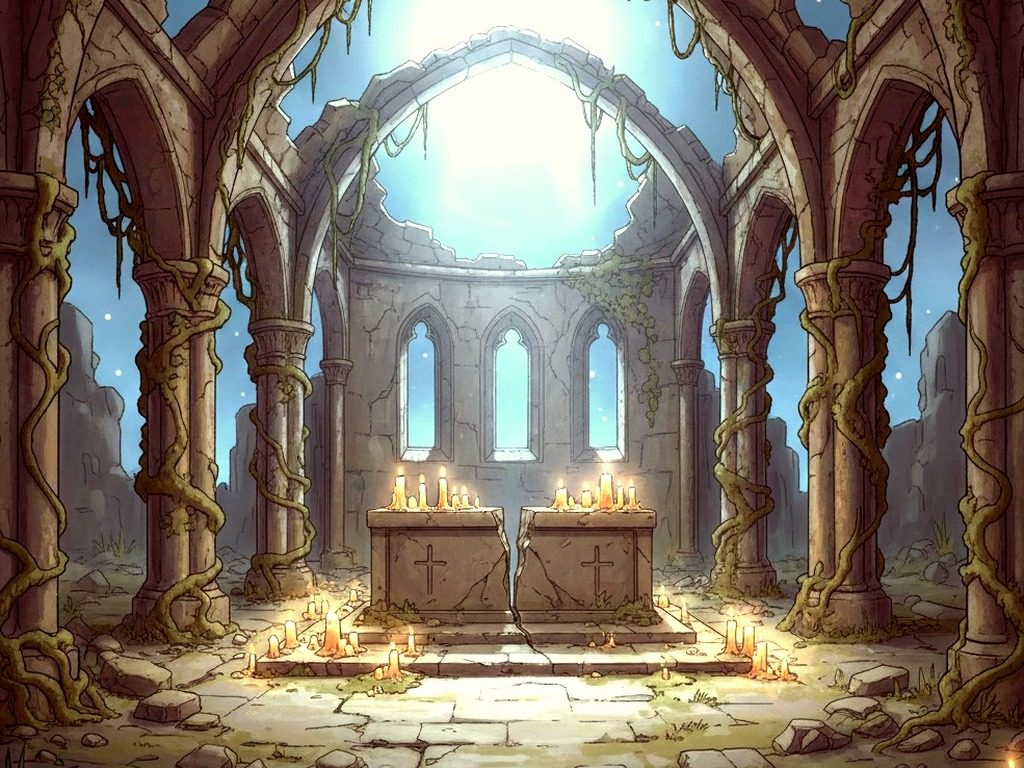
The old chapel
Candles, incense, and a silence in which every footstep echoes like a confession.
-

The watchtower
The highest point of the fortress. From here you see everything - and from below, everyone sees who climbs up.
-

The merchant's house
Carpets brought from overseas and a desk with more secret drawers than drawers.
Objects
-
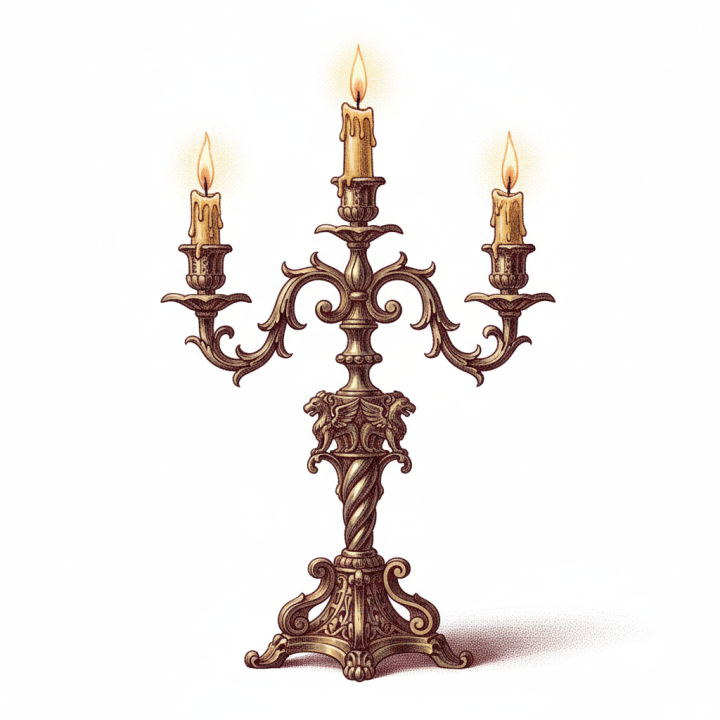
The silver candelabrum
Heavy as a small anvil. It can light a room or end a conversation.
-

The locked chest
Three padlocks, two rows of straps. Fresh scratches around the hinges, not the locks.
-
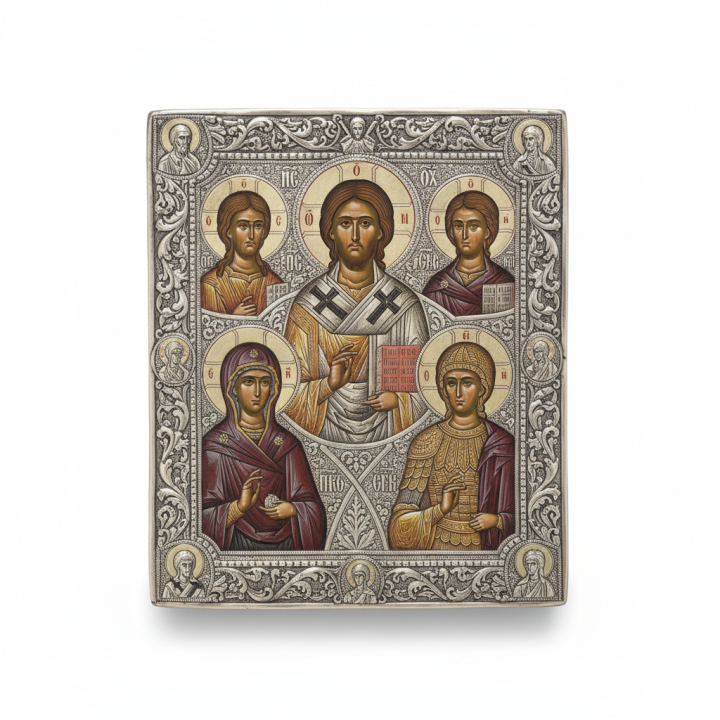
The silver-clad icon
The silver casing is old craftsmanship; the nails that hold it were driven this week.
-

The ruby dagger
A short blade, its hilt set with a stone red as a frozen drop. It was sharpened recently.
-

The rusted sword
An old weapon, forgotten on the rack. The rust on the blade is newer than it looks.
Motives
-

The inheritance
O avere așteptată, pe care numai o moarte o desparte de mână.
-

Greed
Dorința nesățioasă de avere, care nu se oprește la nimic.
-

Revenge
O datorie de sânge pe care numai fapta o mai șterge.
-

Ambition
Setea de a urca, chiar peste trupuri, spre o treaptă mai înaltă.
-

A debt of honour
O făgăduială care cântărește mai greu decât viața.
Moments
-

At dawn
When the citadel is barely waking and the guards still doze.
-

After matins
The hour after the morning service, when the abbey empties.
-

At noon
Midday, with bustle in the markets and silence in the alcoves.
-

At dusk
When the shadows lengthen and the lanterns are not yet lit.
-

At vespers
At the evening service, when the bells drown out any footstep.
Everything that could be learned
Nothing is missing from the list and nothing is surplus. Every row below is necessary: without it, the grid would allow several solutions at once.
- The chronicler notes drily: the locked chest and a debt of honour go together, whatever the court may say.
- The customs register is clear: Pantelimon the Gardener was not driven by ambition.
- A maid whispered it at confession: the tallest suspect handled the ruby dagger.
- An honest-faced witness saw it plainly: the merchant's house and the rusted sword go together.
- About the culprit, the Chancellery knows one thing for certain: the culprit was driven by a debt of honour.
- The gate guard swears: the left-handed suspect was there at dawn.
- The gate guard swears: Costache the Toll-Keeper was driven by the inheritance.
- The tracks in the dust do not lie: the ruby dagger matches that hour: at noon.
- The tracks in the dust do not lie: the abbey library matches that hour: after matins.
- The chronicler notes drily: Costache the Toll-Keeper was in the place from which you see everything, whatever the court may say.
- In the Chancellery's ledger it stands in black and white: the silver-clad icon matches that hour: at vespers.
- Two witnesses, upon their crest: Pantelimon the Gardener never touched the locked chest.
- The tracks in the dust do not lie: the silver candelabrum and revenge go together.
- At the Chancellery, Pantelimon the Gardener maintains: "I was in the place with more secret drawers than drawers".
- In the Chancellery's ledger it stands in black and white: the old chapel and the silver candelabrum go together.
Break the seal: the Chancellery's reasoning — the culprit's name is spoken from here on
The unravelling of the thread
The rule of the house is simple: what is observed enters the grid as it stands; what is declared enters only once it is settled who declared it.
This page was stitched into the file too: “The chronicler notes drily: the locked chest and a debt of honour go together, whatever the court may say”. A pair was tied, and the knot dragged a whole handful of impossibilities after it.
The next line was the one that changed the reckoning: “The customs register is clear: Pantelimon the Gardener was not driven by ambition”. The cut named nobody, but it shortened the list of those who could still be named.
A detail overlooked at the start came back into the file: “A maid whispered it at confession: the tallest suspect handled the ruby dagger”. A certain match thus enters the grid, and its row and column empty at once of every other possibility.
The rest of the file almost wrote itself, out of lines like these: “An honest-faced witness saw it plainly: the merchant's house and the rusted sword go together”; “About the culprit, the Chancellery knows one thing for certain: the culprit was driven by a debt of honour”; “The gate guard swears: the left-handed suspect was there at dawn”; “The gate guard swears: Costache the Toll-Keeper was driven by the inheritance”; “The tracks in the dust do not lie: the ruby dagger matches that hour: at noon”; “The tracks in the dust do not lie: the abbey library matches that hour: after matins”; “The chronicler notes drily: Costache the Toll-Keeper was in the place from which you see everything, whatever the court may say”; “In the Chancellery's ledger it stands in black and white: the silver-clad icon matches that hour: at vespers”; “Two witnesses, upon their crest: Pantelimon the Gardener never touched the locked chest”; “The tracks in the dust do not lie: the silver candelabrum and revenge go together”. Not one of them named a culprit. Together, though, they left room for one alone.
The gate register had kept a trace of its own: “At the Chancellery, Pantelimon the Gardener maintains: "I was in the place with more secret drawers than drawers"”. Here the investigation had to judge twice: once the testimony, once the one who gives it.
The clerk read the next line aloud: “In the Chancellery's ledger it stands in black and white: the old chapel and the silver candelabrum go together”. The match was nailed down, and the rest of the row was left clean, like a page wiped with a sponge.
The mismatch
Here the Supreme Law cut through silence. The single testimony on file withstood checking. Not a word contradicted the grid, so no speaker could be the culprit, and the circle closed of itself around the one who chose to stay silent. It was not the silence that condemned them, but the fact that nobody else was left.
The close of the investigation
The Chancellery pronounced its verdict without hesitation: the culprit is Tintar the Jester. At the hour in question, Tintar the Jester was at the abbey library, handled the locked chest, was driven by a debt of honour and was there after matins. Tier IV is no empty word: without the method of hypotheses, this grid would not have closed.
What became of the others
The innocent were not left without a story; each had a place of their own: Costache the Toll-Keeper was at the watchtower, handled the silver-clad icon, was driven by the inheritance and was there at vespers; Pantelimon the Gardener was at the merchant's house, handled the rusted sword, was driven by greed and was there at dusk; Toma the Cellarer was at the old chapel, handled the silver candelabrum, was driven by revenge and was there at dawn; Sword-Bearer Dragos was at the wharf, handled the ruby dagger, was driven by ambition and was there at noon. Every one of these rows was necessary: take out a single one and the verdict can no longer be demonstrated.
The Chancellery asked nobody to take its word. It showed the road step by step, so that anyone might walk it again.
Play this dossier All mysteries
Nothing in this chronicle is invented: the text rises out of the dossier's logic, and the dossier passed through the solver before publication, so that its solution is provably unique. behind the scenes at the Chancellery.