
Chronicle of the solution: The Crown Intrigue
Espionage Tier III
The spy has been caught, and the thread they left behind is unwound below, from one end to the other.
What the file said when it was opened
A ciphered letter, found where it had no business being, put the Chancellery on alert: someone is prying for another crown. The spy knows the corridors better than the guards do — an ill sign: it is one of the household. Suspicion has fallen on Damaschin the Healer, Costache the Toll-Keeper, Luca the Squire, Tintar the Jester and Sword-Bearer Dragos — and until the proof is plain, none of these names leaves the room. Motives abound — blackmail, ambition, fear of exposure, revenge and the inheritance — yet only one moved the guilty hand. Few files have tested so many investigators; untangle the threads, catch the lie, and pronounce your verdict.
The circle closed around these names: Damaschin the Healer, Costache the Toll-Keeper, Luca the Squire, Tintar the Jester and Sword-Bearer Dragos. The investigation was not permitted to step outside it, and had no need to.
The suspects
-
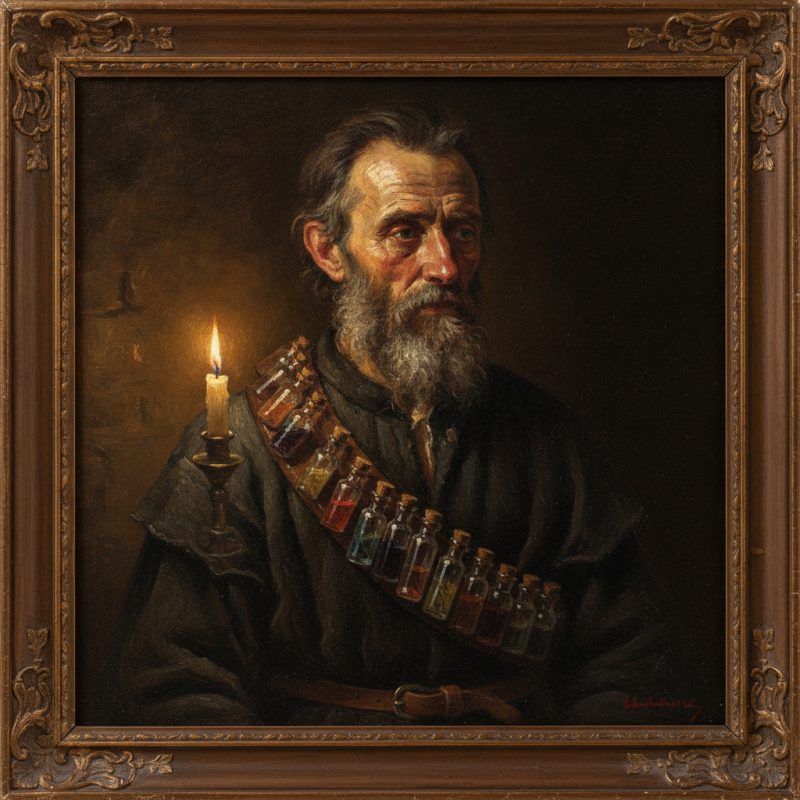
Damaschin the Healer
He knows the cure for any illness and the dose at which the cure becomes something else. He swears he has never mistaken the dosage.
1.71 m tall · green eyes · grey hair · left-handed
-
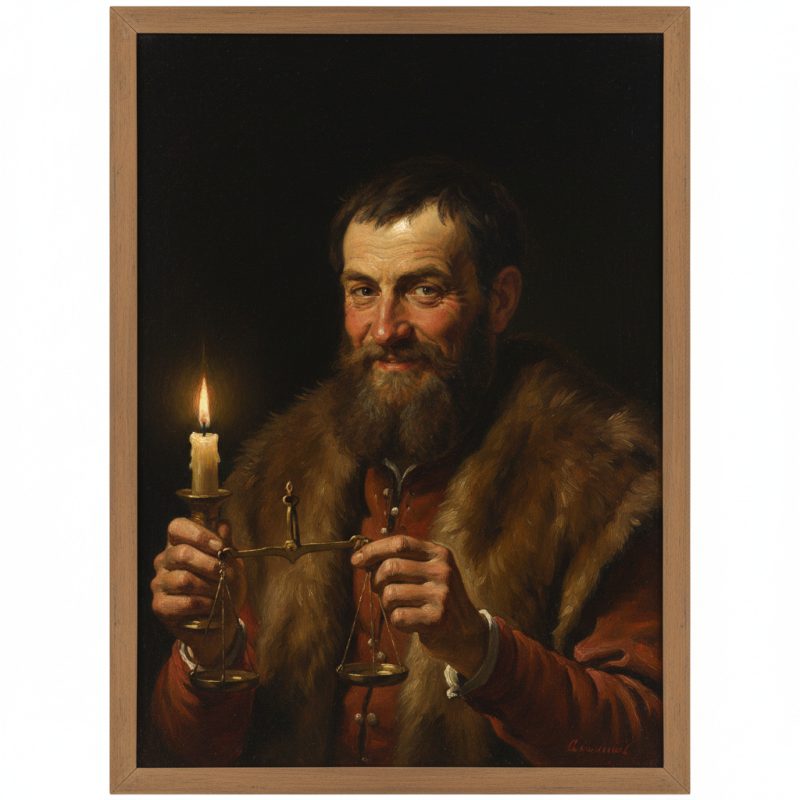
Costache the Toll-Keeper
His scales weigh the goods; his eye, the merchant. Both can be "greased" at need.
1.80 m tall · dark eyes · grey hair · right-handed
-

Luca the Squire
He polishes the knight's armour and dreams of a sword of his own. For a coat of arms he would do almost anything.
1.72 m tall · green eyes · brown hair · right-handed
-
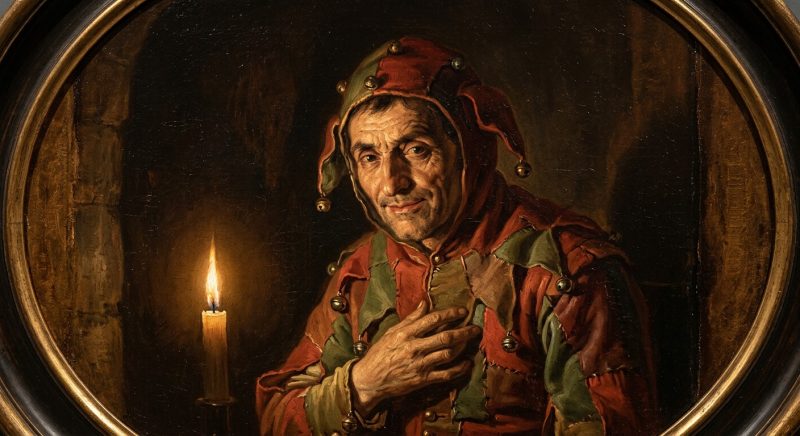
Tintar the Jester
The only man in the kingdom who may tell the king the truth - provided he makes it sound like a joke.
1.56 m tall · green eyes · red hair · right-handed
-
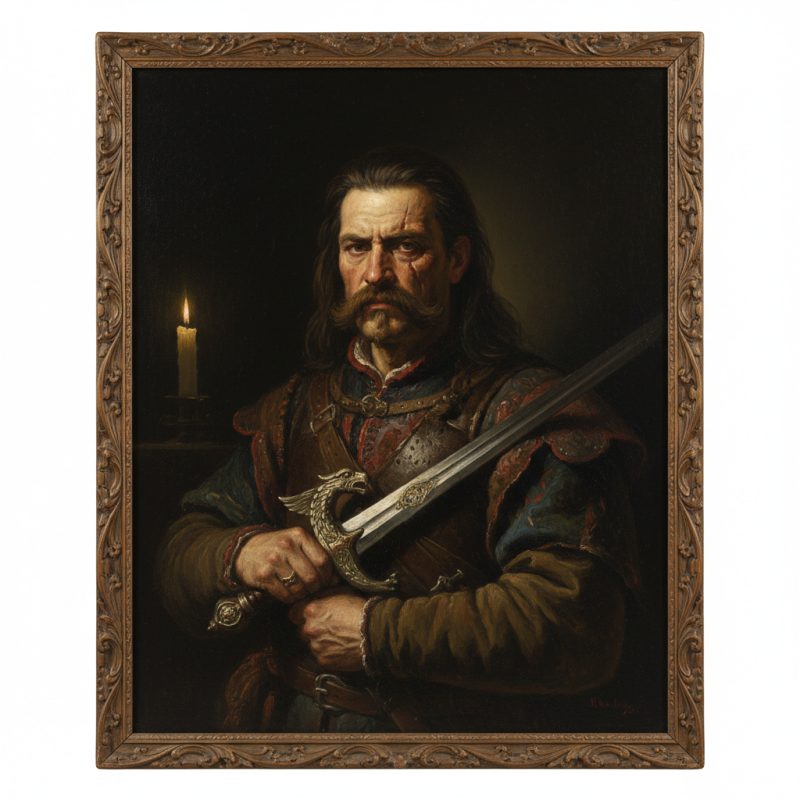
Sword-Bearer Dragos
He bears the king's ceremonial sword. At the tourney he has never lost; at dice, always.
1.86 m tall · brown eyes · chestnut hair · right-handed
Locations
-
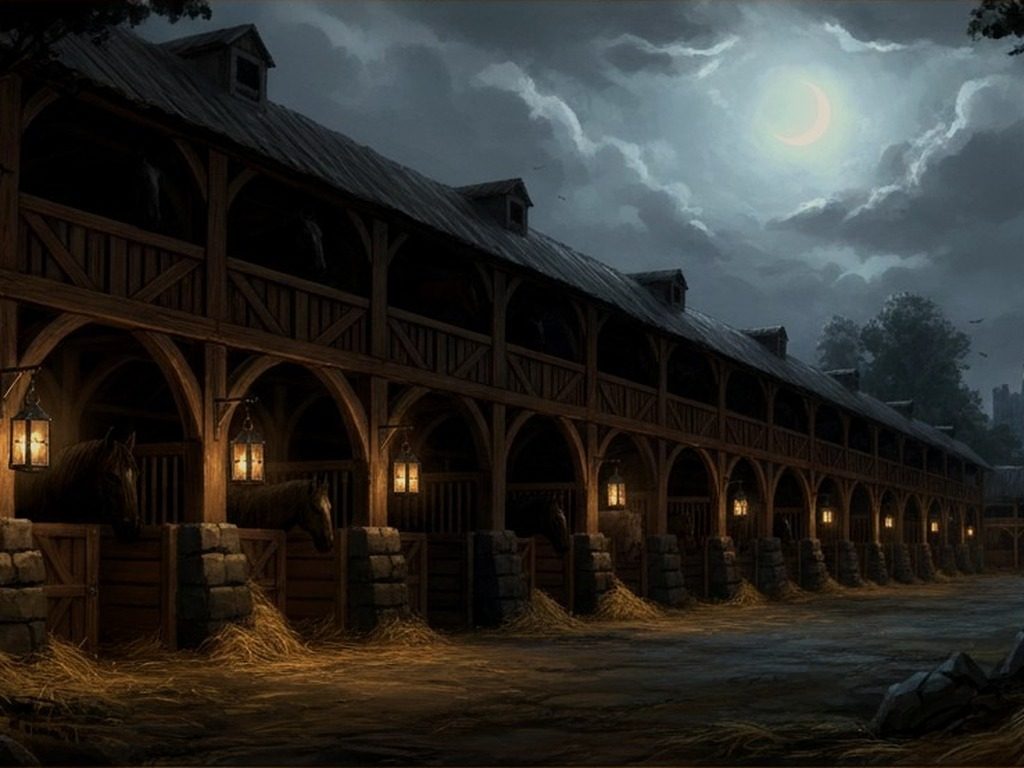
The great stable
It smells of hay and hurried departures. Horses give no testimony.
-
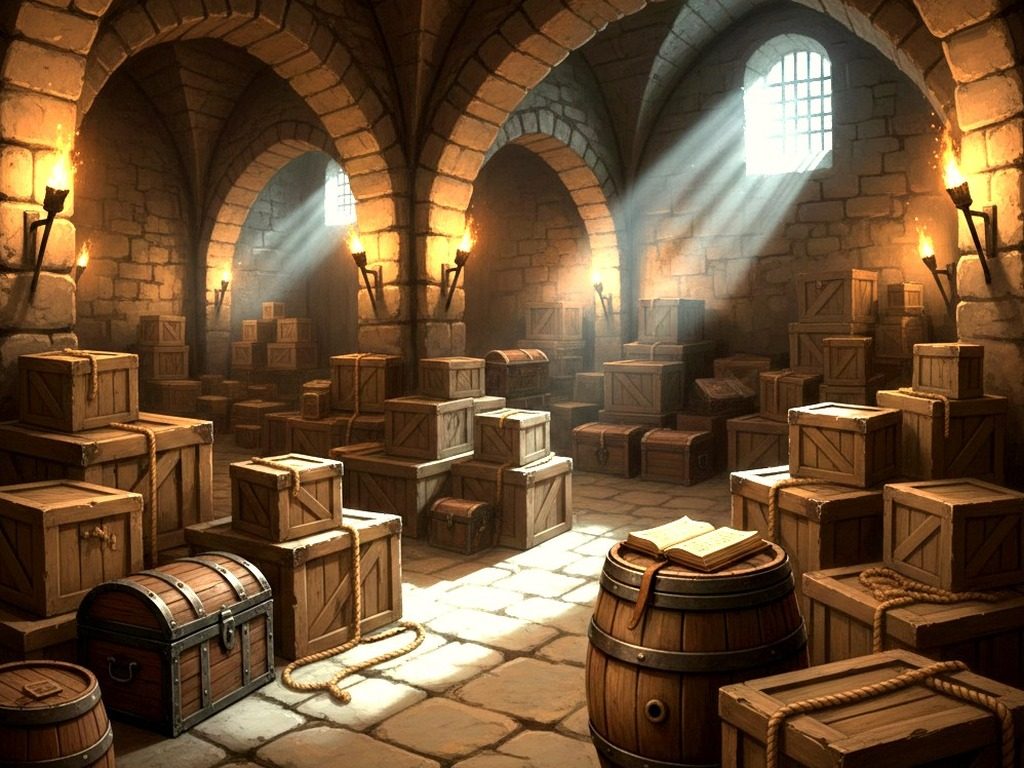
The customs cellar
Sealed crates, thick ledgers, and air that smells of undeclared goods.
-
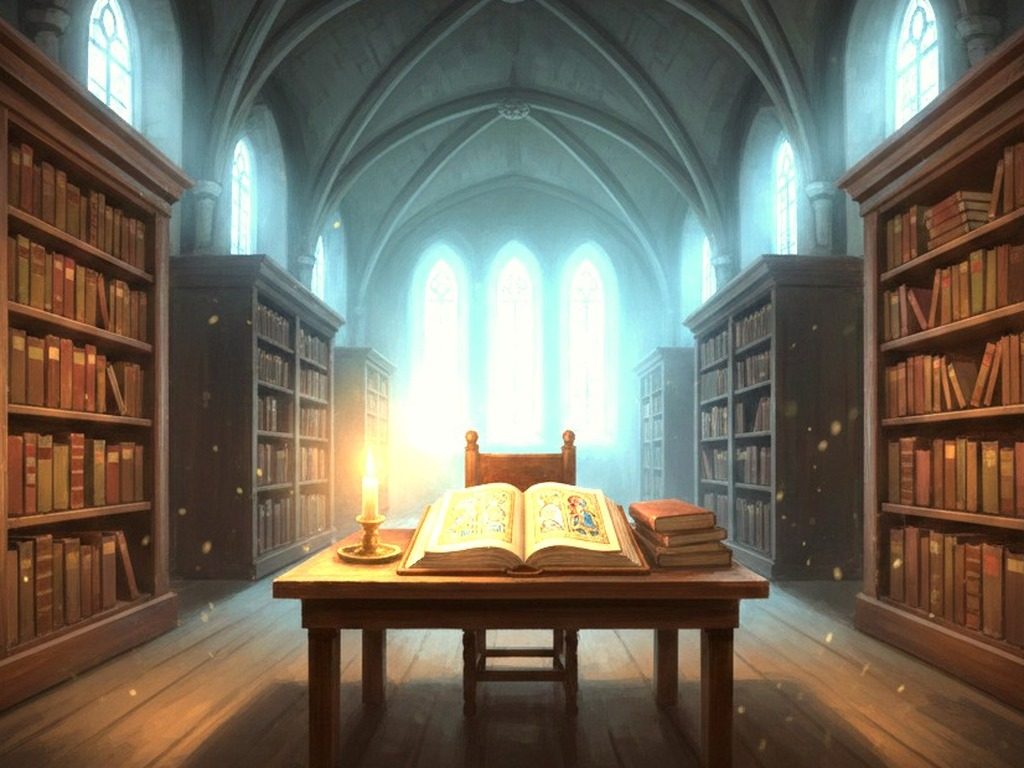
The abbey library
Thousands of leather-bound tomes. Some of the chains on the shelves were cut recently.
-
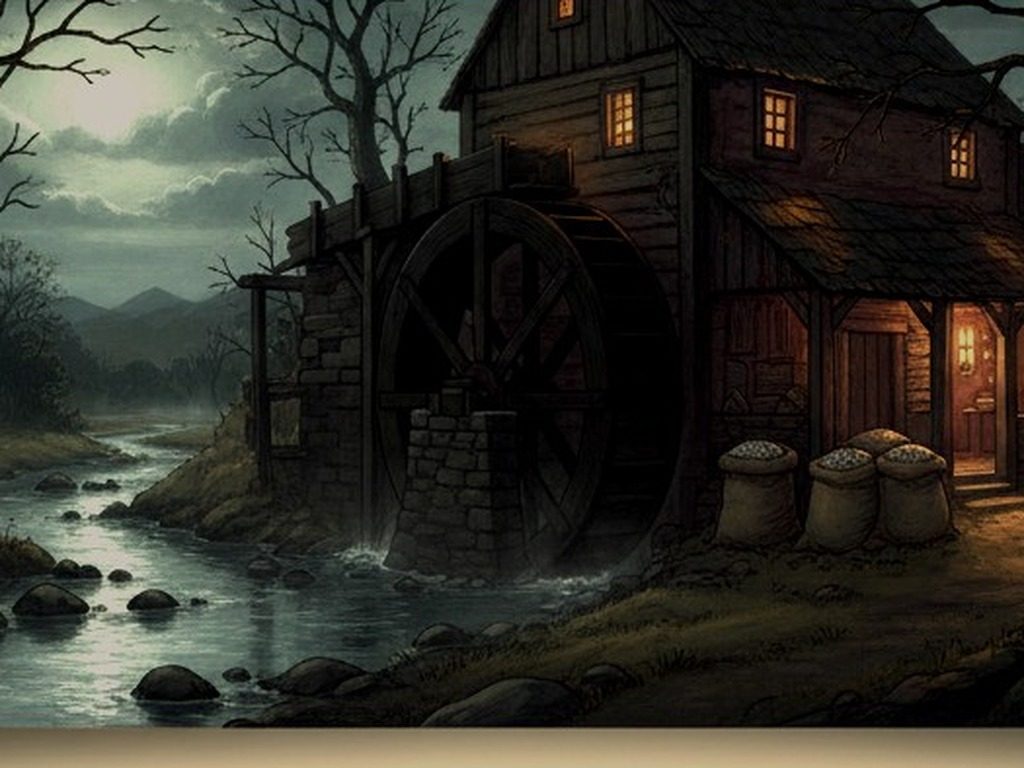
The mill by the river
The wheel turns day and night. Its noise drowns out any conversation - which is why some are held here.
-

The cathedral crypt
The old kings sleep beneath crested slabs. Now and then, someone disturbs their rest.
Objects
-
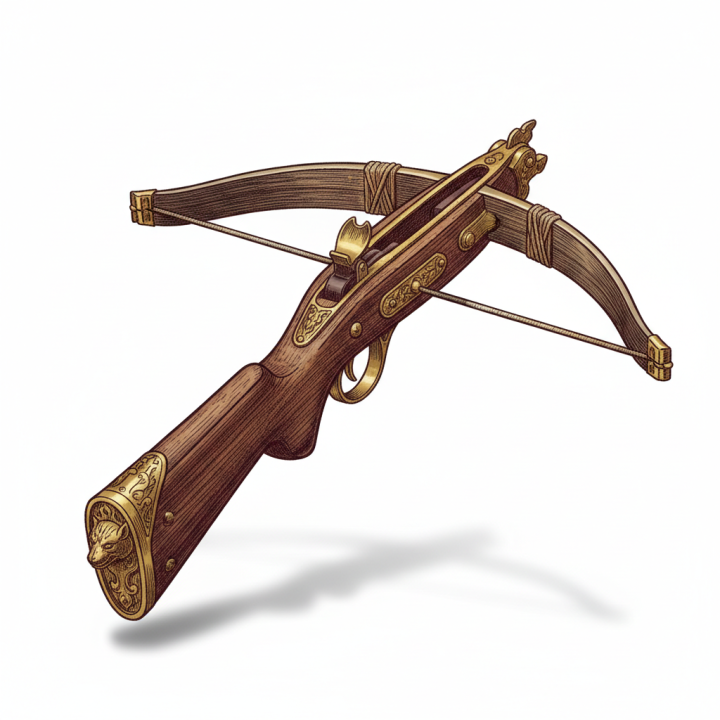
The hunting crossbow
Light, accurate, with a walnut stock. Exactly one bolt is missing from the quiver.
-

The royal seal
Whoever holds it can seal any decree. Which is why it should not be wandering the kingdom.
-

The locked chest
Three padlocks, two rows of straps. Fresh scratches around the hinges, not the locks.
-
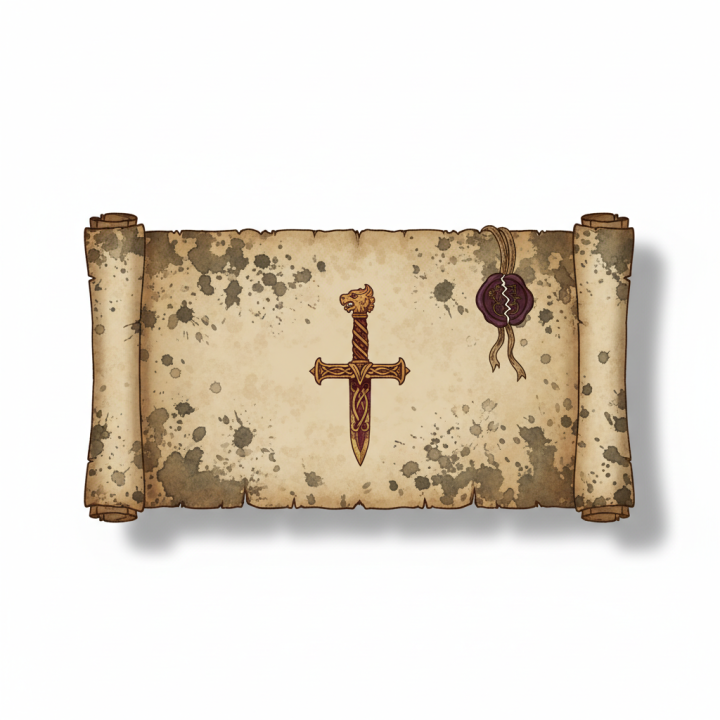
The stained parchment
A half-burned document with a stain that might be wine. Or not.
-

The ruby dagger
A short blade, its hilt set with a stone red as a frozen drop. It was sharpened recently.
Motives
-

Blackmail
Un secret ținut ca funia la gât, strâns exact cât trebuie.
-

Ambition
Setea de a urca, chiar peste trupuri, spre o treaptă mai înaltă.
-

Fear of exposure
Groaza de a fi dat în vileag, care împinge la orice.
-

Revenge
O datorie de sânge pe care numai fapta o mai șterge.
-

The inheritance
O avere așteptată, pe care numai o moarte o desparte de mână.
What the Chancellery had to hand
This much was worked with, no more and no less. Minimality is not a figure of speech: each row was taken out in turn, at trial, and without it the solution ceased to be unique.
- The chronicler notes drily: the customs cellar and fear of exposure go together, whatever the court may say.
- The tracks in the dust do not lie: the suspect with chestnut hair was at the cathedral crypt.
- A note in the margin of the ledger: if Tintar the Jester was in the place that smells of hay, then Sword-Bearer Dragos was driven by ambition.
- In the Chancellery's ledger it stands in black and white: the customs cellar and the locked chest go together.
- Before the investigator, Damaschin the Healer firmly repeats: "I was driven by the inheritance".
- A maid whispered it at confession: the ruby dagger and revenge go together.
- About the culprit, the Chancellery knows one thing for certain: the culprit was at the great stable.
- The chronicler notes drily: the mill by the river and the stained parchment go together, whatever the court may say.
- An honest-faced witness saw it plainly: the suspect with dark eyes was at the abbey library.
- Tintar the Jester declares under oath: "I handled the royal seal".
- An honest-faced witness saw it plainly: the suspect with red hair was driven by blackmail.
Break the seal: the Chancellery's reasoning — open only if you have already tried the dossier
The unravelling of the thread
The Chancellery does not work with impressions. It works with a grid in which every cell has exactly one answer, and with the patience to find it.
The Chancellery asked for one more check, and received it: “The chronicler notes drily: the customs cellar and fear of exposure go together, whatever the court may say”. A certain match thus enters the grid, and its row and column empty at once of every other possibility.
The archivist underlined the following line with his nail: “The tracks in the dust do not lie: the suspect with chestnut hair was at the cathedral crypt”. The cell filled, and around it a space opened: that is what a certain match does to a grid.
A note in the margin of the page read: “A note in the margin of the ledger: if Tintar the Jester was in the place that smells of hay, then Sword-Bearer Dragos was driven by ambition”. While the first half stayed uncertain, the second had nothing to say. Afterwards it said everything.
The pages gathered fast, and each cut a strip out of the grid: “In the Chancellery's ledger it stands in black and white: the customs cellar and the locked chest go together”; “Before the investigator, Damaschin the Healer firmly repeats: "I was driven by the inheritance"”; “A maid whispered it at confession: the ruby dagger and revenge go together”; “About the culprit, the Chancellery knows one thing for certain: the culprit was at the great stable”; “The chronicler notes drily: the mill by the river and the stained parchment go together, whatever the court may say”; “An honest-faced witness saw it plainly: the suspect with dark eyes was at the abbey library”. Taken one at a time they seemed slight; laid together in the grid, they left one arrangement alone possible.
The gate register had kept a trace of its own: “Tintar the Jester declares under oath: "I handled the royal seal"”. Here the grid had to wait. A declaration is not placed until it is settled who made it.
It was set down, for whoever reads after us: “An honest-faced witness saw it plainly: the suspect with red hair was driven by blackmail”. The tick goes down without hesitation, and with it fall all the other cells on that row and that column.
The mismatch
One word was enough. Tintar the Jester swore before the Chancellery that I handled the royal seal — and that alone would not sit with the rest of the file. The truth, drawn out of the other rows, runs thus: Tintar the Jester never touched the royal seal. Whoever lies, under the Supreme Law, gives themselves away.
The seal on the file
The Chancellery closed the dossier with a single name written on it: Tintar the Jester. When the deed took place, Tintar the Jester was at the great stable, handled the hunting crossbow and was driven by blackmail. It was reached only by driving each supposition to its absurd end — a tier III dossier, and rightly so.
The remaining suspects
The others found their acquittal in the grid as well: Damaschin the Healer was at the mill by the river, handled the stained parchment and was driven by the inheritance; Costache the Toll-Keeper was at the abbey library, handled the ruby dagger and was driven by revenge; Luca the Squire was at the customs cellar, handled the locked chest and was driven by fear of exposure; Sword-Bearer Dragos was at the cathedral crypt, handled the royal seal and was driven by ambition. Every one of these rows was necessary: take out a single one and the verdict can no longer be demonstrated.
That is how a dossier closes: not with a well-contrived suspicion, but with the only arrangement the grid still allowed. The Chancellery needed no confession — it needed only logic.
Play this dossier All mysteries
Nothing in this chronicle is invented: the text rises out of the dossier's logic, and the dossier passed through the solver before publication, so that its solution is provably unique. behind the scenes at the Chancellery.